From the studio
Insights on AR,
XR and spatial brands
Practical guides, case study breakdowns, and perspectives on immersive brand campaigns from the team at RBKAVIN.
All articles
No articles match that search.
Try a different term or clear the filterWhat being an official Snap AR partner actually means
I'm an official Snap AR partner. Here's what that status actually gets a brand, what it doesn't guarantee, and what to check first.
What I look for in a smart glasses brief
I read hundreds of smart glasses briefs a year. Here is exactly what makes me say yes and what sends one to the pass pile.
Branded AR filter: what it is, what it costs, and how to brief one
What makes a filter "branded," typical cost ranges from $2,000 to $30,000+, and how the commissioning process works on Snapchat and TikTok.
What is web AR? Augmented reality without an app, explained
Web AR opens straight from a phone browser link or QR code, no app download required. See how it works and where it fits against social AR.
Wearable AR vs phone AR at live events: which one actually converts?
Wearable AR converts fewer people but drives longer dwell time and richer data per interaction. Phone AR reaches more people faster. See the breakdown.
Smart glasses UX: designing interactions without a touchscreen
Smart glasses have no tap, swipe, or keyboard. Voice, hand gestures, and gaze replace touch, with real examples from Snap Spectacles builds. Brief it right.
Camera Kit vs 8th Wall: which no-install AR is right for your campaign?
Camera Kit embeds an existing Snap lens on your site or app; 8th Wall builds WebAR from scratch with no Snap link. Compare here.
How AI image and video generation actually works
Image models turn random noise into a picture step by step, guided by your prompt. Here's the mechanism, not the hype.
AR for film and entertainment marketing
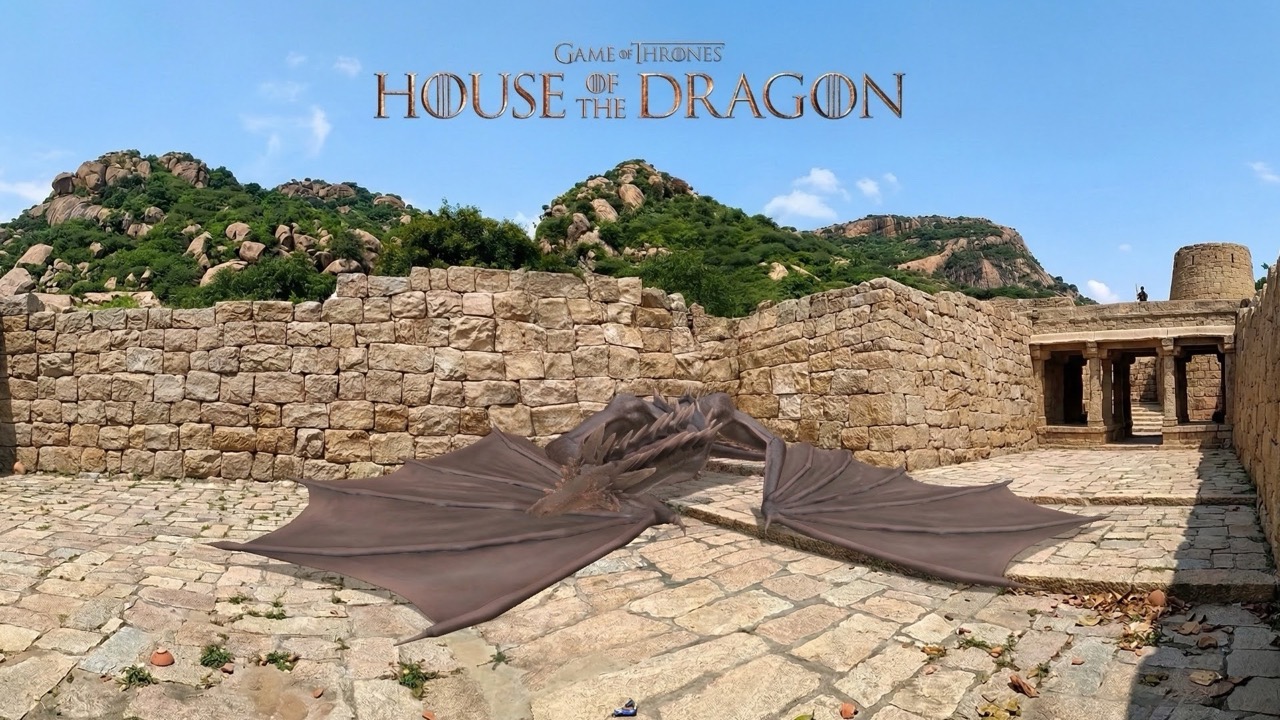
AR lets fans step inside a film's world instead of watching a trailer. See how House of the Dragon and 007 First Light used it. Read the case studies.
Real WebAR examples for brands: campaigns actually shipped
007 First Light, Chester Zoo, and HP: three real WebAR campaigns, the tracking format each used, and the result. See the demos live.
Smart glasses for events: the navigation and activation guide
A mobile companion app handles wayfinding, AR activation points drive engagement, and smart glasses are an emerging option. Plan your brief here.
Snap Spectacles for brands: how to brief a build we can scope
A practical brief template for Snap Spectacles: what a studio needs from you, which content formats work today, and the approval timeline. Start here.
What happens to your data when you try smart glasses at a demo
Trying a smart glasses demo means the device may track your hands, voice, or gaze. Here's what consent should cover before you put them on. Learn more.
Do smart glasses map your room?
Snap Specs builds a live 3D map of a room and locks content to it. Meta Ray-Ban Display does not. Here's what that gap means for a brief.
What spatial AR actually looks like
Three real screenshots from our own builds, explained plainly: what it looks like when content is pinned to a real room.
Spectacles vs Android XR: which to build for
Snap Spectacles has an audience today. Android XR has Google behind it and almost no audience yet. How to pick for a real brief.
Apple Vision Pro vs Snap Specs
Vision Pro is a $3,699 computer you sit down and use. Snap Specs is $2,195 glasses you wear out the door. The real difference.
Android XR explained
Google's operating system for extended reality devices, built with Samsung and Qualcomm, running across MR headsets and future smart glasses.
What is spatial computing? A plain-English explainer
Technology that understands 3D space in real time, so digital content can anchor to real walls, tables, and objects instead of living flat on a screen.
Storytelling in XR: designing for spatial attention
Why a narrative that plays the same way regardless of where someone looks falls flat, and what to design instead.
AR vs MR vs spatial computing: what's the difference
AR overlays, MR reacts to the real world, and spatial computing is the umbrella term covering both plus VR. Here's the difference, plainly.
Building Spatial Mapper: projection mapping you trace with your hands
How we built Spatial Mapper, an AR-native projection mapping tool for Snap Spectacles that traces real light with your hands instead of calibrating on a laptop screen.
Xreal, Brilliant Labs, and Vuzix compared: smart glasses beyond Snap and Meta
Xreal builds tethered display glasses, Brilliant Labs Frame is an open developer AI platform, and Vuzix builds enterprise AR. Three categories, compared for brand and agency briefs.
Freelancer, studio or agency: who should build your smart glasses experience?
A decision framework for brands and agencies choosing between a solo freelancer, a specialist studio, and a full-service agency for a Snap Spectacles or Meta AI glasses build.
What a working Snap Spectacles lens actually looks like
Noodle and Ice Fishing, walked through in detail: what separates a native Spectacles build from a ported one, and what to check before you hire.
Meta AI glasses developer cost: what brands should budget
What a Meta Ray-Ban / Meta Ray-Ban Display build actually costs, and why Meta's closed platform means the budget buys AI and companion-app work, not spatial 3D content like Snap's.
Snap Specs lens development cost: what brands should budget
A dev-only Specs lens runs $8,000 to $20,000; full concept-to-build $25,000 to $60,000. What each tier includes and what actually moves the number.
Smart glasses privacy and consent for brand activations
Recording privacy, bystander consent, signage, and data handling for wearable AR activations. Capture LEDs, on-device processing, and the on-site playbook.
How much does an AR filter cost?
Custom AR filter costs from $3,000 to $30,000+. Platform-by-platform breakdown: Snap Lens, TikTok Effect, Instagram filter, and WebAR with real price ranges.
AR marketing agency: what to look for
How to choose an AR agency. What official partner status means, questions to ask, red flags to avoid, and why platform specialisation beats generalism.
Custom Snapchat filter for brands
The difference between a geo-filter and a Lens, what commissioning one actually costs, and the six questions a studio needs before it can build.
TikTok AR effects for brands
How Effect House differs from Lens Studio, which TikTok AR formats drive brand campaigns, and what makes an effect worth commissioning.
Smart glasses brand campaigns: case studies that worked
LEGO, ILM, Oakley Meta, Anderson .Paak, HBO, and noodle: the campaigns that produced real results and what made each one work.
Smart glasses brands in experiential marketing: who is doing it well
LEGO, Oakley Meta, and ILM have run the most effective smart glasses experiential campaigns. What they built and why it worked.
Snap Specs vs Meta Ray-Ban Display: two AR glasses, different briefs
Both have AR displays. Snap Specs is $2,195 binocular. Meta Ray-Ban Display is $799 monocular. Here is how to choose for your brief.
How to plan a Snap Specs brand activation: brief to launch guide
8 to 12 weeks from brief to tested experience. The full timeline, hardware logistics, and Lens development process.
How long does a Snap Spectacles project take? A realistic timeline
Phase-by-phase: concept, Lens build, agency review, hardware testing, and event day. Where each week goes and where projects lose time.
Sub-contracting smart glasses development: what agencies need to know
When to bring in a specialist, what to hand over, what to keep, how IP and QA ownership works, and what to ask in a first call.
What is MIT Reality Hack? The world's largest XR hackathon explained
4 days, working hardware, real prototypes. In 2026, Noodle won the Snap category. Here is what the event is and why the result matters.
Spectacles lens vs Snap lens: same tool, completely different brief
A Snap lens runs on a phone. A Spectacles lens runs on AR glasses. Both use Lens Studio. Here is how to tell them apart and which brief needs which.
Ice Fishing on Snap Spectacles: behind the build
A frozen lake in real space. Your phone as a fishing rod. How a casual AR experiment built for smart glasses hardware became the clearest lesson we've had about designing for first-time AR users.
Voice-first AI on smart glasses: what brands can build without a display
Meta Ray-Ban has no display: audio out, voice in. Branded AI companions, creator capture campaigns, audio experiences. Here is what the no-display platform actually allows brands to build.
One Lens, three channels: how Snap Camera Kit changes the AR production model
Snap Camera Kit lets one Lens Studio build run in Snapchat, in a browser, and inside your own app. One production budget, three activation surfaces.
Building on Snap Specs: Lens Studio gets AI coding tools
Snap launched agentic development for Lens Studio at AWE 2026, with Claude Code, Codex, and Cursor integration. Plus: an NDK, Migration Agent for Unity, and the SPECS Spatial Benchmark. Here is what changed for developers.
Snap Specs just launched. Here is what it means for brands.
Snap Inc. unveiled Specs at AWE 2026: $2,195, fully standalone, 51-degree FOV, no external puck, preorders open. The shift from Spectacles to a consumer product changes the activation window. What brands need to know now.
What brands misunderstand about immersive campaigns before they brief
Five conceptual mistakes that shape bad briefs before they are written. What to unlearn first about cost, technology, virality, audience adoption, and format fit.
How AR campaigns earn organic reach: the audience-as-distributor model
Social AR earns reach because the audience becomes the distributor. The three mechanics that drive organic spread, and how to design for them from the brief stage.
Teaching AR to non-technical teams: what actually works in the room
The three concepts that shift how brand teams brief AR, and the moment in every workshop when it clicks. First-person from six years of sessions.
Who is building for smart glasses in 2026? A developer landscape for brands
Platform-certified creators, immersive studios, enterprise XR agencies. How to tell them apart, what to ask in a pitch, and what a smart glasses project actually costs.
Try before you brief: live WebAR demos you can open right now
The best way to brief an AR campaign is to try one first. These live WebAR demos open in your browser. Try them before you write a word of a brief.
Smart glasses for museums and cultural experiences: what AR can add
Guided tour overlays, reconstructed artefacts, interactive exhibits without touchscreens. What smart glasses actually enable in a museum setting and how to brief it.
Wearable AR at festivals and music events: a practical format guide
Battery life, hygiene, crowd density, noise, connectivity. The four formats that work at festivals and a new direction worth designing toward: collective shared mechanics.
Smart glasses for brands: what the technology can and cannot do right now
A plain-language guide for brand teams. What experiences are feasible in 2026, what is still prototype-stage, and the one brief question that saves six weeks of scoping.
Six years of AR campaigns: what I would tell myself at the start
After six years directing AR campaigns for HBO, Snap, and others, the lessons that would have saved time, budget, and creative dead ends. By Kavin Kumar.
How to measure ROI on a smart glasses activation: the metrics that actually matter
Why CTR and impressions do not apply, the three measurement layers that do, and realistic benchmarks for what good looks like on a glasses activation.
Smart glasses for brand storytelling: what the medium actually allows
People arrive with screen AR mental models. Glasses is a different interaction contract from scratch. What that means for how you brief and direct a glasses experience.
AI and smart glasses: what's actually possible for brands right now
What AI genuinely does on smart glasses hardware today: translation, object recognition, contextual overlays. What brands can commission in 2026 and what is still prototype-stage.
Smart glasses at events: translation, guided tours, and live activations
Smart glasses display translated subtitles, spatial wayfinding, and branded overlays hands-free. What event producers need to know before briefing a live activation.
Do smart glasses look normal? An honest look at wearability in 2026
Device-by-device breakdown of how Meta Ray-Ban, Xreal, Snap Spectacles, and Brilliant Labs Frame look in public. What wearability means for brand activations versus daily use.
Creative direction for immersive campaigns: what the role actually covers
What an immersive creative director actually does — from brief translation to on-day direction at live events. Six years of campaigns, 1.5B+ impressions.
The AR brief mistake that kills campaigns before they start
Five mistakes brands make when briefing an AR campaign — and how to fix every one. Why briefing the format instead of the outcome is the first failure.
Smart glasses vs phone AR: which works better for brand campaigns?
An honest format comparison for brand managers and agency creative directors deciding between wearable AR and social AR. Which fits your brief, your audience, and your budget.
Building Noodle: how we won MIT Reality Hack 2026
A first-person account of building Noodle — a spatial AI workbench for Snap Spectacles — in 36 hours and winning three prizes at MIT Reality Hack 2026. The brief, the build decisions, and what it proved about hands-free AI.
Wearable AR for live events: 5 formats that actually work
Five wearable AR activation formats for live brand events. What each delivers, which brief it suits, and what you need to know before commissioning one.
What is augmented reality, really? A no-jargon explanation
AR explained plainly. What it is, the four surfaces it runs on, how it differs from VR, and what it enables that no other medium can. Start here if you are new to the space.
How smart glasses work: the tech explained without the jargon
Cameras, waveguide displays, spatial sensors, and hand tracking: what each component does and why the hardware constraints shape everything about how experiences are designed.
Smart glasses in 2026: what's real, what's hype
An honest read of where the smart glasses category actually is. What the hardware genuinely does, what is still years away, and what the Meta Orion prototype signals for the next generation.
Smart glasses vs VR headsets: what's actually different
Most people picture VR when they hear smart glasses. They are not the same thing. A plain-English explanation of what makes them different, why it matters, and which one belongs in your brief.
Smart glasses comparison 2026: four devices, four different jobs
Snap Spectacles, Meta Ray-Ban, Xreal, and Brilliant Labs Frame side by side. What each is built for, what each cannot do, and which one is right depending on the brief.
What can you do with smart glasses right now?
Five things smart glasses genuinely do in 2026, and three things they cannot do yet. An honest guide for brands, marketers, and curious people who want the real picture, not the hype.
What is wearable AR? How it's different from phone AR
Wearable AR explained simply. How augmented reality through smart glasses differs from your phone, and why that changes everything about the way experiences are designed.
What are smart glasses? A plain-English guide for 2026
Smart glasses explained without jargon. What they are, how they work, the two main types, and what you can actually do with them. Written for people who have never touched a pair.
Why most smart glass apps fail before they start
The problem is not the SDK. It is that nobody defined the use case first. A developer's take on the pattern that keeps killing smart glasses demos before real users ever see them.
Building for Snap Spectacles: what the dev kit actually teaches you
A first-person developer account from MIT Reality Hack 2026. What breaks your instincts on day one, what SnapOS gets right, and the moment the glasses finally became invisible.
Smart glasses brand campaigns in 2026: what is actually working
A pattern analysis of how brands have used smart glasses through 2025 into 2026. Which formats land, which briefs keep failing, and what the market maturity signal means for brands planning now.
How to brief a smart glasses developer: what to have before the first call
Most briefs arrive with a platform name but no use case. Here is exactly what a developer needs to move from first conversation to a proposal that will actually produce something good.
Planning an immersive campaign: a step-by-step guide
Objective first, format second. How to plan an immersive campaign in the right order, with free tools for format, budget, KPIs and brief.
What is Social AR? A guide for brand teams
Social AR runs natively inside Snapchat and TikTok. No download, no friction. Here is what it is, how it works, and when to use it.
WebAR for brands in 2026: what you need to know
WebAR activates in a browser from a URL or QR code. No platform, no app, no friction. This is where it works, where it doesn't, and how to brief it.
Social AR vs app AR: what works for brand campaigns
Most brand campaigns should go to social AR. The math is simple: fewer steps, more reach. Here is when standalone apps still win and how to decide.
What Snap Spectacles open up for brand experiences
AR off the phone screen and into the field of view. Spectacles change the brief entirely. What brands can do now, and where this is heading.
How AI is changing immersive creative production
AI has compressed the 3D asset pipeline from weeks to days. What changed, what hasn't, and what this means for budgets and briefs.
Projection mapping for brand events
Projection mapping turns buildings, stages, and products into dynamic visual canvases. What brand teams need to know before the brief lands on a studio desk.
AR mirrors for retail and brand activations
AR mirrors let shoppers try products without touching them. How retail brands are using them for try-on, product discovery, and shareable in-store moments.
AI mirrors for brand activations
AI mirrors generate real-time styled portraits, brand transformations, and personalised visuals from a live camera feed. What makes them work, and when to deploy them.
Immersive installations for brand events
Immersive installations turn a brand moment into a place people want to be. What they are, when they justify the budget, and how the brief should be written.
How to brief an immersive studio
Most immersive briefs arrive incomplete and return as the wrong thing. This is what a good brief covers, in the order a studio needs to read it.
Experiential vs digital campaigns: how brands decide
The two are not competing budget lines. They solve different problems. A clear framework for brand teams: when to lead with experiential, when to lead with digital, when to stack both.
What does an AR or immersive activation actually cost?
Costs vary by format, scope, and platform. A Snap lens starts from around $5k. A native AR app starts at $25k. Here is what drives the number up and what brings it down.
Snap AR, WebAR, or a custom app: which format is right for your campaign?
The right AR format depends on where your audience is, what action you want them to take, and how much friction they will tolerate. A practical decision guide.
How to measure the performance of an AR or immersive campaign
AR metrics are not mysterious, but they require setting the right KPIs before launch. What to track on Snap, WebAR, and live events, plus realistic benchmarks.
AR at live events and festivals: designing for the crowd moment
Live events are a different design problem from campaign AR. In a crowd, you have seconds, worse network conditions, and a mixed-ability audience. How to design for it.
How to choose the right platform for an immersive brand campaign
Social AR, WebAR, AR mirrors, AI mirrors, projection mapping: every format compared. A practical decision guide for brand teams choosing between immersive formats.
Creative direction in the age of AI: how I work now
How AI has changed the concepting phase, the 3D asset pipeline, and the client brief. A first-person account of what shifted, what stayed the same, and what AI still cannot do in immersive work.
AR glasses for brand campaigns: Snap Spectacles, Meta Ray-Bans and Vision Pro
AR glasses change the brief entirely. A practical guide to what Snap Spectacles, Meta Ray-Bans, and Apple Vision Pro actually open up for brand campaigns, and when the reach trade-off makes sense.
AR mirror setup for marketing activations: what brands need to know
Space, hardware, software, staffing, asset timelines, data capture. Everything a brand event team needs to plan an AR mirror activation properly.
Storytelling with AI: how immersive campaigns find their narrative now
AI has compressed the concepting phase from days to hours. What that changes in practice, where creative direction still matters, and what good AI-assisted storytelling looks like.
What is spatial computing and what does it mean for brand marketing?
Spatial computing puts digital content into physical space. What Apple Vision Pro, Meta Quest, and Snap Spectacles each unlock for brands, and what is real now versus two years away.
AR in stadiums: big screens, AR mirrors and crowd moments
How stadium AR actually works: synced big-screen moments, AR mirrors in the concourse, Snap Spectacles for fans, and sponsor-branded crowd experiences. A practical guide for venue operators and rights holders.
Immersive storytelling for film and series promotions
How AR and immersive experiences extend the world of a film or series into real space. Social AR, experiential, WebAR, and how to measure what actually worked.
Immersive storytelling for sports brands
How sports brands use AR, spatial experiences, and immersive activations to hold fan attention beyond matchday. Social AR, location-based moments, Spectacles, and global WebAR reach.
Meta Ray-Ban smart glasses for brand campaigns
No display, but a genuine activation platform. First-person POV content, AI-guided experiences, live-stream events, and what the developer SDK opens up for brand builds.
Snap Spectacles dev kit: what studios and brands can build now
46-degree FOV, hand tracking, spatial anchors, and shared AR for up to three people. A studio-level look at what Lens Studio 5.0 enables and what has already been built on the dev kit.
Smart glasses developer: what studios build for AR glasses
What does building for Snap Spectacles or Meta Ray-Ban actually involve? Lens, SDK, event activation, and what to look for when hiring a studio for a smart glasses build.
Designing for smart glasses: how the brief changes
No screen, no touch, a 46-degree canvas. How spatial UX design differs from phone AR: FOV constraints, hand-first interaction, audio as a primary channel, and what building noodle taught us.
Meta Ray-Ban vs Snap Spectacles: which to brief for your campaign
These are not competing products. They solve different briefs entirely. A practical decision guide for brand teams and agencies choosing which smart glasses platform to build for.
Meta Orion: what true AR means for brands
Orion is not a product yet. But it is the clearest picture we have of where consumer AR glasses are heading. A practitioner's read on the 70-degree FOV, Neural Band input, and why building expertise now is the preparation.
Ready to build something?
We design and build AR and XR experiences for brands worldwide. Tell us about the project.
Start a project