We have received hundreds of AR briefs over six years. The good ones are shorter than you'd expect: one page, clear outcome, concrete success metric, real environment context. The bad ones have one thing in common: they describe what the brand wants to make, not what the audience should experience.
That distinction sounds simple. It is surprisingly hard to get right, especially for brands who have not run an immersive campaign before. The instinct is to describe the thing: "we want a lens", "we want a try-on experience", "we want something like what Brand X did". The instinct is understandable. It is also the most reliable way to produce a campaign that disappoints everyone involved.
Here are the five brief mistakes we see most often, and what to do instead.
"We want a Snapchat lens" is not a brief. It is a format request. The format is the answer to a question the brief has not asked yet: what do you want the audience to feel? What should they do with the experience when they leave? What would make this activation worth stopping for?
When a brand leads with format, the studio is forced to either accept the format request and execute against it, or push back at the risk of being seen as difficult. Most studios take the path of least resistance. The campaign suffers.
Separate outcome from format in every brief. Write what you want the audience to feel, do, and share. Then let the studio recommend the format. If you have a platform in mind, note it as a preference, not a requirement.
"Go viral" and "generate buzz" are not metrics. Neither is "get people talking". Every AR activation needs at least one concrete success criterion tied to its format and context. For a social lens: shares, reach, saves. For a live activation: dwell time, throughput, social posts from the event floor. For a WebAR product experience: time-on-experience, return visits, conversion rate.
A variant of this mistake is the brief that leads with "we want something immersive". Almost every brand wants immersion. It is a feeling, not a format, and on its own it is not a brief instruction. Without knowing what immersive means for this specific audience in this specific context, the studio is guessing. Is immersion the moment of surprise when an AR character appears in the room? The sustained engagement of a spatial game that keeps people for three minutes? The social proof of footage that looks unlike anything else in the feed? All of these are immersive. All of them require different formats and different budgets.
Without a concrete metric, there is no brief. A studio can build an excellent experience against a vague brief and still be told it did not work, because nobody defined what "work" meant at the start.
Write one or two specific, measurable outcomes at the top of the brief. "10,000 lens shares in the first 72 hours" or "average dwell time of 90 seconds at the activation" are briefs. "Something immersive" is a starting point for a conversation, not a brief instruction.

AR has a longer lead time than most brands expect, and the gap tends to surprise people who have run traditional digital campaigns. Social AR lenses require platform submission and review: two to four weeks for Snap in normal circumstances, longer if the lens uses experimental features or requires custom classification. Live activations need venue access for environment scanning. Smart glasses experiences need device lead time and structured rehearsal. A brief that lands five weeks before go-live has, in many cases, left out two of those weeks before the studio was involved.
The result is a compressed concept stage, a skipped prototype, and a launch that goes live without proper testing in the actual environment.
Treat an AR activation like a film shoot. Lock the brief early, allow time for concept and prototype, factor in platform submission, and build in rehearsal time for live activations. Ask the studio for their minimum timeline at brief stage, before the date is fixed.
AR experiences are designed for specific contexts. A social lens designed for a bathroom mirror selfie will look different in outdoor festival light. A Spectacles experience built in a controlled studio environment may not work in a crowded venue with variable surfaces and inconsistent overhead lighting. A WebAR try-on experience optimised for desktop will feel broken on mobile, or vice versa.
These are not edge cases. They are the difference between an experience that works and one that does not.
Include in every brief: where the experience runs (indoor or outdoor, event or permanent installation), expected lighting conditions, available surfaces if physical, audience device situation, and crowd density expectations. These are creative constraints, not logistics details.
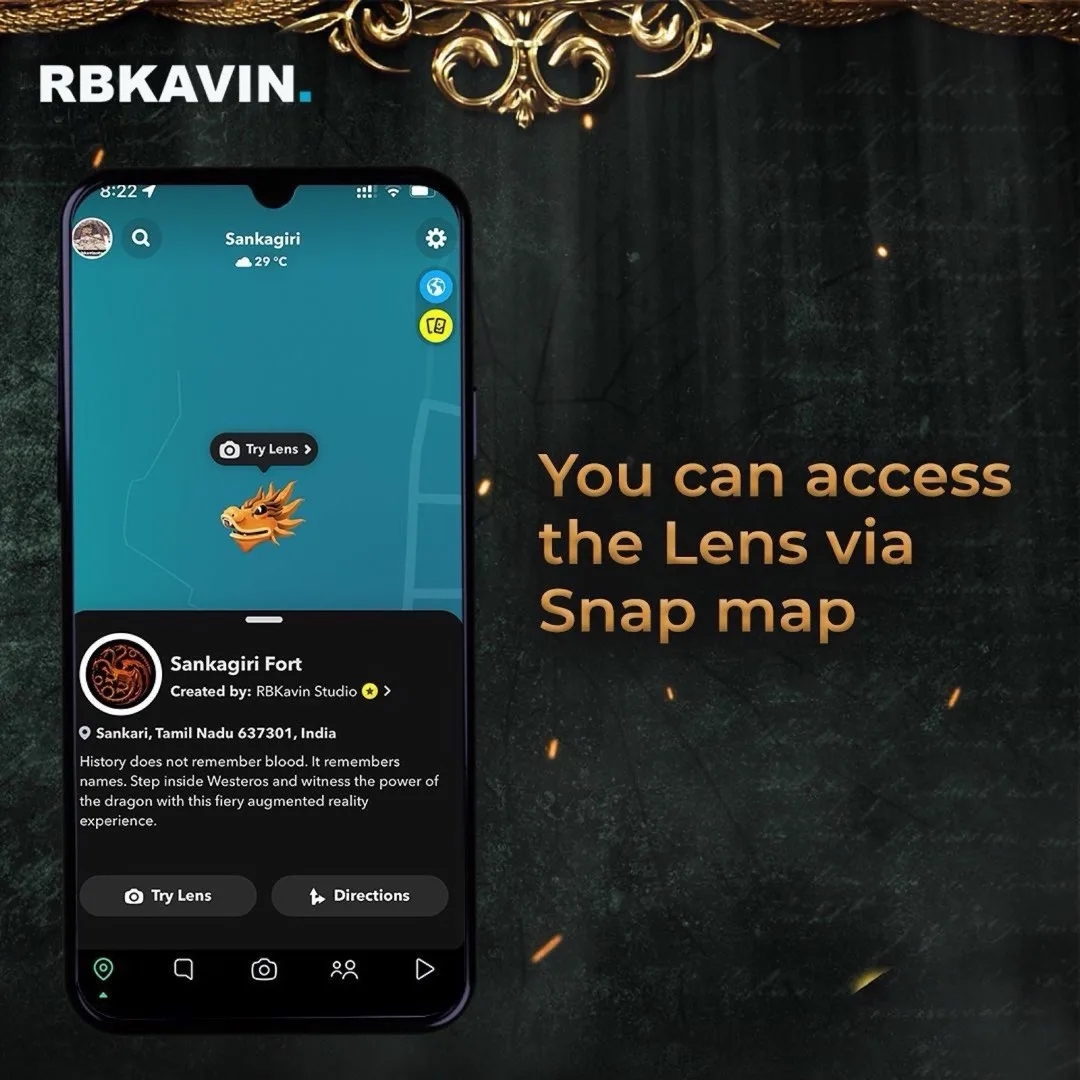
The costliest mistake, and the hardest one to address after the fact. Adding AR to a campaign because it sounds impressive, then measuring it against standard digital metrics it was never designed for.
AR is not a layer you apply to an existing campaign. It is a format with specific strengths: presence, interaction, spatial memory. Used correctly, it does things nothing else can do. Used as decoration: a lens nobody asked for, a try-on that doesn't fit the product, a spatial experience tacked onto a campaign brief that was already finished. It underperforms every other format and confirms the cynicism of everyone who was already sceptical.
Before putting AR in a brief, ask one question: is there something this activation needs to do that only AR can do? If the answer is no, the brief should use a different format. This is a question a good studio will ask you. If they don't, ask it yourself.
This one arrives in the brief as a reference: "we want something like what [Brand X] did, but for us". It sounds reasonable. The problem is that [Brand X]'s campaign was built for their audience, their event, their platform relationship, and their specific outcome, none of which are yours.
When a brand copies a format without inheriting the conditions that made it work, they usually get the aesthetic without the result. A lens that generated millions of shares for a global entertainment brand with an existing Snap audience will not automatically do the same for a mid-size fashion label with a different demographic and a different brief goal. The format might even be wrong. The competitor was optimising for reach; you're optimising for event dwell time. The competitor's lens ran on a film premiere audience; yours runs at a trade event. Same format, completely different context, completely different result.
References are useful for showing the space you're operating in. They become a problem when they replace the brief's actual outcome, when the answer to "what do you want?" is "that, but for us" without ever defining what "that" is supposed to achieve.
Use competitor references to show the territory, not to define the goal. After sharing the reference, write one sentence explaining what it demonstrates: "This shows the kind of audience reaction we're trying to create" or "This is the platform and scale we're aiming for." Then describe your actual outcome independently. A good studio will note where your brief diverges from the reference and adjust the format accordingly.
What a good AR brief actually looks like
A good AR brief fits on one page. It does not require a lengthy background section or an appendix of references. It contains five things:
What should the audience feel, do, or share? One or two sentences. This is the brief's only mandatory creative instruction.
Where does the experience run? Who is there? What devices do they have? What does the environment look like?
One or two concrete, measurable targets. Shares, dwell time, throughput, conversion. Not "engagement" or "buzz".
Platform preference if you have one (as a preference, not a requirement), timeline including actual go-live date, and budget range.
Existing assets, visual guidelines, campaign territory. Everything the studio needs to understand what they are designing inside.
A brief that contains these five things gives a studio everything they need to recommend a format, scope a concept, and tell you honestly whether the timeline and budget are realistic. A brief that substitutes a format request for outcomes 1 through 3 produces a guess, dressed up as a campaign.
Insights newsletter
Smart glasses, AR campaigns, spatial computing.
Straight to your inbox. No noise.
SubscribeReady to write a brief that works?
We work with brand teams from first brief conversation to activation. Send us your brief, or a brief question.
Start a projectFrequently asked questions
How do we brief an AR campaign if we've never run one before?
Start with outcome, not format. Describe what you want the audience to feel, do, or share, and where the activation runs. You don't need to know which platform or format is right; that is the studio's recommendation to make. What you do need to know is your success metric (what does a successful activation look like in numbers?), your environment (indoor or outdoor, event or permanent installation, audience device situation), and your timeline including the actual go-live date. A good studio will take those inputs and come back with a format recommendation before they pitch a concept. If a studio pitches a concept before asking these questions, treat that as a signal.
Should we include a reference to a competitor's AR campaign in the brief?
References are useful context, not creative direction. Including a competitor campaign says "we've seen this done before": it does not say "this is the right format for our brief". The risk is that a studio reads the reference as the creative goal and produces a version of that campaign instead of the right solution for your specific brief and audience. If you include references, label them clearly: "this is context for the space we're operating in" rather than "this is what we want". The brief's goal, your audience outcome and success metric, should drive the concept, not the reference.
How much budget context should we share in an AR brief?
As much as you're comfortable sharing. Sharing a budget range does not commit you to spending it: it tells the studio which format tier is worth recommending. A $15,000 brief and a $60,000 brief have different format options. Without a range, the studio either pitches to a middle ground that suits neither, or scopes conservatively and misses the formats your budget actually unlocks. If you're not sure what things cost, say so. A good studio will give you a realistic range before the brief is finalised.
What is the single biggest thing a brand can do to get a better result from an AR studio?
Brief the outcome, not the format. Every other mistake on this list is downstream of that one. Once you describe what you want the audience to feel, do, and share, and what success looks like in concrete terms, the right format becomes a question the studio can answer properly. Brief the format and you get an execution. Brief the outcome and you get a campaign.
Related articles