The real question
Brand teams and agency creative directors comparing smart glasses and phone AR tend to frame it as a competition. Which is more effective? Which is more impressive? Which should we choose?
That framing is not useful. Both formats work. Both have delivered proven results. The question that actually matters is: which format fits this specific brief, this specific audience, and this specific goal?
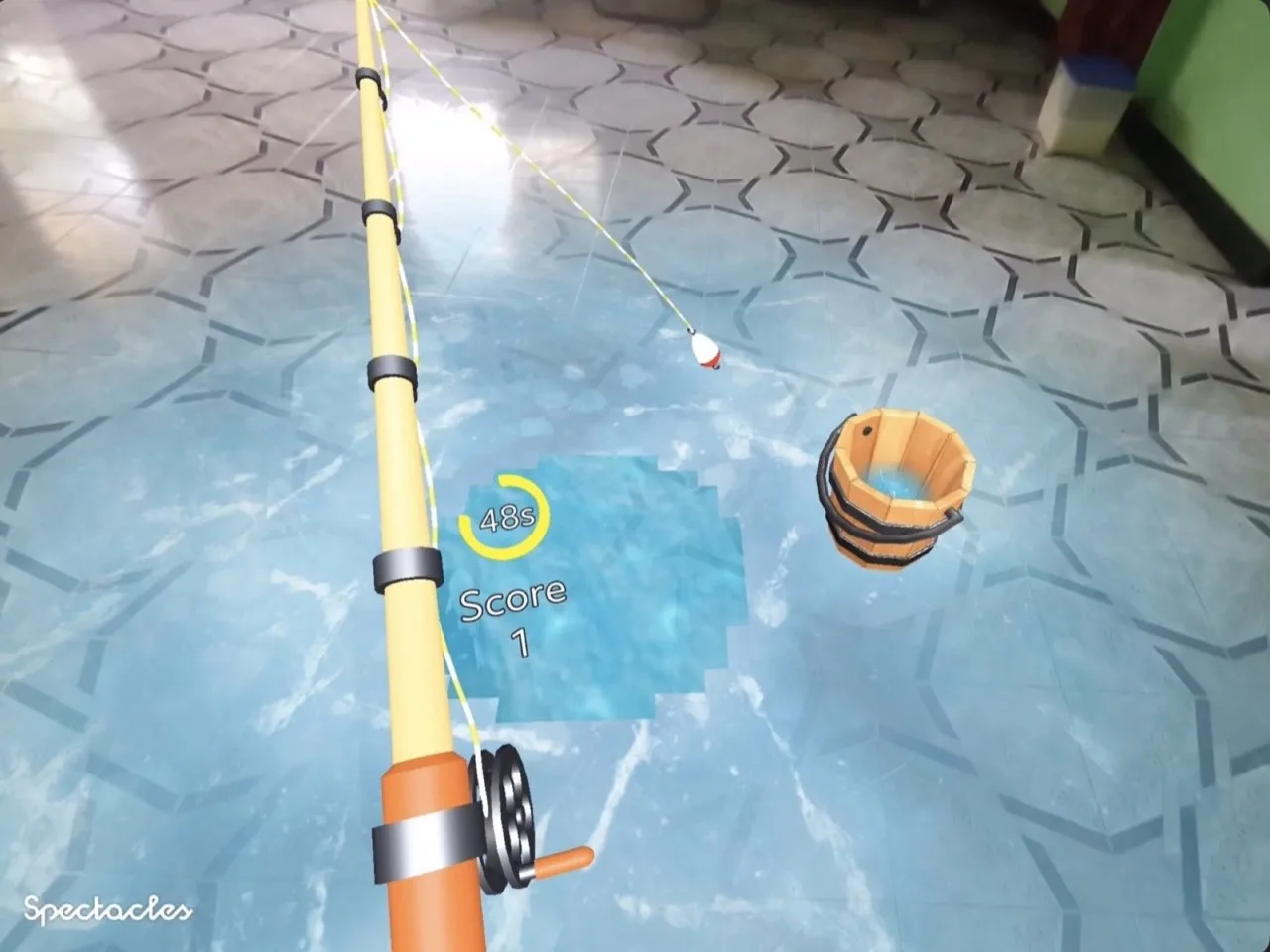
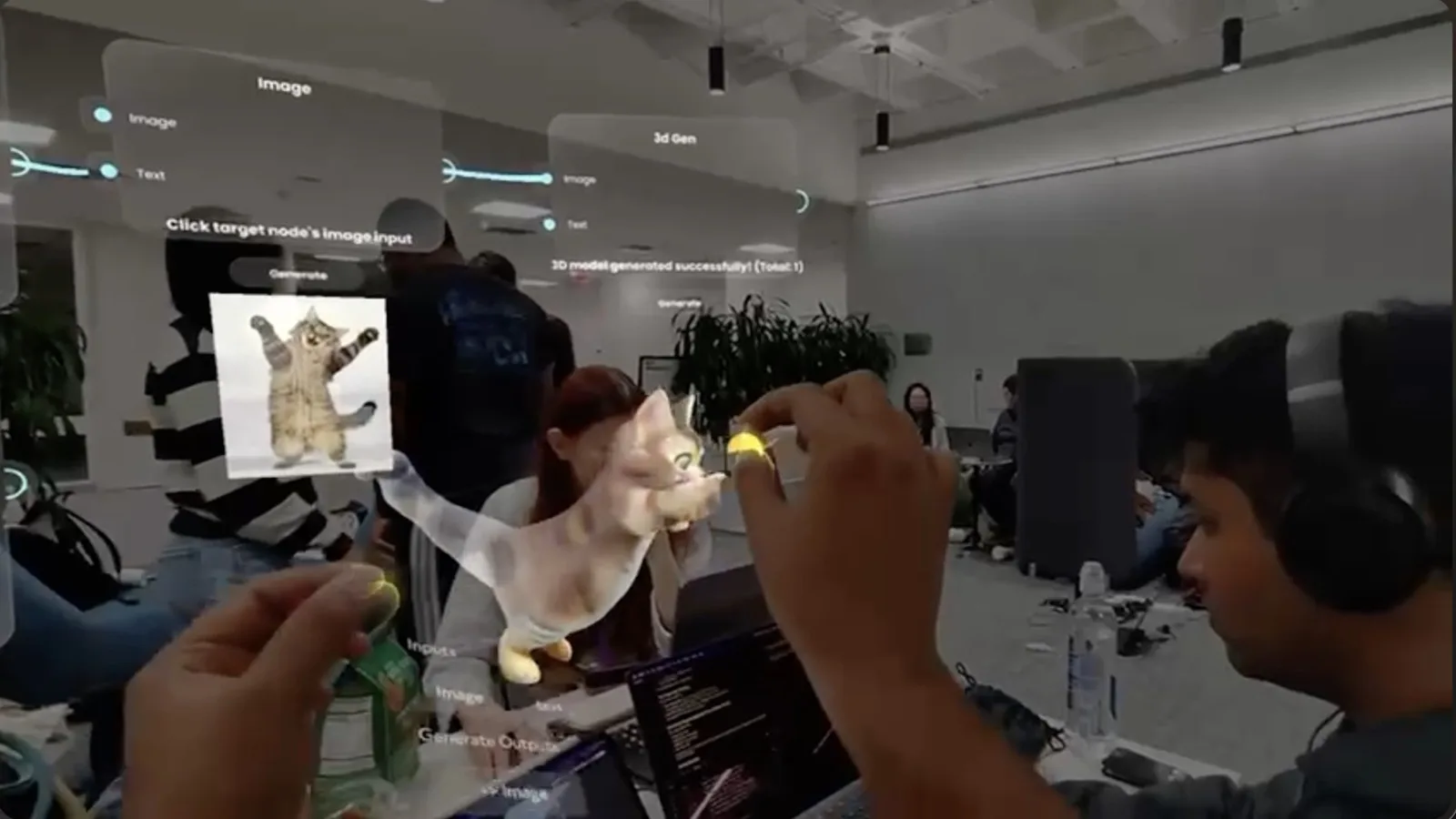
We have built on both sides. Social AR campaigns through Snapchat, Instagram, and TikTok — over 1.5 billion impressions across client work. Smart glasses activations on Snap Spectacles — from competitive AR games to spatial AI tools that won at MIT Reality Hack 2026. This article is not a pitch for either format. It is a practical breakdown to help you make the right call.
Aggregated across 300+ campaigns, 14 markets, 6 years of studio work.
What phone AR does well
Phone AR runs on billions of devices. No hardware to source, charge, or manage. The audience already has the platform in their pocket and already knows how to use it.
Social AR on Snapchat, Instagram, and TikTok distributes natively inside the apps where people already spend time. A well-built Snapchat lens reaches users who were never looking for your campaign. A TikTok effect rides the platform's own distribution mechanics. The reach ceiling is enormous, and the friction for the audience is close to zero: point the camera, activate the filter, share.
Phone AR works best for:
- Top-of-funnel awareness campaigns where scale is the primary metric
- Face filters, virtual try-on, and selfie-native experiences
- Viral social moments designed to travel beyond the original audience
- Campaigns where the audience is dispersed and not physically co-located
- Driving traffic to an event, product page, or further campaign touchpoint
The honest limitations: the phone is always in the hand. One hand is occupied. The camera typically faces the wearer (selfie context), which shapes what kinds of experiences are possible. The experience happens on a screen held at arm's length, not in the world around the user.
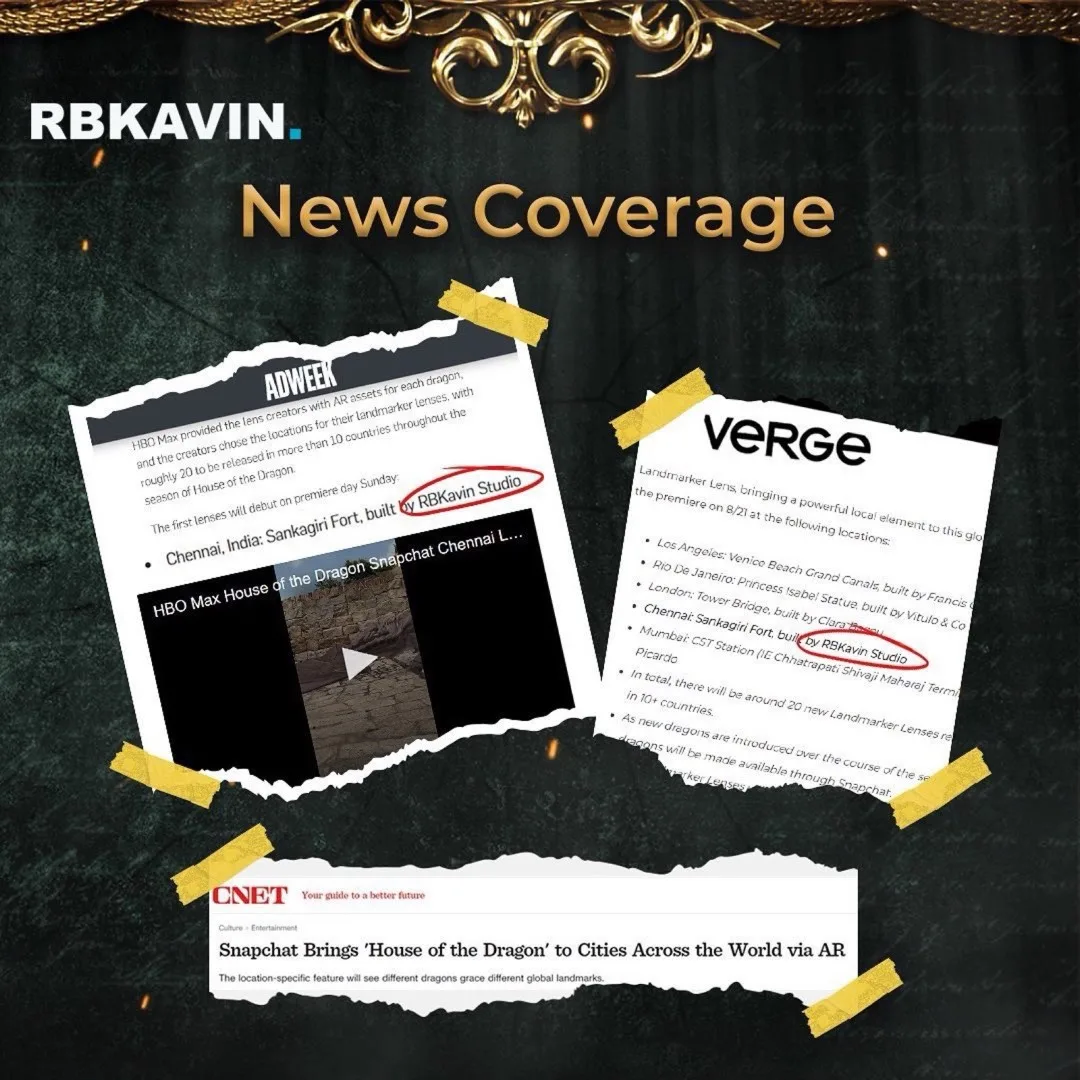
For a real example at scale, the House of the Dragon Snap Map AR activation placed a discoverable dragon across key locations for a global audience. Every phone in a defined area could find and interact with it. That is phone AR at its most effective: reach and distribution that no hardware-dependent format can match.
What smart glasses do well
Smart glasses place digital content in the wearer's field of view, not on a screen they are holding. The hands are free. The experience happens in the physical space around the person, not beside it.
This is a genuinely different relationship with the content. When a product appears to float above a real surface, when a game object is spatially anchored to the floor of an activation zone, when information appears exactly where the wearer is looking without them touching anything — those are moments that a phone cannot replicate, not because the phone lacks the camera or the processor, but because the phone always sits between the user and the world.
Smart glasses work best for:
- Live events, brand activations, and trade shows where the audience is physically present
- Product reveals where spatial presence is the point
- Competitive activations and games where the crowd watching is as important as the person wearing
- Premium or VIP moments that need to feel exclusive and unrepeatable
- Hands-free try-on where phone-held AR creates awkward friction
The honest limitations: device count is finite. You need to source, charge, and manage the hardware. The per-activation audience is smaller than a social campaign. The cost per experience is higher. And the content stays in the room — it does not distribute itself through social platforms the way a Snapchat lens does.
Platform context: Snap Spectacles has a full waveguide display and a spatial SDK built for placing content in the physical world. Meta Ray-Ban Display is camera-forward and better suited to content capture and social output. The platform should follow the format, not the other way around.
Three questions that decide the format
Skip the features comparison. Answer these three questions about your brief and the format becomes obvious.
Where is your audience?
If the audience is on their phones — scrolling Snapchat, TikTok, or Instagram — phone AR is the right format. You meet them where they already are, on a device they already have, inside an app they are already using. If the audience is physically present at an event, a venue, or a defined activation space, smart glasses belong in the room with them. The format follows the audience's context, not the other way around.
What is the goal?
Mass reach and social impressions: phone AR. The platform distribution mechanics exist for this purpose and they work at a scale smart glasses cannot match. Memorable in-person moment, product interaction, dwell time at a stand, or an experience the attendee talks about afterward: smart glasses. The goal is not interchangeable between the two formats. Define the campaign goal first and the format selection becomes straightforward.
What is the budget?
A well-executed Snapchat lens starts from around $15,000 in production. Smart glasses activations on Snap Spectacles start from around $25,000. Both require production budget for design, development, and testing. Smart glasses add hardware logistics costs — device sourcing, charging, on-site management — that phone AR does not require. Neither format is inherently expensive. The costs scale with ambition and complexity, not with the format choice itself.
Where they work together
The strongest brand campaigns we see are not choosing between the two formats. They are using both at different stages of the same campaign.
Social AR builds awareness before the event. A Snapchat lens teases a product launch, drives traffic to a signup page, and puts the brand's visual world on millions of phones before anyone has stepped through a door. At the event itself, smart glasses deliver the premium activation: a spatial reveal, a competitive game, a hands-free moment that the room talks about. The phone lens is the before and the after. The glasses are the moment itself.
A practical example: a product launch campaign could run a Snapchat lens in the week before the event, letting anyone try a teaser of the product experience on their phone. At the launch, Snap Spectacles at the activation zone deliver the full reveal — the product appearing in physical space in a way the lens could only hint at. After the event, the social content from the activation travels back out through phone-based sharing.


The phone lens drives the audience to the moment. The glasses make the moment worth attending. The two formats are not competitors in this model — they are consecutive layers of the same campaign.
The easyJet AR try-on campaign is a useful reference point for how phone-based AR drives real numbers at scale: 400,000 impressions and 45,000 shares from a body-tracked try-on built for social AR. That same body-tracking capability runs in smart glasses as a hands-free experience at a live event. Same technology, different format, different audience context, different campaign role.
For live demos of what both formats look like in practice, the studio's WebAR portal at ar.rbkavin.studio shows the kinds of real-time visual layers that translate across both phone and glasses experiences. For the narrower question of which format converts better specifically at a live event, see wearable AR vs phone AR at live events.
Frequently asked questions
Is smart glasses AR more expensive than phone AR?
For production, smart glasses activations typically start from $25,000 and phone AR campaigns from $15,000. But the cost comparison is not just about the production fee. Smart glasses activations add hardware logistics: sourcing, charging, managing, and insuring the devices for the event. Phone AR has no hardware cost because the audience brings their own devices. The relevant comparison is cost per impression versus cost per in-person moment. Phone AR delivers scale at a lower cost-per-impression. Smart glasses deliver a more memorable activation per person, but the audience is smaller and the per-experience cost is higher. Neither is the expensive option in absolute terms: it depends what outcome you are buying.
Can I run a Snapchat lens AND a Spectacles activation for the same campaign?
Yes, and the best campaigns often do. The two formats work at different stages and in different contexts. A Snapchat lens builds awareness and drives people toward the event or activation. Snap Spectacles at the event delivers the premium in-person moment. The creative can be connected — the same visual world, the same characters, the same product reveal — running first on the lens and then in physical space through the glasses. The key is treating them as one campaign with two channels, not as two separate activations. Budget and production planning needs to account for both from the start.
Which format generates more social content?
Phone AR generates more social content at volume because sharing is built into the platforms it runs on. A Snapchat lens or Instagram filter is designed to be shared from inside the app. Smart glasses activations generate less volume but often higher-quality content: POV footage from the glasses that looks different from phone video, or social posts from people describing the physical experience. If the campaign goal is volume of social impressions, phone AR wins. If the goal is the kind of genuine reaction content that spreads because it looks extraordinary, smart glasses activations have an edge. The most effective approach is both: phone AR drives the broader conversation and smart glasses provide the remarkable content that seeds it.
What is the minimum budget for a smart glasses activation?
Production for a focused smart glasses activation on Snap Spectacles starts at around $25,000 for a well-scoped format like a spatial game or a basic spatial reveal. More complex builds — hands-free try-on with bespoke 3D product assets, or a spatial reveal with high-fidelity content — run from $40,000 to $60,000 in production cost. Hardware hire for the event day is separate and depends on the number of units and the hire period. Brands who have run one activation typically find the second runs faster and at lower cost because the environment mapping, asset pipeline, and operational process are already established.
Insights newsletter
Smart glasses, AR campaigns, spatial computing.
Straight to your inbox. No noise.
SubscribeNot sure which format fits your brief?
Share what you are planning and we will tell you which format — or which combination — gives you the best outcome.
Start a project