June 2026 update: Snap renamed Spectacles to Specs and launched a consumer product at AWE 2026 on 16 June 2026. Pricing is $2,195 with a Fall 2026 ship date. This article has been updated to reflect the new hardware, naming, and what the shift means for brand briefs. See the full launch breakdown here.
Every few months a brand team arrives in a briefing room with a version of the same question: Meta Ray-Ban or Snap Specs? The question sounds like a comparison. It is not. These are different products designed for different purposes, and choosing the wrong one does not produce a mediocre result. It produces a campaign that does not work at all.
The fundamental difference
Meta Ray-Ban Gen 2 is a camera and audio platform you wear. There is no AR display. The wearer sees the world normally. The glasses capture what you see, stream to Instagram or Facebook Live, and put Meta AI in your ear via open-ear speakers. The brief it answers: first-person content creation, ambient AI assistance, mass social reach. Price: $299-329. Over 7 million units sold by end of 2025.
Snap Specs is a spatial AR display you wear. The wearer sees digital content layered over the real world through binocular waveguide lenses with a 51-degree field of view. The brief it answers: visible AR overlays, world-anchored objects, multi-user spatial experiences. Price: $2,195. Consumer preorder now open, ships Fall 2026.
Put directly: Meta Ray-Ban is a camera that happens to be glasses. Snap Specs is a display that happens to be glasses. If your brief requires the wearer to see AR content, only one of these products does that. If your brief requires reach into an existing consumer base at scale, only one of these products does that.
There is also a third product worth knowing: the Meta Ray-Ban Display at $799, which adds a monocular AR display (right eye only, 20-degree FOV) to the Ray-Ban form factor. That is a separate comparison.
Side by side
| Meta Ray-Ban Gen 2 | Snap Specs | |
|---|---|---|
| AR display | None. The wearer sees the world normally. (Display model: $799, monocular, 20° FOV.) | Yes. Binocular AR display, 51° FOV, LCoS technology, 16 million colours. |
| Price | $299-329 (Gen 2). $799 (Display model). | $2,195. Preorder open; ships Fall 2026. |
| Consumer availability | Yes, at retail. 7M+ units sold in 2025. | Consumer product launched June 2026. Preorder open, not yet shipping. |
| Battery | 8 hours mixed-use. 30 hours total with case. | 4 hours mixed-use. Case adds 4 charges (20 hours total). Charges while wearing. |
| Primary use | Content capture, AI audio, social livestreaming. | Spatial AR experiences, world tracking, hand interaction. |
| Build tools | Meta Wearables Device Access Toolkit. | Lens Studio (TypeScript/JS). 400,000+ developer community. All 4M+ Snap Lenses run at launch. |
| Audience reach | Mass consumer. Anyone who owns the glasses can participate. | Premium. At $2,195 per unit, your audience is whoever you equip at the venue. |
| Latency | Not published. | 7ms motion-to-photon. |
When to choose Meta Ray-Ban
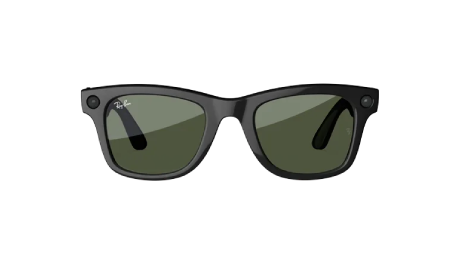
Choose Meta Ray-Ban when the creative output is content, not a visible experience for the wearer.
- Creator and influencer campaigns. First-person POV content from events, product reveals, or activations. The glasses remove the phone from the shot and make footage feel genuinely immersive.
- Livestream activations. Direct integration with Instagram Live and Facebook Live. An athlete, creator, or brand ambassador broadcasts their perspective in real time with no handheld rig.
- AI-guided audio experiences. "Hey Meta" can describe surroundings, translate languages, navigate, and respond to questions. Tours, museum activations, and location-based brand experiences can be built around this.
- Mass consumer reach. If you want consumers to participate from their own devices, Meta Ray-Ban is the only smart glasses platform where that math works at any meaningful scale.
- Talent-led campaigns. The NIL Club program and the Oakley Meta Super Bowl spot (directed by Spike Lee, cast: Marshawn Lynch, iShowSpeed, Akshay Bhatia, Kate Courtney, Sky Brown, Sunny Choi, Feb 2026) show how the platform scales with talent partnerships across sport and culture.
When to choose Snap Specs
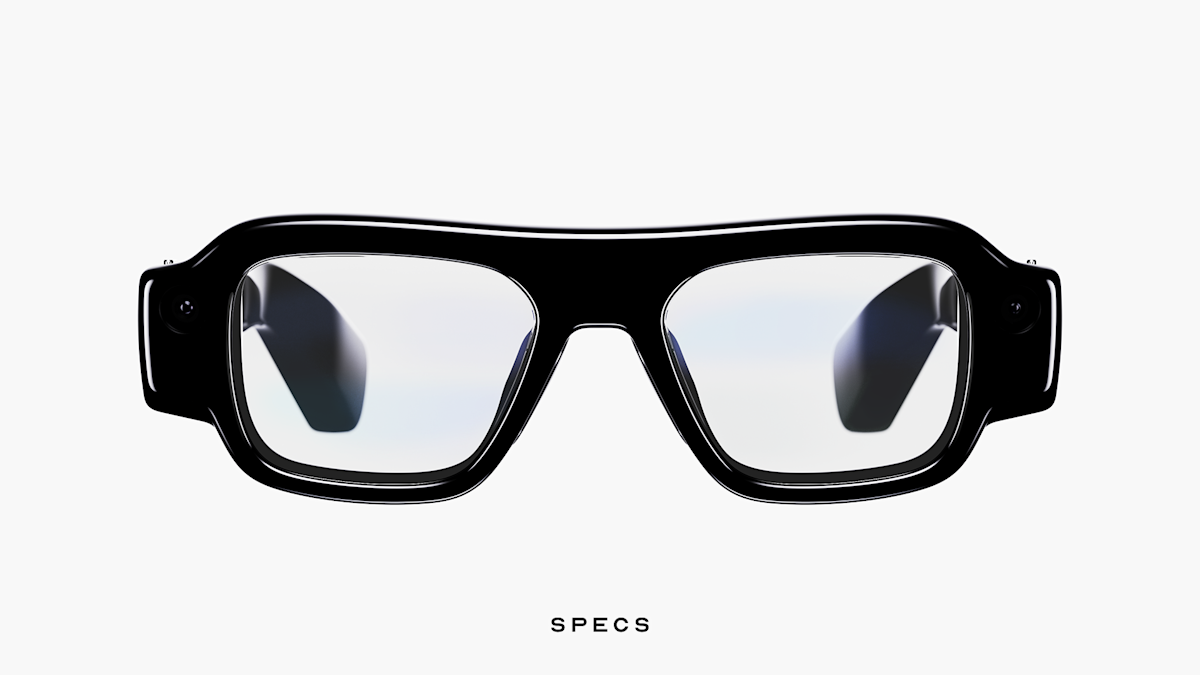
Choose Snap Specs when the visual overlay is the product. When you need the wearer to see something that is not there.
- True AR overlays. Spatial objects, product visualisations, characters, or information layers that appear in the physical world. This is only possible on Specs — not on Meta Ray-Ban Gen 2.
- Spatial computing experiences. World-anchored content, 6DoF tracking, two-hand tracking, and persistent spatial anchors at centimetre accuracy. 7ms motion-to-photon latency means the world feels real, not lagged.
- Shared multi-user experiences. Up to three users can see the same AR content simultaneously. Multiplayer activations, brand games, and social spatial moments are possible in a way phone AR cannot replicate.
- Controlled event installations. Festival activations, product launches, retail demos, press and creator days. At 4 hours of battery per charge, device rotation is far more manageable than the old dev kit's 30 minutes.
- All-day events. The charging case adds four full charges, giving you 20 hours of battery across a day. This is a fundamental operational improvement over the developer Spectacles.
- Developer ecosystem. Lens Studio (TypeScript/JS), 400,000 developers, and all 4 million+ existing Snap Lenses run on Specs at launch. LEGO BRICKTACULAR and ILM's Star Wars Holocron Histories were built for the dev hardware and carry over.
For an example of what Specs-class hardware produces in a controlled creative context: noodle, our MIT Reality Hack 2026 project, won the Snap category. Restraint in spatial UI design produces something environmental rather than screen-like.
When to use both
Some activations benefit from running both platforms in parallel, with each doing what it is best at.
A worked example
A brand launches a new product at a flagship event. Twenty guests wear Snap Specs and experience a spatial AR story inside the venue: the product appears in their field of view, responds to their hands, and is anchored to the physical space. At the same time, five creators wearing Meta Ray-Ban glasses capture the whole event in first-person and livestream to their combined Instagram audience. The Specs experience is the premium in-room layer. The Meta Ray-Ban content is the campaign asset that reaches everyone outside the room.
These are different outputs for different audiences. Plan them as separate briefs running in the same physical space.
The reach trade-off
This is the most important thing to be honest about when making the decision.
Meta Ray-Ban: over 7 million units sold in 2025. Available at retail from $299. Any consumer who owns the glasses is a potential participant. If your campaign scales on consumer participation, this is the only smart glasses platform where that math currently works.
Snap Specs: a consumer product at a premium price point. At $2,195, Specs will not achieve Meta Ray-Ban's install base in the near term. Your audience at an activation is the number of glasses you bring into the room. That audience is curated and high-quality, but the amplification layer matters: documentation content, press coverage, social sharing from attendees. The depth of experience per person is unmatched. The width of reach is not.
Neither answer is wrong. They are different audience models. Snap Specs buys depth of experience per person. Meta Ray-Ban buys width of reach. Know which one your brief is actually measuring before you commit to a platform.
Brief for Meta Ray-Ban when
- You need mass consumer reach
- The creative is content, not an overlay
- Livestreaming is part of the activation
- Talent-led or influencer campaign
- AI-guided audio is the experience
- Budget is per-consumer, not per-device
Brief for Snap Specs when
- The wearer must see AR content
- Spatial anchoring or world tracking required
- Multi-user shared experience needed
- Controlled event or installation context
- Hand interaction is part of the design
- Premium experience per person is the KPI
Frequently asked questions
Are Meta Ray-Ban and Snap Specs the same kind of product?
No. Meta Ray-Ban Gen 2 is a camera and AI audio platform with no AR display. Snap Specs is a true AR display product with a 51-degree binocular field of view, world tracking, hand tracking, and persistent spatial overlays. The brief, tools, and creative output are completely different for each platform.
How much do Snap Specs cost compared to Meta Ray-Ban?
Snap Specs launched at $2,195 in June 2026, with preorders open and a Fall 2026 ship date. Meta Ray-Ban Gen 2 retails at $299-329. Meta also makes a Ray-Ban Display model at $799 with a monocular AR display. Snap Specs is a premium display product; Meta Ray-Ban is a mass consumer product. The price gap reflects the difference in what each product actually does.
What is the difference between Snap Spectacles and Snap Specs?
Snap Spectacles was the developer kit name, available only to approved developers on a $99/month subscription with around 30 minutes of active battery life. Snap Specs is the consumer product launched at AWE 2026 in June 2026, at $2,195, with 4 hours of mixed-use battery life. The core hardware architecture is similar, but Specs is designed for consumer ownership and ships with the full Snap Lens ecosystem from day one.
Which smart glasses platform has better reach for brand campaigns?
Meta Ray-Ban has significantly more reach. Over 7 million units sold by end of 2025. Available at retail. Any consumer who owns the glasses can participate. Snap Specs at $2,195 is not a mass-market product, so your audience at any activation is the number of glasses you bring into the venue. That audience is curated and high-quality, but it does not scale the way Meta Ray-Ban does.
Which platform should I brief a developer to build for?
Depends on the output. If the creative requires visible AR content the wearer sees, brief for Snap Specs. If the creative is about content capture, social reach, AI-guided audio, or livestreaming at scale, brief for Meta Ray-Ban. For events where you want a premium visual experience in a controlled space, Snap Specs. For campaigns that need consumers to participate from their own devices, Meta Ray-Ban.
Insights newsletter
Smart glasses, AR campaigns, spatial computing.
Straight to your inbox. No noise.
SubscribeNot sure which platform fits your brief?
We have built for both. Fifteen minutes with someone who has shipped on Snap Specs and Meta Ray-Ban is worth more than another hour of reading specs.
Replies within 48 hours, straight from the studio.
Talk to us about your brief