Why the format question matters first
Event agencies and brand managers asking about wearable AR for events tend to open with the same question: "what can smart glasses do?" It is the wrong starting point. The question that actually determines whether an activation works is: what do you need the audience to feel, and when exactly do you need them to feel it?
Smart glasses sit at a live event differently from every other AR format. The wearer's hands are free. They are looking at the physical world, not a screen. The experience is happening in the space, not beside it. That combination is specific and powerful, but only if the format matches the moment you are designing for.
Below are five formats that consistently deliver. Each one is built around a different brand goal and a different audience moment. Pick the one that matches what your event actually needs.
Format 1: the spatial reveal
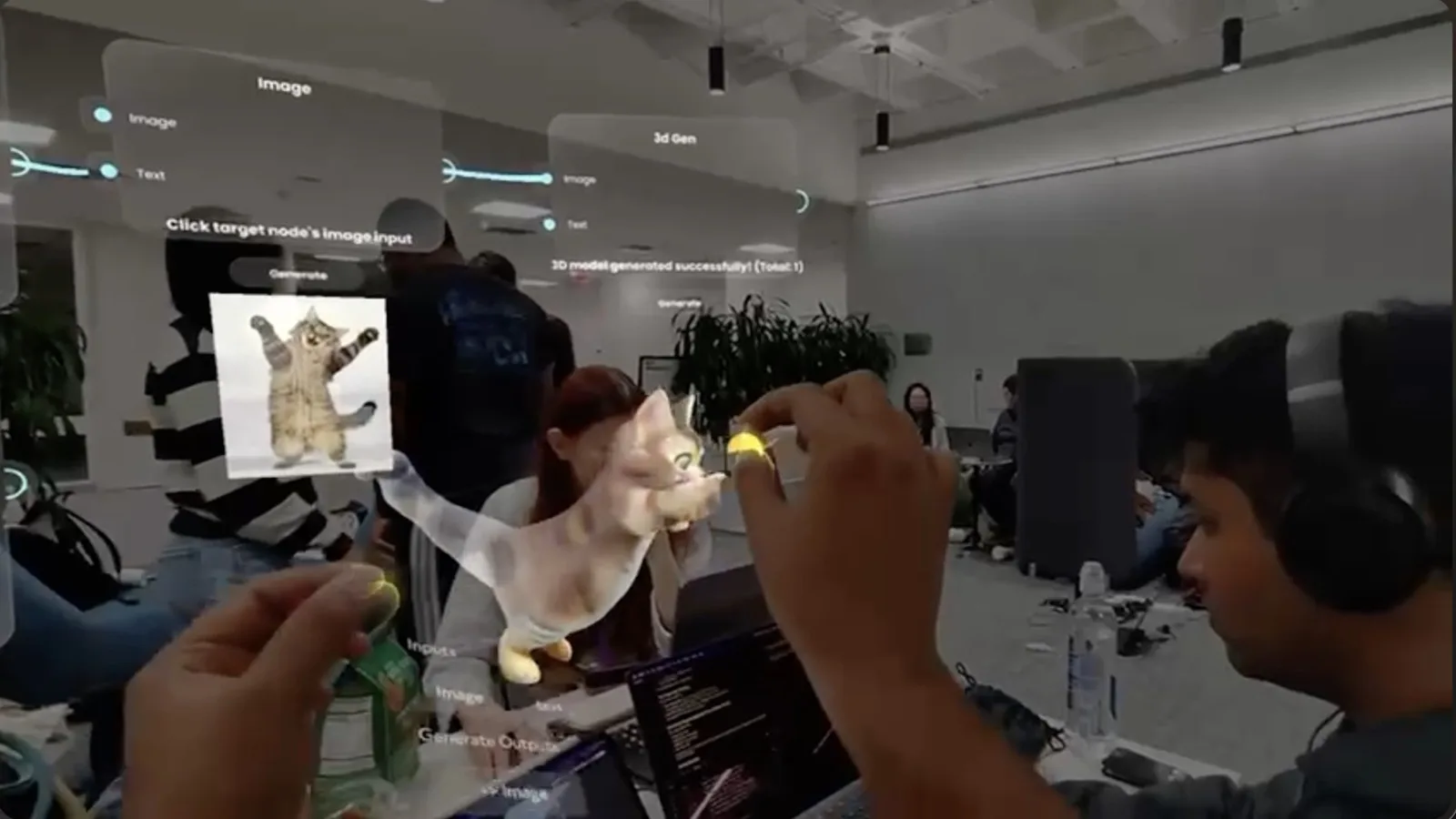
A product launch moment where something unexpected appears in the wearer's field of view at a precise cue. The product floats above a physical surface. A brand story plays out on a real object. A hidden layer of the space unlocks as the wearer moves through a defined area. The reveal is designed to feel like the physical environment is changing, not like someone has handed you a screen.
What the audience experiences: a moment that only exists for them, in that space, at that time. The product is not on a plinth or a screen. It is in the room with them, behaving as if it belongs there. That anchoring to real space is what phones and tablets cannot replicate. The wearer looks at a physical object and sees more than is physically there.
What brand goal it serves: launch memorability. A spatial reveal creates a specific, singular memory tied to the product. Attendees do not remember "the AR thing." They remember standing in a room and watching a product appear in front of them. That specificity is worth more than a general "immersive experience" label.
Format 2: the game
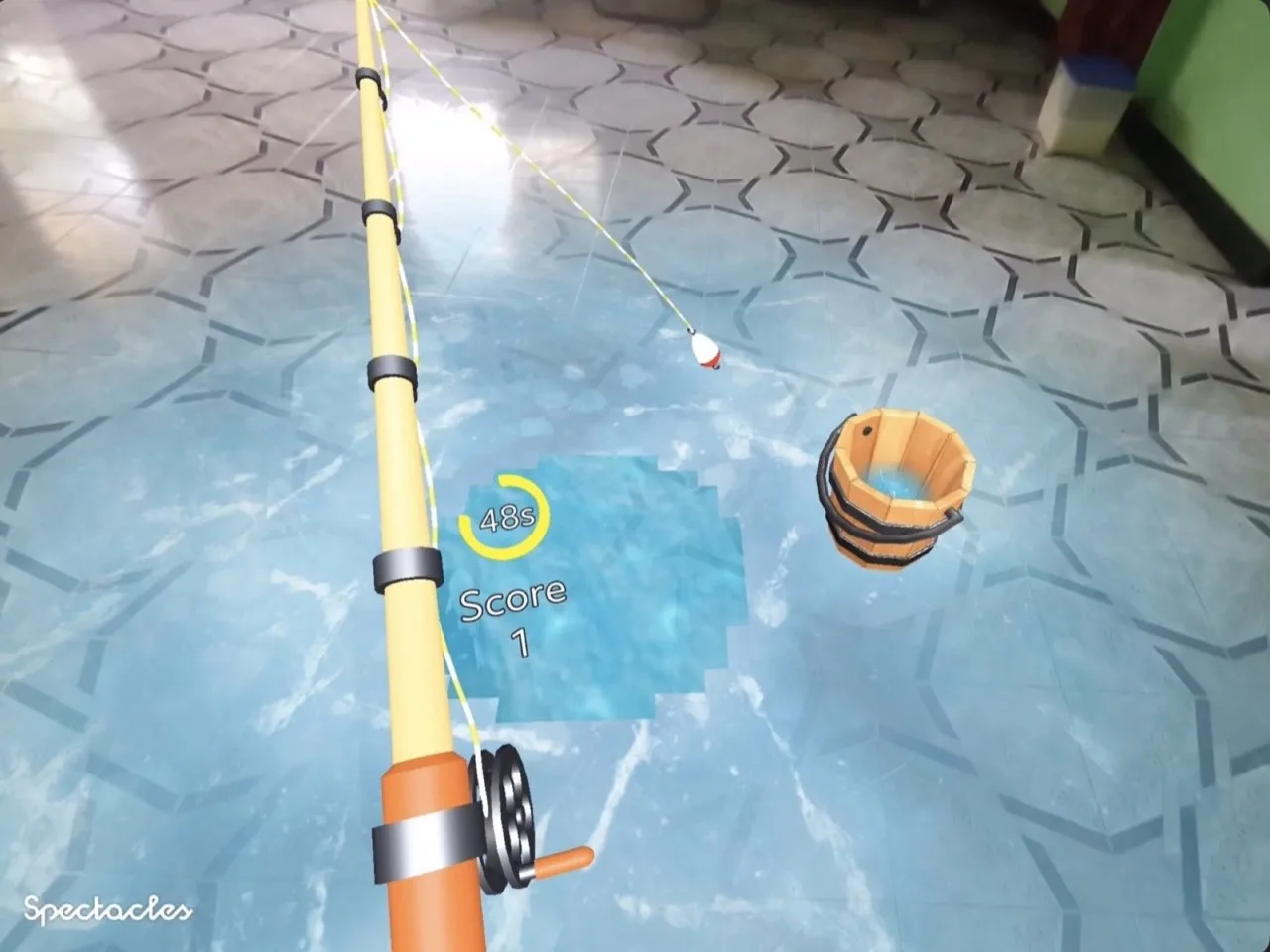
A competitive AR activation where audience members take turns wearing the glasses and playing against each other: catching, shooting, building, or scoring in a mixed-reality space. A leaderboard displays on a screen visible to the crowd outside the activation zone. The competitive mechanic is the thing that keeps people watching even when they are not wearing the glasses.
What the audience experiences: participation that does not require a screen. The wearer is physically moving, reacting to spatial objects that only they can see, while a crowd watches their behaviour and the score on a shared display. The audience outside the experience is almost as engaged as the person wearing the glasses, because they can see the leaderboard and are waiting for their turn. Dwell time at the stand increases significantly when there is a live scoreboard to watch.
What brand goal it serves: stand energy and dwell time. At a trade show or festival, the biggest problem is not awareness. It is time-on-stand. A game mechanic with a visible leaderboard solves this directly. People queue. They compete. They come back. The stand becomes a destination rather than a passing point, and social sharing happens naturally because the person who just beat the leaderboard wants to tell someone.
This format pairs well with a simple brand integration: the game objects carry the product or brand mark. The mechanics are fun first; the brand layer is visible but not intrusive.
Format 3: the hands-free try-on
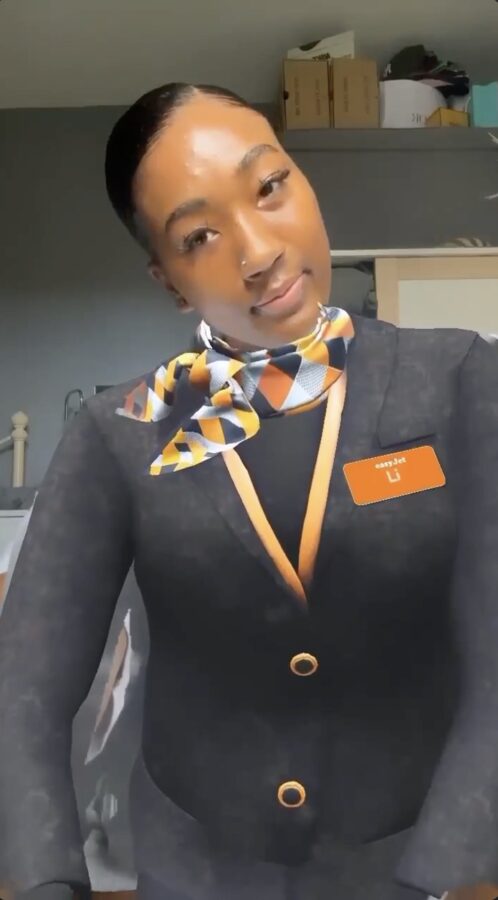
Fashion or product try-on without a phone in your hand. The wearer looks at themselves in a mirror or a surface and sees the product on their body in real time: sunglasses, a jacket, a piece of jewellery, a cosmetic product. Both hands stay free throughout. The experience of seeing yourself wearing something changes when you are not holding a device at the same time.
What the audience experiences: try-on that feels like actually trying something on, rather than holding up a screen. Phone-based try-on is always slightly awkward because the device is part of the action. When the experience is in the glasses, the wearer can turn, adjust, see the product from different angles, and interact with it without the interruption of a camera held at arm's length. The experience feels closer to standing in front of a fitting room mirror than to using a filter.
What brand goal it serves: product consideration at the point of experience. Try-on activations work because product contact drives intent. The wearer has a direct, physical experience of the product on their body. For fashion and beauty brands, that moment of "I can see what this looks like on me" accelerates decision-making in a way that static display cannot. The hands-free element specifically removes the last piece of friction that makes phone try-on feel like a demo rather than a real interaction.
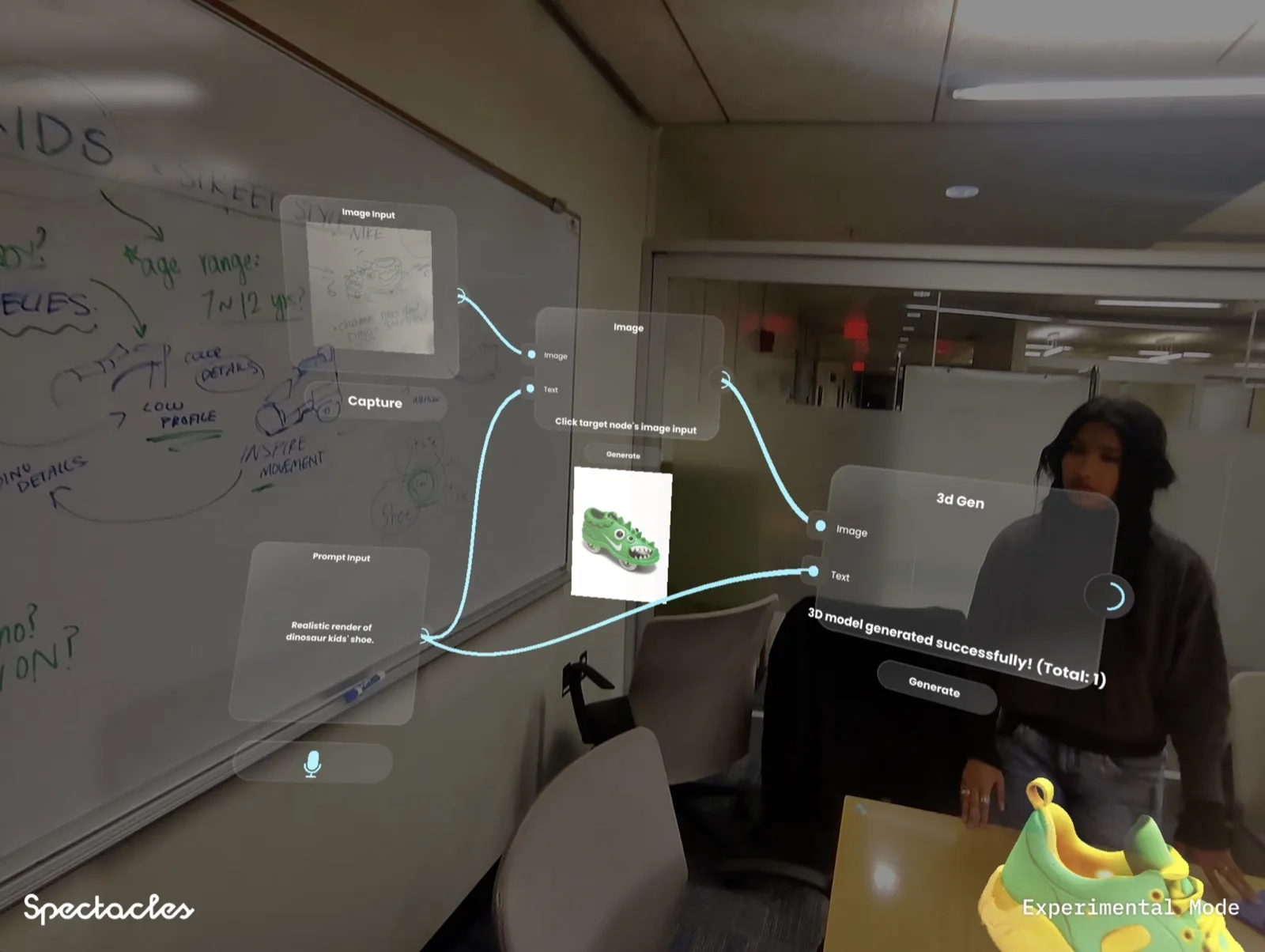
For deeper reading on what hands-free builds look like in practice, the Noodle project on Snap Spectacles is a useful reference point: a spatial AI workbench built natively for hands-free Spectacles interaction, winner at MIT Reality Hack 2026.
Format 4: the spatial guide
Contextual information layered onto the physical space. Wayfinding arrows that appear at intersections. Product details that surface when the wearer looks at a specific shelf or display. Brand storytelling that plays out on a physical landmark or installation. The spatial guide turns the environment itself into the content delivery mechanism.
What the audience experiences: the space becoming legible in a way it was not before. At a large trade show, the spatial guide removes the cognitive load of navigating a floor plan on a phone while also looking at the environment. At a brand installation, it adds a layer of narrative that only exists through the glasses. The wearer is not asked to pause and interact with a screen. The interaction happens while they are already moving through the space, which is a fundamentally different quality of attention.
What brand goal it serves: depth of engagement at scale. Spatial guides work for events where the audience is large, the environment is complex, and a single high-intensity moment like a reveal is not practical across thousands of attendees. The format adds value across the whole event rather than for a small number of people in a dedicated zone. It also reinforces brand presence at every point in the space where a content layer appears, rather than at a single activation stand.
This format draws on the same capability set as the spatial AR work across the studio's client campaigns. For a detailed example of how spatial layers were used to extend brand presence across a defined physical territory, the HBO Snap Map AR activation is a relevant case study in spatial anchoring at scale.
The spatial guide also extends to multilingual events and museum-style experiences: smart glasses can layer translated subtitles or language-specific tour content onto the same spatial framework. For a full breakdown of translation pipelines, guided tour triggers, and the logistics of running glasses as a translation service at a live conference, see smart glasses at events: translation, guided tours, and live activations.
Format 5: the content capture
Wearers create shareable content through the glasses: POV footage, mixed-reality moments, branded overlays in their field of view. The experience is designed to produce an output that goes on social. The wearer is not just an audience member. They become the camera operator, the subject, and the distributor, all at once.
What the audience experiences: a first-person perspective on the event that no one else at the event can replicate with a phone. The POV footage from smart glasses looks different from phone video. It is head-height, hands-free, and stabilised in a way that captures the feeling of being at an event rather than documenting it from the side. When branded overlays appear in the field of view and make it into the video, the content carries the activation's creative layer out through the wearer's own social channels.
What brand goal it serves: earned social reach from within the event itself. Content capture activations generate social distribution as a by-product of the experience rather than as an ask. Wearers share the footage because it looks good and feels exclusive, not because they were directed to. The branded overlay or mixed-reality moment in the footage is the mechanism that ties the distribution back to the campaign. You can explore the studio's live WebAR demos at ar.rbkavin.studio to see the kinds of real-time visual layers that translate well to this format.
This format works particularly well at music events and fan experiences because the content captures something the audience genuinely wants to keep: the feeling of being there. The brand layer enhances the memory rather than interrupting it.
Choosing the right format for your event
These five formats are not mutually exclusive. Large events often run two in parallel: a spatial guide across the floor and a game or reveal at a focused activation stand. But every brief should start with one clear primary format, because the production, logistics, and staffing requirements are different for each one.
The fastest way to narrow down which format fits is to answer three questions. First: how many people need to have the experience? Reveals and games work best for a smaller number of wearers with high intensity. A spatial guide works at scale. Second: is the brand goal about social reach or about a specific in-room moment? Content capture is the format for reach. Spatial reveal is the format for a moment that lives in the room and in the attendee's memory. Third: what does the physical space allow? A spatial guide needs a large, mappable environment. A game needs a defined play zone. A try-on needs a mirror or reflective surface.
If the three questions do not resolve to an obvious answer, that is useful information: it means the brief is not specific enough yet, and adding more budget will not solve that. The format needs to be locked before production starts.
For a broader view of what smart glasses are capable of in brand contexts, the wearables pillar page covers the full scope of what we build, with links to relevant case studies and platform notes.
What to expect from production
A realistic timeline from confirmed brief to a tested, deployable experience is 8 to 12 weeks. The breakdown: two to three weeks for environment scanning and spatial design, three to four weeks for build and iteration, and two weeks of device testing in conditions that match the activation venue.
The two weeks of on-device testing is the phase that gets cut when timelines compress, and it is the phase that protects the activation. Smart glasses experiences are harder to fix on the day than web or phone AR. Problems with spatial anchors, hand tracking confidence, or session stability show up on-device, not in a browser preview. Testing in the actual venue space is strongly preferable over testing in a studio environment, even if only for a single day.
Production costs for a focused activation typically run $25,000 to $60,000 depending on format and content complexity. A spatial guide or basic game sits toward the lower end. A hands-free try-on with bespoke 3D product assets, or a spatial reveal with high-fidelity 3D content, sits higher. These figures cover production only: hardware hire, on-site staff, and logistics are additional and depend on the scale of the event.
Frequently asked questions
What smart glasses platform is best for live event activations?
Snap Spectacles is the platform we use most for live event activations because it has a full waveguide display and a mature developer SDK. That means you can place spatial objects in the physical environment, track surfaces and planes, and deliver a genuine AR layer rather than a simple heads-up overlay. For activations where the main output is social content rather than a shared visual layer, Meta Ray-Ban is often the better fit because of its first-person camera and creator distribution. The format you choose should determine the platform, not the other way around.
How many pairs of smart glasses do you need for an event activation?
For a standard brand activation, four to six pairs of Spectacles is a reliable starting point for events with up to 500 attendees in the activation zone. That number assumes a rotation model where each session runs three to five minutes and a staff member manages handoffs. For larger throughput, eight to twelve pairs allow multiple simultaneous wearers, which also creates visible social proof in the room. Every unit needs a charged spare battery and a tested fallback state. Never arrive with only one pair.
How long does it take to build a wearable AR activation for an event?
A realistic production timeline from confirmed brief to a tested, deployable experience is 8 to 12 weeks. The breakdown: two to three weeks for environment scanning and spatial design, three to four weeks for build and iteration, and two weeks of device testing in conditions that match the activation venue. Compressed timelines of six weeks are possible for simpler formats like the spatial guide or a basic game, but anything involving precise spatial anchors or bespoke 3D content needs the full timeline. The two weeks of on-device testing is non-negotiable: the problems that surface only on hardware have no fast fix on the day.
What does a wearable AR event activation cost?
Production costs for a focused wearable AR event activation on Snap Spectacles typically run $25,000 to $60,000 depending on the format and content complexity. A spatial guide or basic game sits at the lower end. A spatial reveal with bespoke 3D assets or a hands-free try-on requiring product scans sits higher. Hardware hire for the event day is usually separate and depends on the number of units and hire period. Brands that have run one activation typically find that the second runs faster and at lower cost, because the environment mapping, asset pipeline, and operational process are already established.
Can wearable AR activations work outdoors?
Yes, but outdoor activations need more planning than indoor ones. Variable lighting affects the display visibility of current waveguide glasses, which perform best in shade or indoor conditions. The spatial mapping also needs to be done in conditions as close as possible to the live activation: grass, open ground, and large open-air stages can cause plane detection to drift if the scan was done indoors. For outdoor events, we recommend a site visit for scanning in natural light at a similar time of day to the activation, and testing on-device in the actual space before the event opens. Covered outdoor areas, like pavilions or brand lounges with a defined floor plan, work reliably.
Insights newsletter
Smart glasses, AR campaigns, spatial computing.
Straight to your inbox. No noise.
SubscribePlanning a wearable AR activation for an event?
Tell us about the moment you are designing for and we will tell you which format fits.
Start a project