In short: Vision Pro is a headset you use in a fixed spot, like a chair or a booth. Snap Specs is glasses you wear while moving through the world. Pick based on where the person using it will actually be standing, not on which spec sheet looks more impressive.
Stop comparing spec sheets. Compare rooms.
Both of these are lumped into "AR" and "spatial computing" coverage, and both are genuinely impressive pieces of hardware. Putting them side by side on paper, resolution, chip, field of view, misses the actual decision, because they are not built to be used in the same place.
Vision Pro is a headset. It wraps around your entire head, weighs over 1.3 pounds, and needs an external battery pack connected by a cable. You use it sitting in a chair, standing at a desk, or in a controlled room. It is not designed to be worn while walking down a street.
Snap Specs is glasses. It weighs 132 to 136 grams, close to a normal pair of eyewear, and is designed specifically to be worn out in the world, at an event, at a store, while moving around a room full of other people.
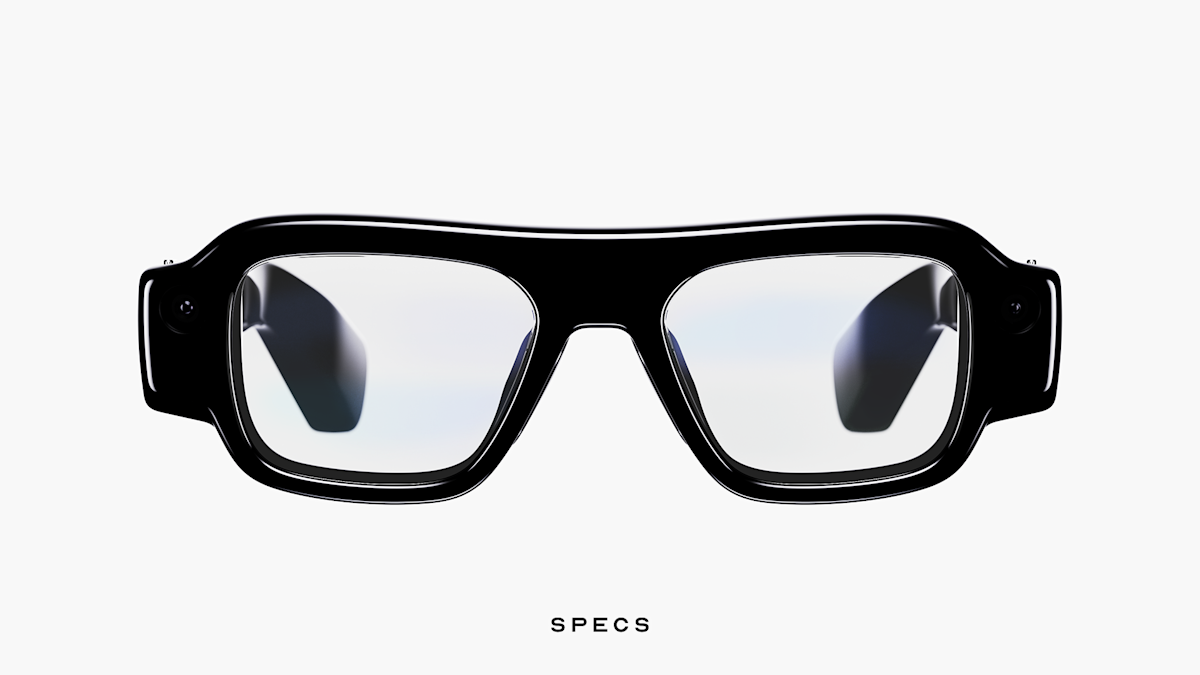
The real question is not "which device is better." It is "where is the person going to be standing when they use it."
What each one actually gets you
| Apple Vision Pro | Snap Specs | |
|---|---|---|
| Form factor | Full headset, external battery, cable | Glasses, self-contained, no cable |
| Weight | Over 1.3 lbs (600g+) | 132 to 136g |
| Used while walking? | Not practically | Yes, designed for it |
| Display | Dual OLED, ~3660x3200 per eye, near-full passthrough | Binocular AR, 51-degree FOV, sees the real world directly through the lens |
| Price (entry tier) | $3,699 (256GB) | $2,195 |
| Best setting | Showroom, booth, seated demo | Live event, retail floor, anywhere people move |
Vision Pro's display is genuinely higher fidelity, closer to looking at a real object than any glasses can currently manage. That fidelity is the reason for the weight and the cable: more processing, more optics, a bigger battery need. Snap Specs gives up some of that visual polish specifically to be light enough and self-contained enough to wear outside.
The plain-English way to decide
If the person will be sitting or standing in one spot, a showroom demo, a flagship store install, a seated product walkthrough, Vision Pro's fidelity is worth the price and the setup. Nobody is walking anywhere, so the headset's limitations do not matter.
If the person will be moving, a festival, a conference floor, a live activation with a crowd, Vision Pro is the wrong tool regardless of budget. It cannot be worn comfortably for more than a few minutes while standing, let alone walking. Snap Specs is built for exactly this setting.
Most brand activations fall into the second category. That is a large part of why Snap Specs, not Vision Pro, shows up more often in event-based AR campaigns, which is covered in more depth in our guide to AR glasses for brand campaigns.
See it instead of imagining it
The fastest way to feel this difference is to try a spatial experience on your phone first. The live WebAR demos at ar.rbkavin.studio show what content anchored in real space feels like without needing either headset. We have shipped work on Snap's glasses platform, including noodle, which won the Snap category at MIT Reality Hack 2026, and cover more of the platform landscape at our wearables page.
Frequently asked questions
What is the actual difference between Apple Vision Pro and Snap Specs?
Vision Pro is a headset: it covers your whole face, blocks most of the outside world, and is built to be used sitting or standing in one spot, like a very advanced monitor. Snap Specs are glasses: lightweight, worn on your face like normal eyewear, and built to be used while walking around outside. Vision Pro trades mobility for visual fidelity. Snap Specs trades some visual fidelity for being wearable in public.
How much do Apple Vision Pro and Snap Specs cost?
Apple Vision Pro starts at $3,699 for the 256GB model, rising to $3,899 for 512GB and $4,199 for 1TB. Snap Specs is $2,195. Vision Pro costs 1.7x more than Snap Specs at the entry tier.
Can you wear Apple Vision Pro outside like glasses?
Not practically. Vision Pro weighs over 1.3 pounds, straps around your entire head, and needs an external battery pack tethered by a cable. It is designed for a chair, a desk, or a controlled room, not for walking down a street or standing at a live event for hours. Snap Specs weighs 132 to 136 grams, closer to a normal pair of glasses, and is built specifically to be worn out in the world.
Which one should a brand build for, Vision Pro or Snap Specs?
Depends on the setting. A showroom, flagship retail install, or a controlled B2B demo where a person sits down for five minutes suits Vision Pro's higher fidelity. A live event, festival, or anywhere the audience needs to move around suits Snap Specs, because Vision Pro cannot be worn comfortably while walking. Most brand activations happen in the second kind of setting.
Insights newsletter
Smart glasses, AR campaigns, spatial computing.
Straight to your inbox. No noise.
SubscribeDeciding between a headset and glasses for a brief?
Tell us where the audience will actually be standing. We'll tell you which platform fits.
Start a project