What they actually show
Both products have AR displays. That is where the similarity ends.
Snap Specs ($2,195, ships Fall 2026)
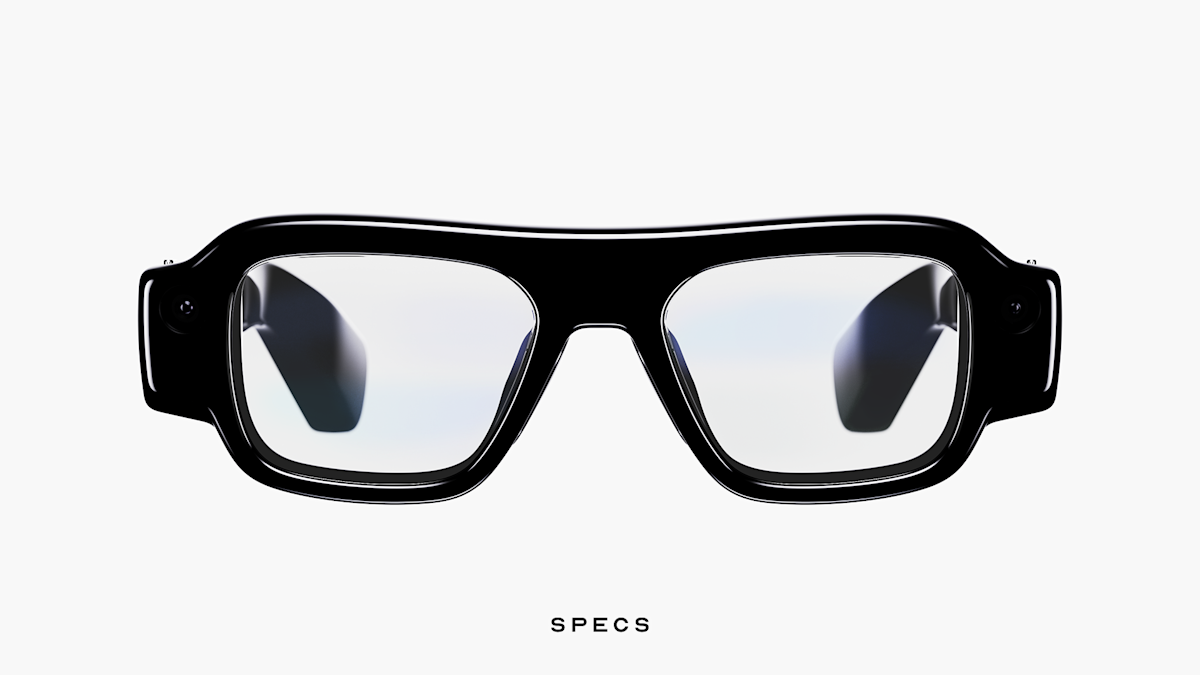
- Binocular AR display: both eyes see the same AR content simultaneously
- 51-degree field of view: closest consumer AR hardware has come to natural human peripheral vision
- LCoS (liquid crystal on silicon) display technology, 16 million colours
- 7ms motion-to-photon latency
- World tracking, hand tracking, and persistent spatial anchors
- The wearer is inside the experience: content fills their vision in both eyes
- All 4 million+ Snap Lenses run at launch
- Preorder open; ships Fall 2026
Meta Ray-Ban Display ($799, available now)
- Monocular display: right eye only
- 20-degree field of view: a small rectangle in one corner of vision
- 600x600 pixel resolution, 30-5,000 nits auto-adjusting brightness, 90Hz display
- The wearer sees notifications, captions, translations, navigation, and AI responses
- Includes Meta Neural Band (sEMG wrist controller) for hands-free input
- Available at Best Buy, LensCrafters, Sunglass Hut, Ray-Ban stores, and Verizon
- Launched September 30, 2025
Snap Specs puts you inside the AR experience. Meta Ray-Ban Display puts information alongside your normal vision. One is spatial computing. The other is a HUD.
Key specs side by side
| Snap Specs | Meta Ray-Ban Display | |
|---|---|---|
| Display type | Binocular AR | Monocular (right eye only) |
| Field of view | 51 degrees | 20 degrees |
| Resolution | Not disclosed (subjectively equivalent to 115-inch TV at 10 feet, per Snap) | 600x600 pixels |
| Brightness | Not officially published | 30-5,000 nits (auto-adjusting) |
| Battery | 4 hours + charging case (20h total) | 6 hours + charging case (30h total) |
| Price | $2,195 | $799 |
| Availability | Fall 2026 (preorder open) | Now (since Sep 30, 2025) |
| Input | World tracking, hand tracking, touch pad | Meta Neural Band (wrist EMG), touch |
| Build platform | Lens Studio (TypeScript / JS) | Meta Wearables Device Access Toolkit |
| Audience reach | Premium event activation (you supply hardware) | Wider, but still not mass market at $799 |
What each one is built for in a brand campaign
Meta Ray-Ban Display: when to use it
Guided and wayfinding experiences. The wearer sees captions, directions, and AR labels as a HUD layer while moving through a space. Museum guides, venue navigation, event wayfinding. The 20-degree monocular rectangle is well-suited to information that sits at the edge of awareness rather than filling vision.
AI-augmented interactions. Meta AI can respond to what the camera sees and surface information in the display. Concierge experiences, product discovery, live translation for international events. The display is the output layer for an AI that reads the world through the camera.
Branded data overlays. The display can surface branded content, stats, scores, or real-time data alongside normal vision. Sports, live events, retail environments where information alongside reality has value without replacing it.
Consumer-owned hardware. At $799 with retail availability, more people will own this hardware over time than Snap Specs. For campaigns where the glasses live with the consumer after the event, Meta Ray-Ban Display is accessible in a way that $2,195 hardware is not.
Content capture plus AR. It still has a 12MP camera for first-person content. The display is additive to the camera platform, not instead of it.
Snap Specs: when to use it
Immersive spatial experiences. The wearer is inside the experience. AR characters, product visualisations, spatial stories. The binocular 51-degree FOV means content fills vision convincingly in both eyes, not a small rectangle in one corner. For a brand launch or installation where the activation is the headline, Snap Specs produces a result that Meta Ray-Ban Display structurally cannot.
Shared multi-user moments. Up to three users can see the same AR content simultaneously. Multiplayer activations, social spatial moments, and shared audience experiences are possible on Snap Specs. They are not possible on Meta Ray-Ban Display.
World-anchored content. Snap's persistent spatial anchors work at centimetre accuracy. Content stays exactly where you place it in physical space. For an installation where the creative depends on content living at a specific location, this matters.
Access to the existing Lens library. All 4 million+ Snap Lenses run at launch on Snap Specs, giving a large library of existing spatial content. If a Lens has already been built for your brand, it runs on Specs hardware.
For more on how the platforms compare at a platform level, see the full Meta Ray-Ban vs Snap Specs platform comparison.
The price gap is not the only gap
At $799, Meta Ray-Ban Display is $1,396 cheaper per unit than Snap Specs at $2,195. For events, that difference compounds fast. Equipping 30 attendees is a $41,880 hardware difference per activation. That is a real operational consideration.
But the brief, not the price, should drive the decision.
If your creative requires immersive binocular AR, the wearer inside the experience, Meta Ray-Ban Display cannot produce that output. The 20-degree monocular display gives you a small, single-eye rectangle of information. It is useful. It is not spatial computing.
If your brief is about information overlay, navigation, AI assistance, or content capture with an AR info layer, Meta Ray-Ban Display is a genuine tool for a meaningful price. Briefing Snap Specs for that use case is spending $1,396 per unit on a capability you are not using.
The one-line version of that capability: Snap Specs builds a live 3D map of the room and locks content to it, Meta Ray-Ban Display does not. See do smart glasses map your room? for what that specific gap means for a brief.
Briefing the wrong platform produces the wrong output regardless of cost.
Who builds for each
Lens Studio (Snap Specs). TypeScript and JavaScript. 400,000+ developers in the community. A large library of existing Lenses, extensive documentation, and six years of production work across social AR. If you are briefing a studio for Snap Specs work, the toolchain is well-established. Read the Snap Specs launch article for more on the developer platform and what launched with Specs.
Meta Wearables Device Access Toolkit (Meta Ray-Ban Display). Public preview since December 2025. Smaller developer ecosystem at time of writing, but growing quickly with the full Meta developer ecosystem behind it. A studio experienced in Lens Studio is not automatically production-ready for Meta's toolkit. The interaction models, display constraints, and input methods are different enough to require platform-specific knowledge.
Both platforms require hardware-specific development knowledge. Neither transfers directly from the other. When briefing for either, confirm the studio has shipped on that specific platform, not just on AR in general. See smart glasses in experiential marketing for what production-ready work looks like from studios that have shipped.
What RBKAVIN. builds for
We have built for Snap Spectacles and Specs hardware. noodle was built for Snap Spectacles at MIT Reality Hack 2026, where it won the Snap category. Ice Fishing was a multi-player spatial AR experience built for the same hardware. Both briefs were immersive: the wearer inside the experience, content anchored in space, interaction through hand tracking. For that brief, Snap Specs is the correct platform.
If a brief required the HUD or information overlay use case, we would assess Meta Ray-Ban Display on its merits for that specific activation. The platforms are complementary, not competing, once you have a clear brief in hand.
Frequently asked questions
What is the difference between Snap Specs and Meta Ray-Ban Display?
Snap Specs has a binocular AR display at 51-degree FOV: both eyes see spatial AR content overlaid on the world. Meta Ray-Ban Display has a monocular display at 20-degree FOV in the right eye only. It shows notifications, captions, AI responses, and information. Snap Specs is a spatial computing platform. Meta Ray-Ban Display is a heads-up display with ambient AI. They are built for different briefs.
Which is better for a brand activation?
Depends on the brief. If the creative requires immersive AR that fills the wearer's vision, spatial objects, world-anchored content, multi-user experiences, brief for Snap Specs. If the brief is about information overlay, AI guidance, navigation, or content capture with an AR info layer, Meta Ray-Ban Display is worth evaluating. Price is a secondary consideration: $2,195 vs $799 is significant for event hardware budgets, but briefing the wrong platform produces the wrong output regardless of cost.
Can you use Meta Ray-Ban Display for spatial AR like Snap Specs?
No. The 20-degree monocular display on Meta Ray-Ban Display is not capable of the same spatial computing experience as Snap Specs' 51-degree binocular display. They are architecturally different. A Snap Specs experience, a character appearing in your field of view, a product you can walk around, would not look or feel the same on a single-eye 20-degree HUD.
When did Meta Ray-Ban Display launch and where can you buy it?
Meta Ray-Ban Display launched September 30, 2025, in the US first, expanding internationally in early 2026. Available at Best Buy, LensCrafters, Sunglass Hut, Ray-Ban stores, and Verizon. Price: $799, includes the Meta Neural Band wrist controller.
Studio newsletter
AR and smart glasses, without the noise
Platform updates, campaign breakdowns, and what is worth your attention. No fluff.
SubscribeWork with us
Not sure which AR display platform fits your brief?
We have shipped on Snap Spectacles hardware and can help you identify the right platform before the brief is written.
Replies within 48 hours, straight from the studio.
Start a project