The brands leading in smart glasses experiential marketing
Smart glasses have split into two distinct creative platforms. That split is what most brand briefs miss, and it explains why some campaigns land hard and others land nowhere.
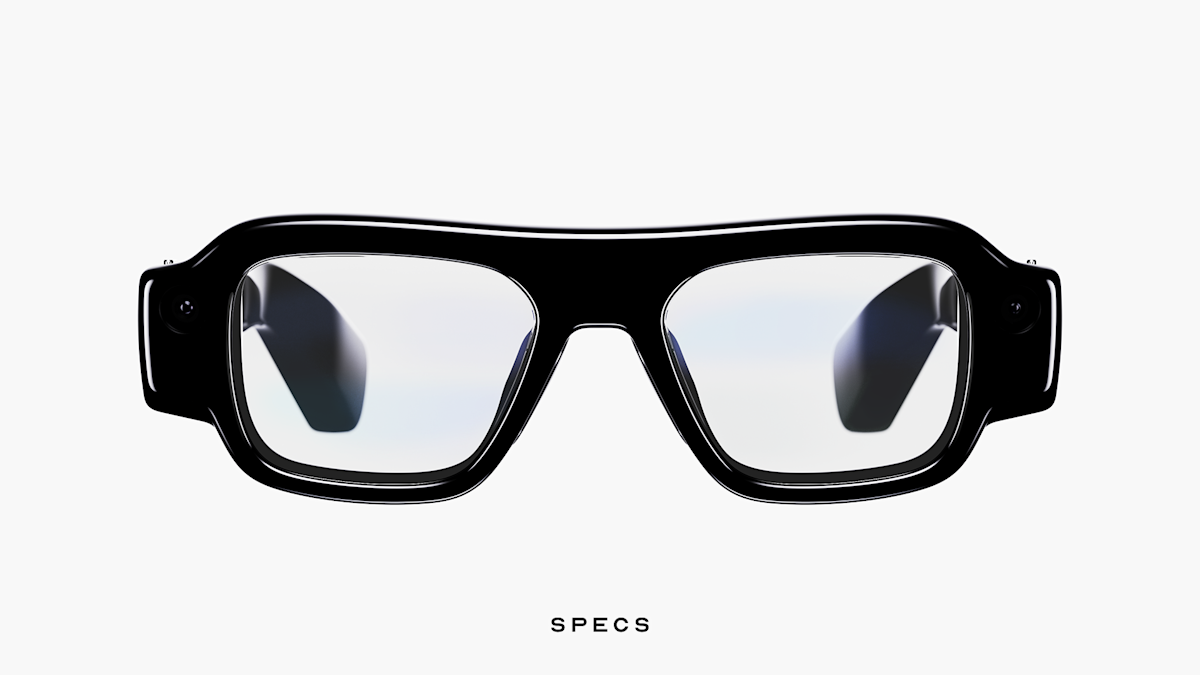
On one side: AR display glasses (Snap Specs, the device formerly known as Spectacles) where the wearer sees digital content layered over the physical world. These are spatial experiences. The audience is small, the immersion is complete, and the emotional ceiling is high.
On the other: Meta Ray-Ban and Oakley Meta, where the glasses capture content, play audio, and run AI, with no visible overlay. These are reach platforms. The product is worn, the camera is always ready, and the campaign scales through conventional media.
The brands doing this well have worked out which platform fits their creative, then built for it properly. The brands doing it badly have treated either platform as a gimmick and produced exactly that. What follows is an account of both, and what separates them.
Snap Specs and spatial AR: what the best activations look like
Snap Specs (launched June 2026, previously in developer preview as Spectacles) put an AR display in front of both eyes with hand and voice tracking as the primary inputs. No phone. No controller. You reach in and the world responds.
That sounds obvious, but the creative implications are significant. Every brief for this platform should start with one question: what does the wearer do with their hands?
LEGO BRICKTACULAR
LEGO built a hand-tracked AR game on Snap Spectacles with two modes: a free building mode where users create open AR LEGO constructions, and a challenge mode where they build LEGO sets against the clock. No phone. No controller. Pure hand and voice interaction. It was built for the developer and partner audience at Snap Partner Summit, not for mass consumer release.
The IP alignment is what made this almost inevitable once you see it. LEGO is a building toy. Snap Spectacles are a spatial building platform. The brief and the medium describe the same thing. The creative team did not have to stretch: they had to restrain. One mechanic. Executed properly. That is the whole campaign.
ILM Star Wars Holocron Histories
ILM Immersive (the XR arm of Industrial Light and Magic) built three chapters on Snap Spectacles developer hardware. Chapter one: a Jedi vs Sith encounter. Chapter two: a Nightsisters cautionary tale. Chapter three: a Guardians of the Whills story. Users are guided through each chapter by a former student of the Force. The wearer is the protagonist, not the observer.
This is not a demo. It is a structured narrative, delivered spatially. Each chapter has a beginning, a conflict, and an end. The spatial medium is used because the story requires presence, not because the platform needed a showcase.
It was built on developer-tier hardware, so the audience was small and curated. That is deliberate. Proof of concept at this level does not need scale: it needs quality.
RBKAVIN noodle (MIT Reality Hack 2026)
RBKAVIN. Immersive Studio built noodle for MIT Reality Hack 2026: a spatial AI workbench on Snap Spectacles that won the Snap category. noodle is not a game and not a brand experience. It is a productivity and creativity tool that runs in AR, designed to show what the platform does when you take it seriously as a computing environment rather than as an entertainment shell.
The studio operates on both Snap Specs and the Snap platform more broadly. The noodle case study sets out the full brief, the technical approach, and what the judges saw.
RBKAVIN HBO Snap Map AR
The studio built an AR experience for HBO on Snap Map, the location-based layer inside Snapchat. The campaign reached 1.5 billion impressions across its run. That number matters for this article because Snap Map AR sits in the same creative family as Snap Specs work: it is Snap's spatial platform, it is designed to place content in the world rather than on a screen, and it requires the same kind of brief.
The HBO case study covers the scope of that project. The point here is what distribution looks like when the Snap platform is paired with a major IP and proper production resources.
Meta Ray-Ban and Oakley Meta: reach-led campaigns
Meta Ray-Ban (Gen 2) and Oakley Meta are camera glasses with built-in AI. The wearer hears audio through open-ear speakers, captures photo and video hands-free, and runs Meta AI queries by voice. There is no visible AR overlay in the base model (Meta Ray-Ban Display adds a monocular display for $799, but that is a separate product and a separate brief).
That means the campaign is not about what the wearer sees. It is about what the wearer does, how the product looks on them, and what the cultural moment around the glasses communicates to the audience watching. These are image and lifestyle campaigns that happen to involve a piece of wearable technology. The brief should be written accordingly.
Oakley Meta Super Bowl 2026
Oakley Meta's first Super Bowl appearance was built around athletes. Marshawn Lynch (NFL), iShowSpeed, Akshay Bhatia (PGA Tour), Kate Courtney, Sky Brown, and Sunny Choi (all Olympians) appeared in a spot directed by Spike Lee. The proposition was AI-powered athletic intelligence: glasses that work for performance, not for lifestyle.
Three decisions made this land. First, the talent matched the product. These are actual athletes, not celebrities wearing athlete-adjacent clothes. The credibility is built in. Second, Spike Lee's direction gave the spot visual authority that the category does not usually get. Third, the proposition was clear and narrow: athletic AI, not camera glasses, not fashion tech. One thing, said clearly, with the right faces saying it.
Anderson .Paak, Tinashe, and James Blake x Meta Ray-Ban: "Live in the Moment"
Translation (a Black-owned creative agency) produced a 30-second spot with three artists at a party demonstrating hands-free capture, music listening, and Meta AI: while wearing the glasses. The campaign name was "Live in the Moment." The emphasis was on presence, fashion-forward styling, and keeping phones out of your hands. No tech specs appeared in the creative.
The cultural alignment here is precise. These three artists share an aesthetic: considered, independent, not chasing radio. The glasses were styled to match. The scenario (a party, music, no phones) made the product proposition obvious without stating it. The campaign worked because it did not explain the technology. It showed what the technology makes possible in a situation the target audience already understood.
Meta Ray-Ban x Ferrari
A limited-edition colorway in Ferrari livery. No activation. No AR experience. The product as object. Ferrari's visual language applied to a consumer technology product and distributed through both brands' channels. The result was significant press coverage from both tech and fashion media: two audiences the standard Meta Ray-Ban creative does not reach simultaneously.
This sits outside the experiential category but belongs in any account of smart glasses brand strategy. It demonstrates that camera glasses have a fashion product dimension that is independent of their technology capabilities. The brief was: make it desirable. The execution required no creative technology at all.
What separates the campaigns that work from the ones that don't
Across every example above, three patterns repeat.
The brief drives the platform choice
LEGO needed hands to build with. Spectacles. The Anderson .Paak campaign needed presence and social proof at scale. Meta Ray-Ban. The Ferrari collab needed fashion credibility in two markets simultaneously. Limited-edition product. None of these teams started with a platform and worked backwards. They started with what the creative required and chose accordingly.
Most bad smart glasses briefs start the other way: "we want to do something with smart glasses." That sentence does not tell you which glasses, what the audience should feel, or what outcome the brand is measuring. The platform is not the brief. The brief is the brief.
The best campaigns treat the hardware as a medium, not a novelty
LEGO BRICKTACULAR is a game. It would have been a weaker game without Spectacles, but it is a game with rules, modes, and a clear win condition. Holocron Histories is a story with chapters and a guide. noodle is a tool with a workflow. The glasses are how you access each of these things. They are not the thing itself.
A novelty campaign says: come look at these glasses. A medium campaign says: come play this game, see this story, use this tool. The glasses are how you do that. The difference in participant experience is significant. The difference in press coverage and word-of-mouth is larger still. For more on how the two platforms compare on this dimension, see the Meta Ray-Ban vs Snap Specs comparison.
The amplification layer is part of the brief from the start
A Snap Specs activation at an event reaches the people in the room. That might be 20 people. It might be 50. The content that gets captured, the press coverage that follows, and the social documentation from participants are what take the experience to the rest of the audience. ILM's Holocron Histories reached vastly more people through coverage than through the device. That is not a failure of scale: it is the campaign structure working as designed.
If the amplification layer is not in the brief, it will not happen. The team producing the experience will produce the experience and stop there. The team that built Holocron Histories planned for developer community coverage. The team that built LEGO BRICKTACULAR planned for Summit attendees to talk about it. Neither left that to chance. See the AR glasses brand campaigns guide for more on planning the full distribution stack. For a comprehensive set of case studies across both platforms, the smart glasses brand case studies round-up has the full set.
What this means for your brief
Three questions to answer before briefing a studio.
Does the experience require the wearer to see AR content? If the audience needs to see spatial objects, characters, or information overlaid on the physical world, brief for Snap Specs. If the campaign is about reach, lifestyle association, or hands-free content capture, brief for Meta Ray-Ban. These are different products with different creative requirements. Choosing the wrong one will produce a campaign that fights the hardware instead of using it.
What is the primary KPI: depth of experience per person, or reach? Snap Specs delivers deep, controlled, in-person experiences to small audiences. Meta Ray-Ban delivers reach through media and content at scale. If you need both, you need a sequenced campaign: a Specs activation generates the content and coverage that drives the Meta-era consumer campaign. They can work together. They should not be confused with each other.
Who is the audience: event guests in a controlled setting, or consumers at scale? Spectacles activations suit invitational events, brand showcases, and partner summits. Meta Ray-Ban suits broadcast, social, and retail campaigns. The audience determines the format as much as the creative does.
If you are not sure which side of this your brief falls on, the Snap Specs launch overview sets out what the platform can and cannot do, and the Meta Ray-Ban vs Snap Specs piece runs through the decision framework in detail.
Frequently asked questions
Thoughts on what is shipping, what platforms are doing, and how brands are using wearable AR. No noise.
Ready to build your own smart glasses campaign?
We have shipped on Snap Specs and Meta Ray-Ban. Start the conversation.
Replies within 48 hours, straight from the studio.
Start a project