The most important thing to know first
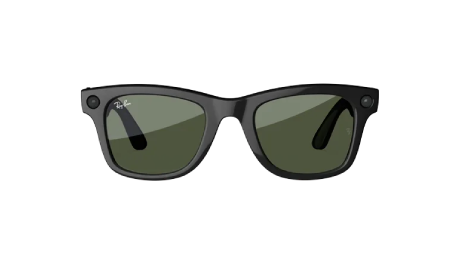
Meta Ray-Ban smart glasses do not have a display. There is no AR overlay, no digital layer projected into the wearer's field of view, no spatial content floating in the world. If your brief requires a visible AR experience, these are not the device.
That distinction gets lost surprisingly often, partly because Meta's long-term AR roadmap does involve display-equipped glasses (its Orion project), and partly because the Ray-Ban brand partnership makes the glasses feel premium and technology-forward in a way that implies more visual capability than they have. The current glasses are camera-forward, audio-first, AI-connected devices. Understanding what that actually means is the start of building a useful brief around them.
What they do have: a 12-megapixel ultrawide camera, open-ear speakers, a five-microphone array, a touchpad on the temple, and Meta AI integration that can see through the camera and respond to voice commands. They also have a live-streaming capability that connects directly to Facebook and Instagram. The combination of those features, not a display, is what the brand brief needs to be built around.
Camera
12MP ultrawide, first-person POV
Audio
Open-ear speakers, 5-mic array
AI
Meta AI, visual + voice query
Live stream
Facebook and Instagram, hands-free
Display
None
Why the brief changes when there is no display
Most immersive campaign briefs are built around what the audience sees. A visual moment, a digital overlay, a spatial object that appears in the world. The Meta Ray-Ban glasses invert that. The value is in what the wearer captures and what they hear, not in what they are shown.
That means the campaign question shifts from "what should appear?" to "what should be captured and broadcast?" The glasses are a production tool and a presence device, not a display platform. They put a broadcast-quality camera at eye level with both hands free. They deliver audio information to the wearer without pulling out a phone. They connect the wearer's perspective to a live audience on Meta's social platforms.
Those are genuinely useful capabilities for brands. They just require a different creative framework to exploit.
What brands can actually build with them

Creator content partnerships
This is the most developed use case and the one with the clearest ROI structure. A creator wears the glasses for a brand-relevant experience: a product launch, a behind-the-scenes access moment, a travel or lifestyle activation. The content they capture is first-person and fully hands-free, with the camera sitting at true eye level rather than at arm's length.
The output looks and feels different from phone-filmed content. The creator's hands are in frame. Their reactions are natural rather than staged around holding a device. The viewer perspective is genuinely immersive in a way that phone video is not, because you are seeing through the creator's eyes at the height and angle they actually experience things.
For fashion brands, music events, sports sponsorships, and travel, this format is underused. The content differentiates on platforms saturated with phone-filmed video.
Live-stream brand activations
The hands-free live-streaming capability connects directly to Facebook and Instagram. For brands that have access, or that partner with creators with large followings on those platforms, the glasses make it possible to broadcast experiences with a presence that tripod or handheld streaming cannot match.
The format works well for factory tours, studio access, fashion week coverage, sports behind-the-scenes content, and any situation where the authentic live presence of the broadcaster is the point. The wearer can talk to the camera, interact with people and environments, and be fully present simultaneously. The production constraint of holding a phone or managing a rig disappears.
Ambient AI experiences at events
The Meta AI integration is less discussed in brand contexts but worth serious attention. The AI can see through the camera and respond to voice queries, which opens up a category of experience that is neither traditional AR nor standard content capture: ambient information delivery.
At a product launch, a wearer wearing the glasses could look at a product and ask Meta AI a question, with the AI providing contextual information through the open-ear speakers. In a branded retail environment, the glasses could serve as a guided audio experience. At a conference, they could provide live context about speakers or sessions visible to the wearer's camera.
None of this requires a display. The information arrives through audio, leaving the wearer's visual field unobstructed and their hands free. That is a different kind of immersive experience from visual AR, but it is distinctive and has very low competition from other brands.
Ambient audio branding through Meta AI is one of the most underused channels available to brand experience teams in 2026. The tooling exists. Almost no brands are building with it yet.
First-person documentary and editorial content
Beyond creator partnerships, the glasses suit any context where authentic first-person documentation is valuable. A brand ambassador wearing them through a day in their creative process. An athlete wearing them during training. A chef wearing them while working. A stylist working a shoot.
The content captured has a quality of presence that is hard to replicate with traditional filming setups. It is not polished, but it is real in a way that audiences respond to. For brands building documentary-style content or editorial series, the glasses are a viable production tool rather than a campaign gimmick.
The use cases in brief
Creator content
First-person brand activation content filmed hands-free at eye level. Differentiates on platforms saturated with phone video.
Live-stream events
Hands-free broadcast to Facebook and Instagram. Works for access moments, tours, launches, and sports activations.
Ambient AI experiences
Meta AI delivers contextual audio through the glasses. Branded guided experiences and product discovery at events or retail.
Documentary content
Authentic first-person documentation of athletes, creatives, and brand ambassadors. Editorial series and brand storytelling.
When this platform does not make sense
It is equally important to be clear about where the glasses are the wrong tool. Because they lack a display, they cannot deliver visual AR experiences. If the brief requires digital objects that appear in the wearer's field of view, branded overlays visible to the person wearing the glasses, or spatial content anchored to the real world, the Ray-Ban glasses cannot fulfil it.
For visual AR at events, Snap Spectacles are the relevant platform. For premium spatial computing experiences in controlled environments, Apple Vision Pro is the appropriate device. The Ray-Ban glasses are a complementary tool, not a substitute for display-equipped AR hardware. See the full AR glasses brand campaign guide for a direct comparison of all three devices.
The other limitation is audience scale through the device itself. The glasses can reach a large audience through the creator's social following or through the content they produce, but the glasses-wearing experience is one person at a time. If the brief requires a simultaneous shared experience for a group of people, glasses AR (Spectacles with its shared-space Lenses) or phone-based social AR (which scales to millions) will serve that brief better.
The content strategy framing
The most productive way to think about Meta Ray-Ban glasses in a campaign plan is as a content production tool with ambient AI capability, not as an AR activation platform. The question is not "what will people see when they wear these?" but "what content does wearing these produce, and where does that content go?"
That reframe makes the brief considerably easier to write. You are looking for experiences where first-person presence is the editorial differentiator, where live broadcasting adds something that pre-produced content cannot, or where ambient audio information is genuinely useful to the wearer rather than a gimmick.
The strongest briefs treat the glasses as they actually are: a camera worn at eye level, a social broadcasting tool, and an AI-connected audio device. Working with those constraints rather than against them produces better work.
Briefing a Ray-Ban glasses activation
Start with these questions before any creative development:
- What is the wearer experiencing? The glasses capture and transmit. The experience has to be worth capturing.
- Where does the content go? Live to social, into an editorial series, as social content from a creator partnership. Define the distribution before the production.
- Does the AI integration add something? If there is useful contextual information the wearer might want during the experience, Meta AI can deliver it. If not, the glasses are a camera.
- Why hands-free? If the wearer could film with a phone and the content would be equivalent, the glasses are not adding value. The glasses matter when the hands-free, eye-level perspective is the point.
Where Meta's glasses roadmap is heading
Meta's longer-term AR glasses project, Orion, is developing display-equipped hardware that would add a visual AR layer to the glasses form factor. Internal demonstrations have shown promise, but no confirmed consumer release timeline exists.
The Ray-Ban smart glasses are understood to be building the wearable habit and hardware distribution ahead of a display-capable version. The install base and behavioural patterns established now become the audience for the future device. Brands building creator relationships and content formats around the current glasses are positioning for that next step, not just for today's capability.
When a display version ships, Meta's social infrastructure, distribution through the Ray-Ban brand, and existing creator ecosystem would make it a significant platform. The brands that have worked with the hardware and understand the format will be considerably better positioned to move quickly.
The honest read: the current glasses are a useful tool for specific briefs. They are also a learning platform for a future that will have significantly more visual AR capability attached to it. Both framings are worth taking seriously.
Considering a smart glasses activation?
Before briefing any wearable hardware campaign, it is worth mapping the brief against what each device can actually deliver. We help brands do that early, before significant creative development is built on a platform assumption that does not hold.
Talk to us at the brief stage. The platform choice shapes everything else in the production.
Frequently asked questions
Do Meta Ray-Ban glasses have AR?
No. Meta Ray-Ban smart glasses do not have a display and therefore have no AR overlay. They have a camera, open-ear speakers, a microphone array, and Meta AI integration. They are a content capture and ambient AI tool, not an AR glasses platform. Snap Spectacles and Apple Vision Pro are the devices to consider when a visible AR overlay is part of the brief.
How can brands use Meta Ray-Ban glasses in campaigns?
The strongest use cases are creator content partnerships (first-person POV content recorded through the glasses), live-stream brand activations broadcast hands-free from events, and ambient AI experiences where the Meta AI integration serves contextual product information or branded audio prompts. They are a content strategy tool and creator partnership platform, not a visual AR activation device.
What is the Meta AI integration in Ray-Ban glasses?
Meta AI is built into the Ray-Ban smart glasses and can be triggered by voice. It can see what the wearer is looking at via the camera and respond contextually. For brands, this creates possibilities around ambient audio information delivery, guided experiences, and AI-assisted discovery at events or in retail environments. It is an underused brand channel compared to the better-known content capture capability.
Will Meta release AR glasses with a display?
Meta is developing AR glasses with a display under its Orion project. A consumer release timeline has not been confirmed publicly. The Ray-Ban smart glasses are widely understood to be building the wearable habit and distribution ahead of a display-equipped version. When that device ships, Meta's social infrastructure and existing glasses distribution would make it a significant platform for brands.
Related articles
Insights newsletter
Smart glasses, AR campaigns, spatial computing.
Straight to your inbox. No noise.
SubscribeBuild a smart glasses campaign
We help brands map the right platform to the right brief before creative development begins. Start with a conversation.
Start a project