In short: Snap Specs maps the physical room in 3D and anchors content to it, so a reminder can sit on the actual plant. Meta Ray-Ban Display shows a screen-like overlay that has no idea where the plant is.
New to this? The technique behind that room map is called world tracking. See the 45 second visual explainer →
Two AR displays, two different questions being answered
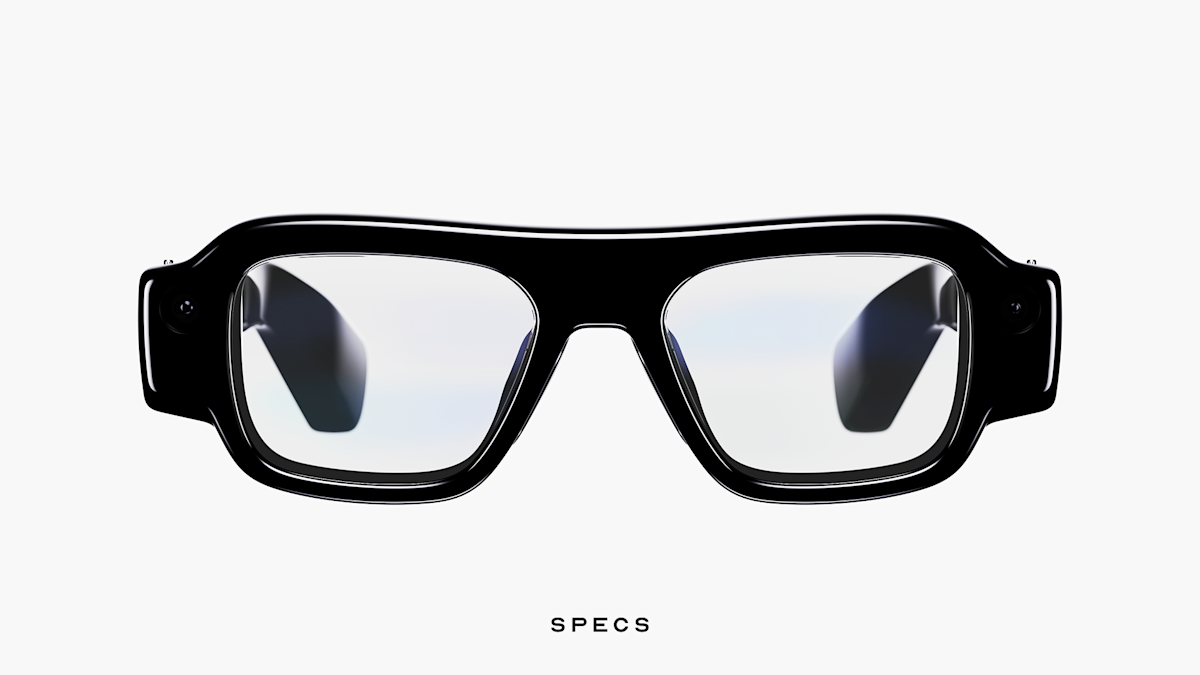
Snap Specs and Meta Ray-Ban Display both put an AR display in front of your eyes, and it is easy to assume that makes them the same category of product with a big price gap attached. They are not answering the same question.
Meta Ray-Ban Display answers "what information do you need right now?" Say "water the plant" sits on your to-do list. On Meta's display, that shows up as a line of text floating in the corner of your right eye, the same way it would look as a notification on your phone. It is content on a screen. The screen happens to be very close to your eye.
Snap Specs answers a different question: "what belongs where in this room?" The same reminder can sit directly on the actual plant. Walk past it and it is still there, on the plant, because the glasses built a map of the room and know where "there" is.
One is a screen. The other understands the room you are standing in. That is the actual gap, not just a spec sheet difference.
What "spatial mapping" is actually doing under the hood
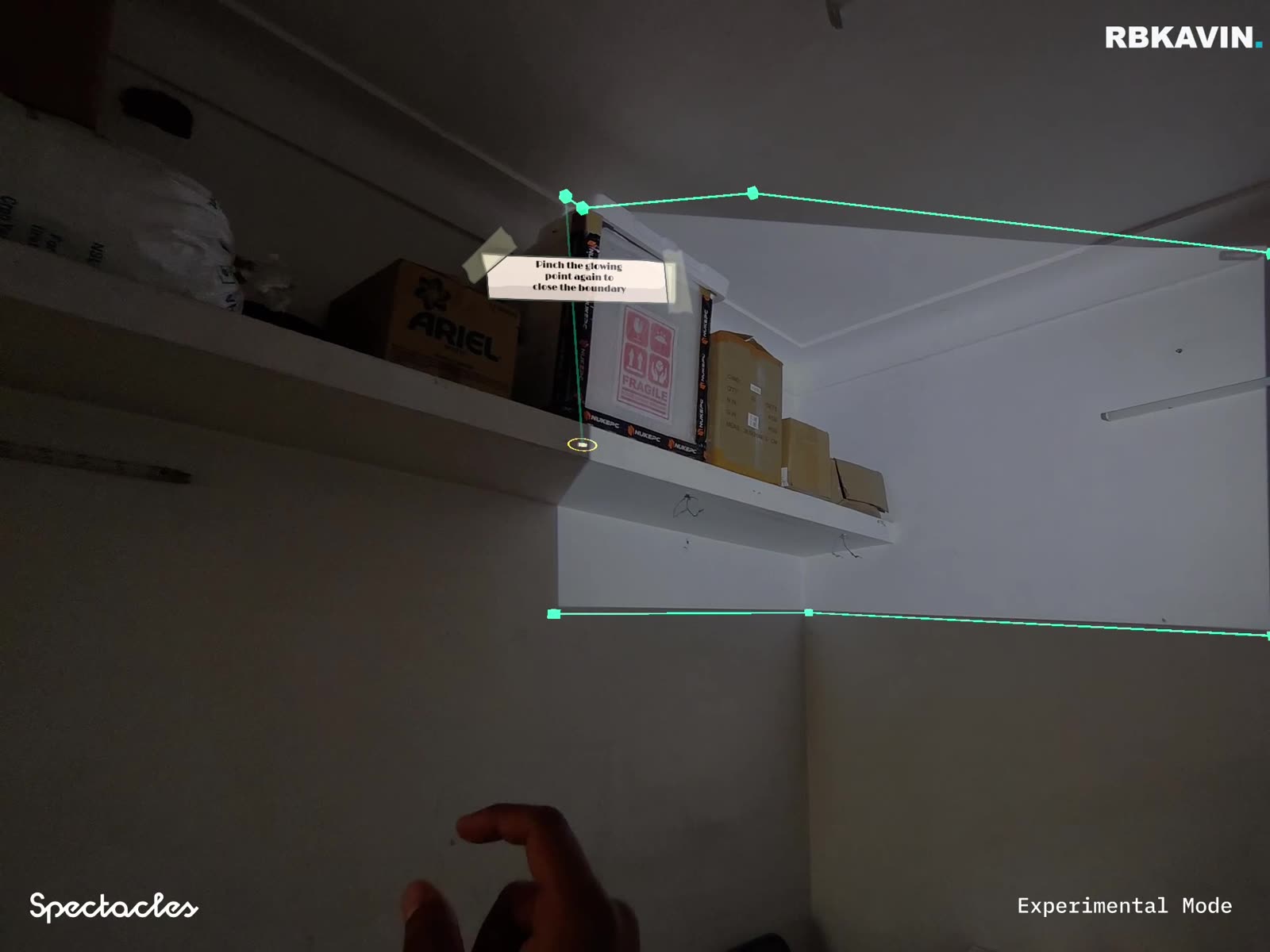
Snap Specs uses onboard cameras and depth sensors to continuously scan the room, walls, floor, corners, furniture, and build a live 3D mesh of it. Once that mesh exists, the glasses can drop a spatial anchor at a specific point, on the plant, on a wall, on a table, and content placed at that anchor stays exactly there. Turn around and come back, and it is still on the plant, not floating in front of your face wherever you happen to be looking.
This is the same underlying principle covered in our spatial computing explainer: real-time mapping, persistence, and response to physical change. A HUD platform like Meta Ray-Ban Display skips all three. Its display is locked to a fixed position relative to your eye, so it never needs to understand where the plant, the wall, or the crowd actually is.
Why the price gap makes sense once you know what you are paying for
Snap Specs costs $2,195. Meta Ray-Ban Display costs $799. Compared as "AR glasses," that looks like an odd gap for two products in the same category. Compared as "a spatial computer you can wear" versus "a HUD with AI," the gap starts to track with what is actually inside each device.
Mapping a room in real time and rendering spatially anchored content across a binocular 51-degree display takes meaningfully more sensing and processing than showing a fixed line of text in a 20-degree monocular corner. The full spec-by-spec breakdown, field of view, resolution, battery, input, is in our Snap Specs vs Meta Ray-Ban Display comparison. This article is about the one distinction that spec sheet undersells: only one of these two devices knows where your room actually is.
What it means for a brand brief
If the creative depends on content living at a real location, a character standing next to a product on a shelf, a graphic locked to a stage that a crowd can walk around, a wayfinding path anchored to a real corridor, that requires spatial mapping. A HUD platform cannot produce it, no matter the budget, because it never builds the room map the creative depends on.
If the brief is about information delivery, captions, translations, AI answers, notifications, alongside normal vision rather than inside a mapped scene, a HUD platform is a legitimate and cheaper tool for that job. Briefing spatial mapping hardware for an information-overlay use case spends budget on a capability the creative never uses.
Getting this right before the brief is written is the same judgment call covered in how to brief a smart glasses developer. The platform decision is a creative decision, not a procurement afterthought.
See the difference instead of reading about it
Spec sheets and comparison tables only go so far. The live WebAR demos at ar.rbkavin.studio show what content anchored to real space actually feels like versus content pinned to a screen. We built wearable AR including noodle on Snap Spectacles, which won the Snap category at MIT Reality Hack 2026, and Spatial Mapper, a tool purpose-built around the room-mapping capability this article is about.
Frequently asked questions
Do smart glasses map the room they are in?
Some do, some do not. Snap Specs uses onboard cameras and depth sensing to build a live 3D map of the room, floors, walls, corners, and objects, and locks digital content to positions in that map. Meta Ray-Ban Display does not build a room map. Its display shows a fixed monocular overlay in one corner of the right eye that moves with the wearer's head, not with the physical space.
What is the difference between a HUD and spatial mapping on smart glasses?
A heads-up display (HUD), like Meta Ray-Ban Display, shows information in a fixed position relative to your eye: text, notifications, AI responses. It does not know where the walls or objects around you are. Spatial mapping, like Snap Specs, builds a 3D understanding of the room so content can be locked to an actual surface, a desk, a wall, a specific point in space, and stay there as you move.
Why does Snap Specs cost more than Meta Ray-Ban Display?
Price partly reflects what each device is built to do. Snap Specs ($2,195) carries the sensors, processing, and binocular 51-degree display needed to map a room in real time and render spatial content across both eyes. Meta Ray-Ban Display ($799) uses a simpler monocular 20-degree display and does not need the same depth-mapping hardware, because it is not placing content in 3D space, it is placing it in a fixed screen position.
Can a phone camera map a room the way smart glasses do?
Yes, in a more limited way. Phone AR apps use the same underlying technique, camera-based world tracking, to detect surfaces and place content in a scene. The difference with dedicated smart glasses is persistence and hands-free operation: the room map can persist across a session or between sessions without the wearer holding a screen up to look through it.
Why does this matter for a brand activation?
It decides what the brief can actually ask for. A HUD platform can show wayfinding text, captions, or AI responses at an event, but it cannot place a branded object that a crowd can walk around because it never mapped the crowd's space. A spatial mapping platform can. Briefing the wrong platform for a spatial creative idea produces a flat result regardless of budget.
Insights newsletter
Smart glasses, AR campaigns, spatial computing.
Straight to your inbox. No noise.
SubscribeNot sure which AR platform your brief needs?
Tell us what the content needs to do in physical space. We'll tell you whether that needs spatial mapping or a simpler HUD.
Start a project