What actually changed from Spectacles to Specs
Snap Spectacles was a developer kit. You applied for access, paid a monthly subscription, and received hardware intended for building, not for wearing at dinner. The experience was designed for people with Lens Studio open on a second screen. Specs is not that.
The hardware architecture shares its DNA with Gen 5 Spectacles: dual Qualcomm Snapdragon processors, proprietary liquid crystal on silicon display, electrochromic lenses. But the product positioning has changed completely. Specs ships to consumers in Fall 2026 at $2,195, is available for preorder with a $200 refundable deposit, and comes in two frame sizes built from Swiss TR90 polymer with removable prescription inserts. Four million Lenses from the developer community are ready at launch.
The distribution model also changed. Spectacles reached a few thousand developers under NDA. Specs will reach consumers in the US, UK, and France first, with availability expanding after. That changes the audience maths for any brand activation built on this platform.
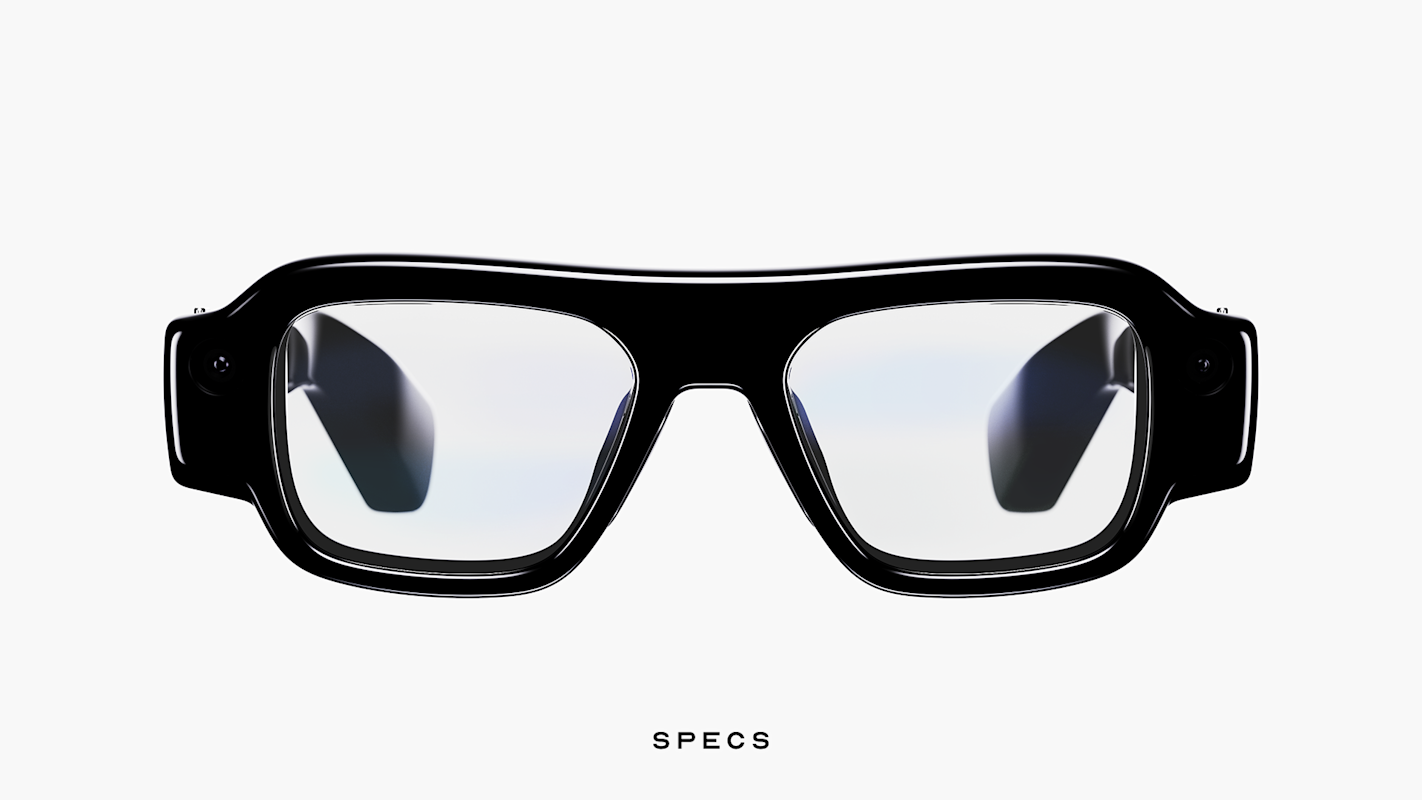
The hardware numbers that matter for a brand brief
Not all the spec numbers matter equally for a brand brief. Here are the ones that shape what you can and cannot design:
The 51-degree field of view is the most important number for a creative brief. At 51 degrees, Specs perceives at the equivalent of a 24-inch desktop monitor in work scenarios, or up to a 115-inch home cinema screen at 10 feet in entertainment contexts. That is substantially larger than the narrow band of earlier developer hardware. It means spatial overlays can occupy a meaningful portion of the wearer's view, not a small window in the corner.
The 4-hour battery under mixed use matters for event activations. If you are running a three-hour brand experience, you are inside battery life with margin for setup and warmup. If you are planning a full-day retail deployment, you need a rotation plan with the charging case, which adds four additional charges for a total of 20 hours. Build this into the operational plan at the brief stage, not on activation day.
The 7-millisecond latency is what makes spatial anchoring comfortable. Earlier consumer hardware often exceeded 20ms, which creates visible lag between physical movement and digital overlay. At 7ms, anchored content holds position in a way that reads as genuinely spatial to the wearer, not as a screen floating in space.
What $2,195 means for activation budgets
Spectacles hardware was never part of a brand's activation budget, because brands did not own it. The developer kit was subscription-based, managed by the studio, and returned after the project. Specs changes that calculation in ways brands need to plan for ahead of time.
For event activations, the most common model will continue to be studio-operated: the production studio owns the Specs units and brings them to the activation. The $2,195 price point means a five-unit activation fleet costs $10,975 in hardware before production, insurance, and logistics. That is no longer a trivial line item, and studios with existing Spectacles hardware from the developer programme will have a material advantage in keeping activation costs competitive.
For brands considering longer-term retail or venue deployments, owned hardware becomes a realistic option for the first time. A permanent in-store Specs experience at a flagship location — one where units live at the location and are managed by store staff — requires upfront hardware investment but amortises the cost across a longer activation window.
The correct question for your brief is not "how much do the glasses cost?" It is: "who owns and operates the hardware for this activation, and what does that model cost across the full production and deployment period?" Studios that have done this before will answer it in their fee breakdown. Studios that have not will give you a vague answer and revise the quote later.
The four million Lenses: what the audience looks like
Snap announced at AWE that four million Lenses will be available for Specs at launch. These are the experiences built by Snap's global developer community across five generations of Spectacles hardware. Not all of them are relevant to a brand context, but the number matters for one specific reason: it means Specs arrives with an existing content library, which means consumers have reasons to own and wear the hardware beyond a single brand activation.
This is a structural difference from earlier AR glasses launches, where hardware shipped to a small number of people with nothing to do in it. Specs ships to a consumer market with four million existing experiences, Snapchat's social layer, and integration with OpenAI and Google Gemini for ambient AI assistance. The audience for a brand Lens on Specs is not just "people who bought the hardware." It is "people who bought the hardware and are already using it daily."
For brand campaign planning, this means the distribution logic for a Specs Lens is closer to social AR than to a bespoke event experience. A well-built Lens can travel across the Snapchat network, not just activate at a single event. Studios that understand both the spatial production layer and the Snapchat distribution layer will produce better ROI from this format than those that treat it as a traditional installation build.
Three activation formats that make sense on Specs now
Six questions to ask before you brief a Specs experience
The questions below are the ones that distinguish a brief that will produce a campaign from one that will produce an R&D invoice:
- What is the person doing when the experience reaches them, and what do you need them to feel or do differently as a result?
- Is the experience anchored to a specific physical space, or does it need to work in multiple environments?
- How many hardware units does this activation require, and who owns, operates, and insures them?
- Does this experience also need to work on the Snapchat phone app, or is it Specs-only?
- Has the studio you are briefing shipped a Spectacles or Specs experience to real users in a production context, not just demoed one?
- What is the fallback state when hand tracking loses confidence or the wearer steps outside the spatial anchor zone?
The last two matter most. A studio that has only demoed on Spectacles has not encountered the production problems that appear when real users wear the hardware in uncontrolled environments. And an experience with no fallback state is not a production-ready experience. It is a demo that will break publicly.
We have been building on Snap's glasses hardware since Spectacles Gen 5 at MIT Reality Hack 2026, where our spatial AI workbench Noodle won the competition. If you are planning a Specs activation and want a studio that has shipped production experiences on this hardware, start a conversation with us. The window to be ready for Fall 2026 launch is short.
Frequently asked questions
What is the difference between Snap Spectacles and Snap Specs?
Snap Spectacles was the developer kit name for Snap's AR glasses, available only to approved developers on a subscription basis. Snap Specs is the consumer product launched at AWE 2026 in June, priced at $2,195 and open for public preorder. The hardware architecture is similar: dual Snapdragon processors, see-through lenses, fully standalone. The difference is consumer ownership and broad distribution instead of restricted developer access.
How much do Snap Specs cost?
Snap Specs are priced at $2,195, with a $200 refundable deposit to place a preorder. They ship in Fall 2026 in the US, UK, and France first. Two frame sizes: 47mm at 132 grams and 52mm at 136 grams, both in Swiss TR90 polymer with removable prescription inserts.
What can brands do with Snap Specs?
Brands can build Lenses, spatial AR experiences that anchor digital content to the physical world through the Specs display. Relevant formats include event activations with persistent spatial overlays, retail experiences with product information and navigation, and distributed branded Lenses available through the Snapchat network. All four million Lenses built by developers will run on Specs at launch.
When should brands start planning for Snap Specs?
If you want an activation ready for Fall 2026, brief a studio now. A realistic production timeline for a Specs activation is 8 to 12 weeks from confirmed brief to tested, deployable experience. Studios with prior Spectacles production experience will ramp fastest. Studios approaching this platform for the first time will need additional time for environment and device testing.
Insights newsletter
Smart glasses, AR campaigns, spatial computing.
Straight to your inbox. No noise.
SubscribePlanning a Specs activation for Fall 2026?
We have shipped experiences on Snap glasses hardware. The brief window to hit launch day is narrow.
Start a projectReplies within 48 hours, straight from the studio.