The confusion starts with the name

The term "smart glasses" covers four fundamentally different products. One has a full AR display. One has no display at all. One is tethered to your phone. One is a monocular lens for an AI assistant. The only thing they share is the form factor.

If you are trying to decide which one is right for you, or briefing a developer on what to build for, this is the comparison you need.

The four platforms at a glance
AR display glasses
Snap Spectacles
True AR display. A stereo waveguide lens renders 3D content in a roughly 46-degree field of view. Both hands free, no phone required, 6DoF world tracking and hand interaction. Built for experiences: brands, developers, spatial games, AI tools. Requires Lens Studio development. Around 30 min active AR battery.
Camera + audio glasses
Meta Ray-Ban
No AR display. Cameras capture your point of view, open-ear speakers play audio, and Meta AI responds to voice commands. You see the world exactly as normal: no digital layer. Built for everyday wear: capture, voice AI, music. All-day battery (4-6 hours). Mass consumer reach.
Tethered display glasses
Xreal
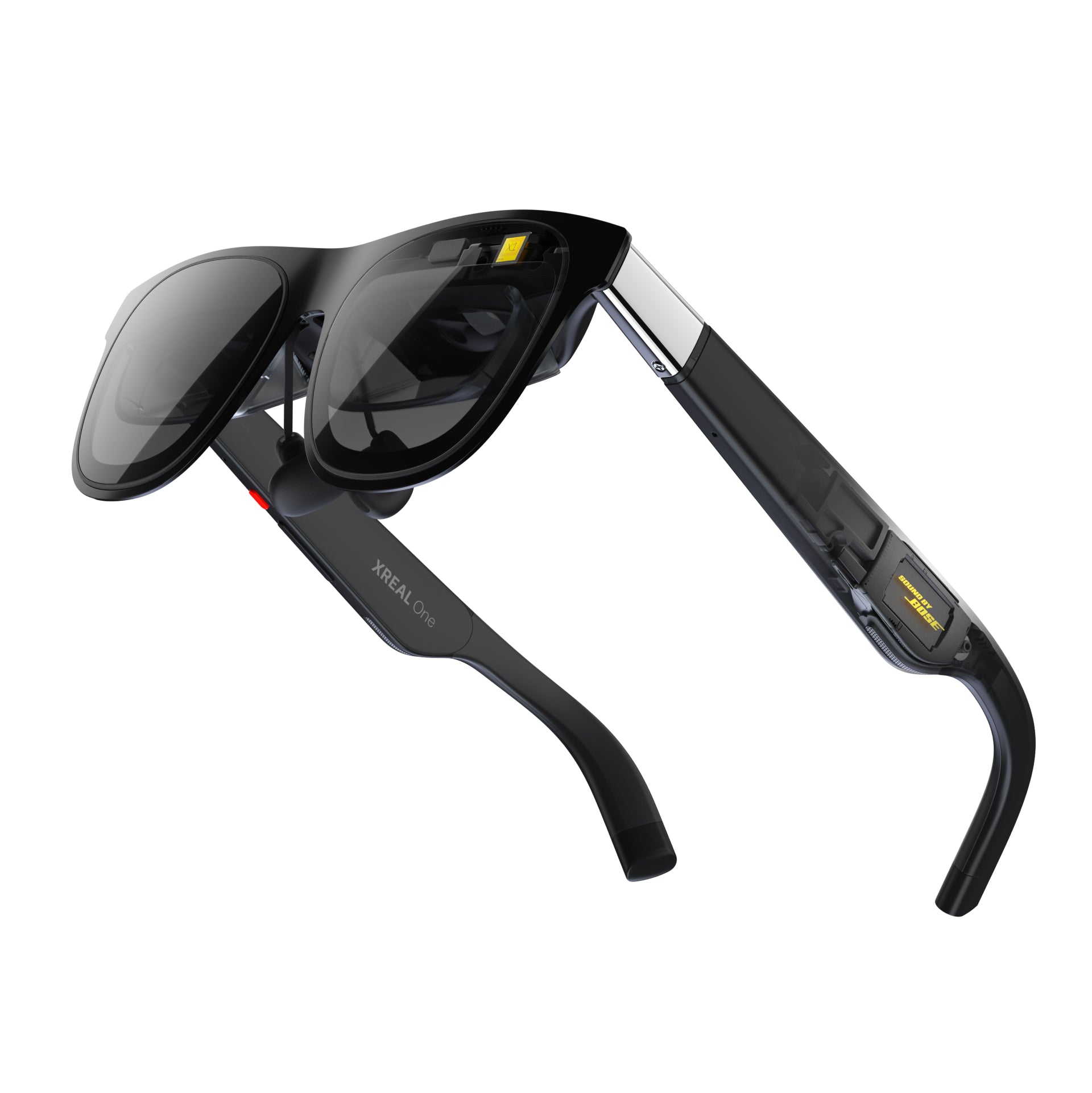
Tethered AR glasses that connect to a phone, laptop, or gaming device. The display shows a private floating screen: good for productivity, media, and gaming. The AR is screen-based rather than world-anchored: content floats in front of you but does not interact with the environment. Popular with productivity users and remote workers.
AI assistant glasses
Brilliant Labs Frame
Minimalist monocular AR lens with an AI assistant built in. A small green display shows text and simple graphics in the corner of one eye. Designed for ambient AI queries, transcription, translation, and info overlays. Developer-first. The lightest and least visually intrusive option. Not a spatial AR platform.
Xreal One AR glasses — tethered AR display glasses for productivity and media
Xreal One AR glasses. Unlike Snap Spectacles, Xreal tethers to a phone or laptop and shows a private floating screen rather than world-anchored AR. Image: Xreal official product photography via xreal.com

What each one is actually best for

Snap Spectacles
Spatial brand experiences, AR games, hands-free activations, developer exploration, AI spatial tools.
Meta Ray-Ban
Everyday wear, social content creation, hands-free voice AI, audio navigation, all-day ambient use.
Xreal
Mobile productivity, media consumption (travel, remote work), gaming on the go, privacy (no one else sees your screen).
Brilliant Labs Frame
Ambient AI assistance, real-time translation and transcription, developer experiments, maximum wearability.

None of these is "the best" in any objective sense. The right device depends entirely on what you are trying to do.

The display question: what actually matters

The most important technical distinction in this category is how each device handles the visual layer.

  • World-anchored AR (Spectacles): digital objects are placed in the physical environment, tracked as you move, and exist in space. A fish can swim through your living room. A score counter floats above a target. Content is part of the room.
  • Screen-based AR (Xreal): a virtual screen floats in your field of view. The content does not react to the environment. It is a private monitor, not spatial AR.
  • No display (Ray-Ban): audio-only. No visual AR at all. The intelligence is in the voice layer.
  • Monocular overlay (Frame): one-eye text overlay. Functional, not immersive.

The distinction matters most for brands. If the brief requires content that exists in the physical space: an object on a table, a character in the room, only Spectacles delivers that. If the brief is about voice AI or first-person capture, Ray-Ban is simpler and reaches more people.
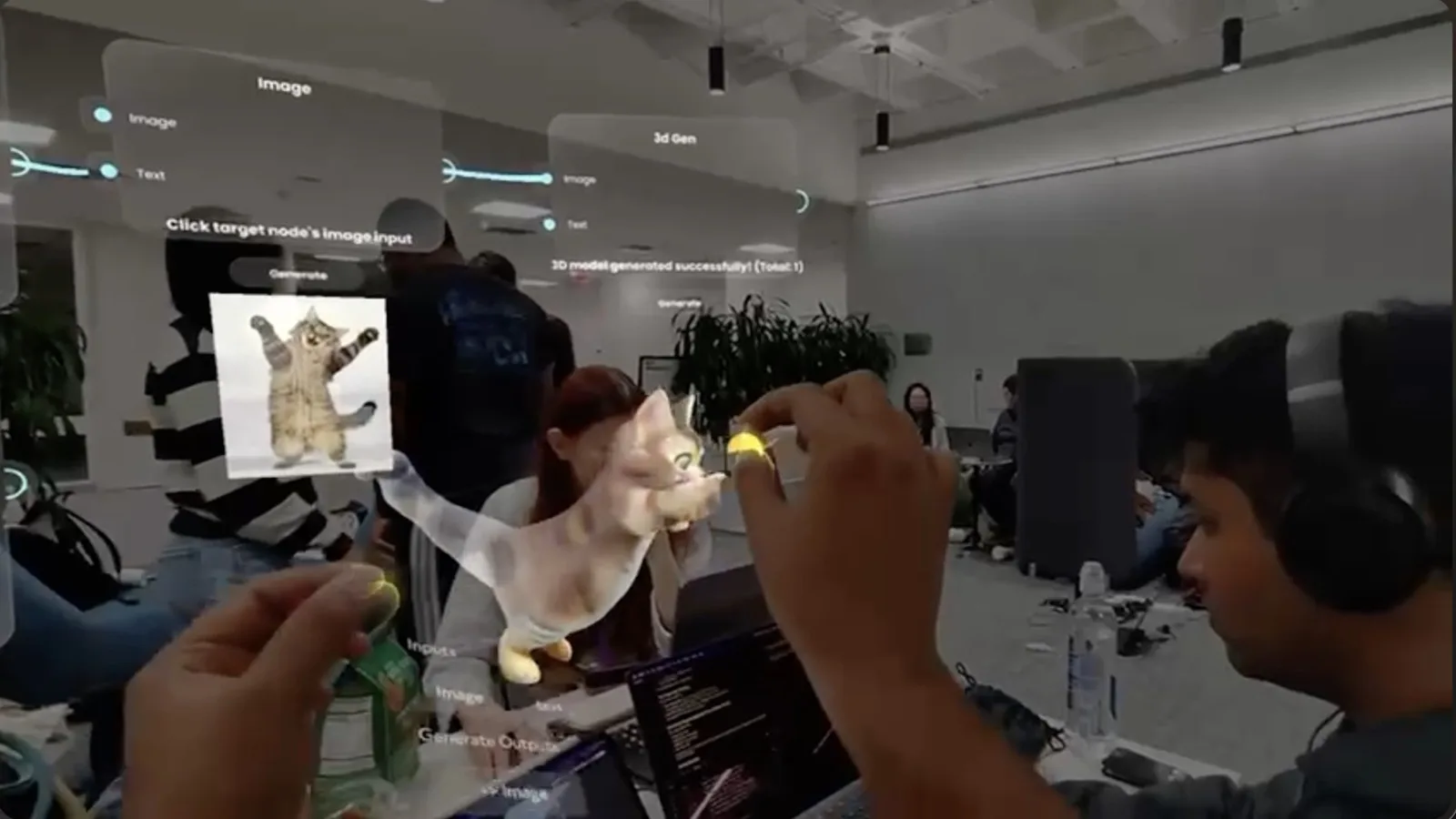
Snap Spectacles — hands interacting with AR nodes from the noodle spatial AI workbench at MIT Reality Hack 2026
What world-anchored AR looks like through Snap Spectacles: the noodle node graph at MIT Reality Hack 2026. The nodes exist in the physical room. Your hands interact with them directly. Built by RBKAVIN. Studio.

Which is right for brands?

The answer depends on what the brief is actually asking for.

  • If you are planning an event, launch, or press activation and want an experience that cannot be replicated on a phone, use Snap Spectacles.
  • If you want to reach a mass consumer audience with wearable technology and are comfortable with audio and capture rather than visual AR, use Meta Ray-Ban.
  • If your use case is productivity, remote work, or mobile gaming, use Xreal.
  • If you want an ambient AI assistant or are building something developer-experimental, use Brilliant Labs Frame.

For immersive brand experiences specifically, Spectacles is the only platform in this list that supports spatial visual AR. The other three are not the same category of product, however well-marketed they are as "AR glasses."

For brands considering a Spectacles activation, the wearables page covers what RBKAVIN. Studio builds and how the process works.

A note on Meta Orion

Worth mentioning: Meta is developing Orion, a true AR prototype with a much wider field of view than any current consumer device. It is not available to buy. It is a signal of where the category is heading.

The display quality and field of view in prototype demos suggest the next generation of true AR glasses will be significantly more capable. But that generation is still 2-3 years away from consumer availability. The four devices in this comparison are what you can actually put on a person's face today.

Frequently asked questions

What is the difference between Snap Spectacles and Xreal?
Snap Spectacles are standalone AR glasses with a built-in processor, wireless operation, and world-anchored spatial AR. Content is placed in your physical environment and tracked as you move: objects exist in the room with you. Xreal glasses are tethered AR: they connect to a phone or laptop via USB-C and display a floating virtual screen in your field of view. That screen does not react to or interact with the environment. Spectacles is a spatial platform; Xreal is a private monitor.
Do any smart glasses work without a phone?
Yes. Snap Spectacles operate completely independently: no phone required. The device runs Snap OS, has its own processor and Wi-Fi, and works even if your phone is in another room. Meta Ray-Ban pair with a phone for setup but function without it for photos, video, and basic voice commands. Xreal requires a physical connection to a phone, laptop, or computer to display content.
Which smart glasses have the best battery life?
Meta Ray-Ban last 4-6 hours depending on camera and audio use. Xreal battery life depends on the source device it is connected to. Snap Spectacles last approximately 30 minutes of active AR use, but ship with a charging case that provides multiple full charges per day. Brilliant Labs Frame is rated for around 2 hours of active use. Battery life reflects the power demands of the hardware: AR displays and spatial processors are considerably more power-intensive than cameras and speakers.
Are smart glasses safe to wear all day?
Meta Ray-Ban and Brilliant Labs Frame are designed for all-day wear and most users report no issues. Snap Spectacles are designed for shorter active sessions of 30-45 minutes. Xreal users report varying experiences: some find the display comfortable for hours, others experience eye strain during extended use. None of the current devices have the battery life to support all-day AR display use, which makes the question partly moot for the display-based devices.
What smart glasses should a brand use for an event activation?
Snap Spectacles, without question, if the goal is visual AR: spatial content placed in the physical environment, anchored to surfaces, interactive. They are the only device in this list with a true world-anchored AR display. Meta Ray-Ban work well for creator content at events: first-person footage, hands-free streaming. But they have no AR display. Xreal and Brilliant Labs Frame are not suited for event brand activations in the traditional sense.

Working out which platform fits the brief

Working out which platform your brief calls for is the first conversation we have with every client. If you are exploring a smart glasses activation for a brand, start a project or read how RBKAVIN. Studio builds for wearables.

Related articles

Back to Insights