Wearable AR is glasses
with a screen built in.
In short: wearable AR, usually called smart glasses, is a pair of glasses with a small display built into the lenses that projects digital content into your field of view, while you can still see everything around you normally. Flip the switch to see the same pair of glasses, plain and then augmented.
Same physical shape, same room behind it. The only thing that changes is whether a display is drawing content into the lenses.
Three ways to see digital content
Wearable AR sits in the middle: unlike a phone it is hands-free, and unlike VR it never blocks the real world.
What wearable AR can actually do right now
No sci-fi required. These are things current smart glasses do today, hands-free.
Real wearable AR, built by the studio
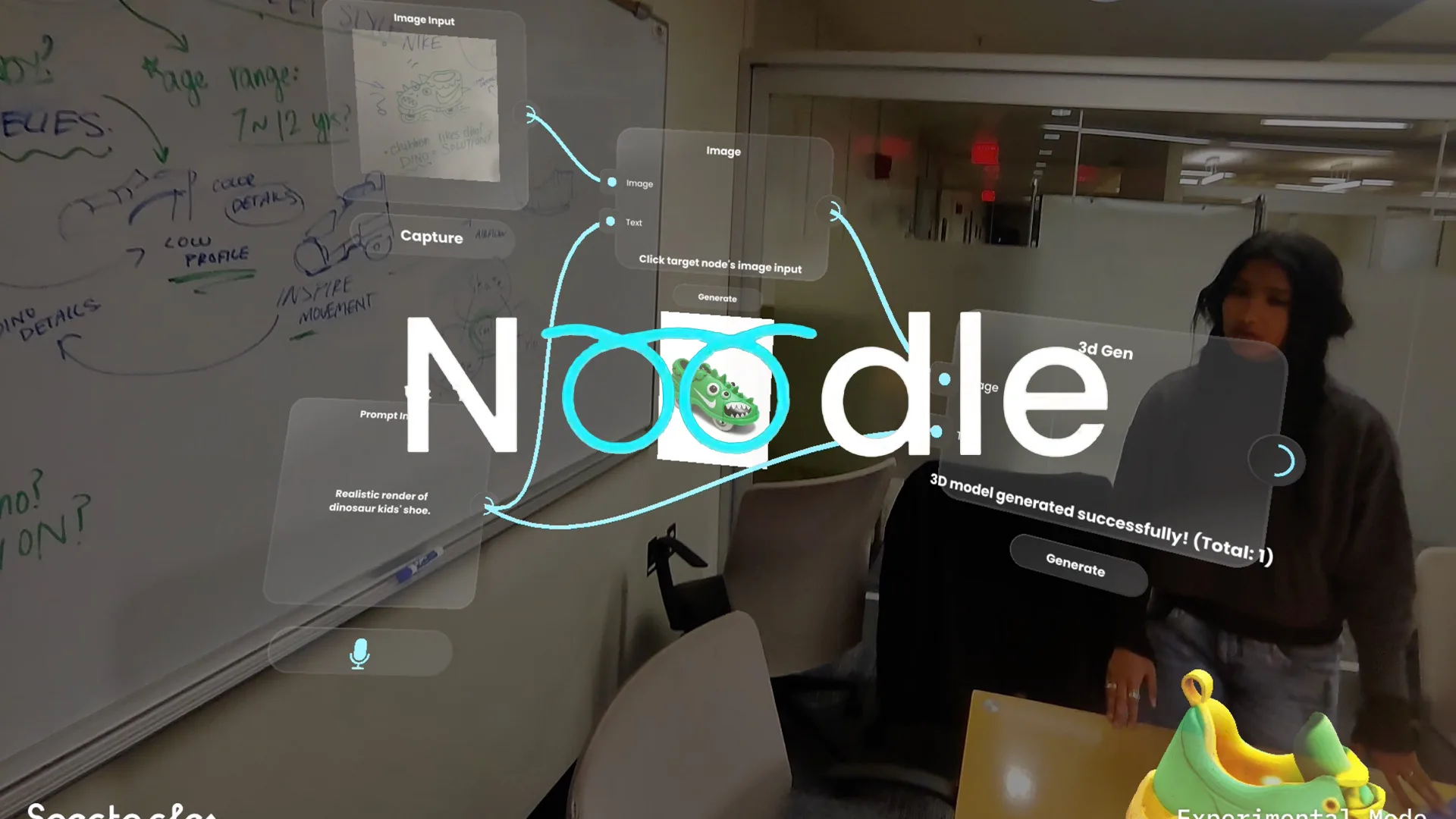
Spatial AI workbench

Hand-tracked game
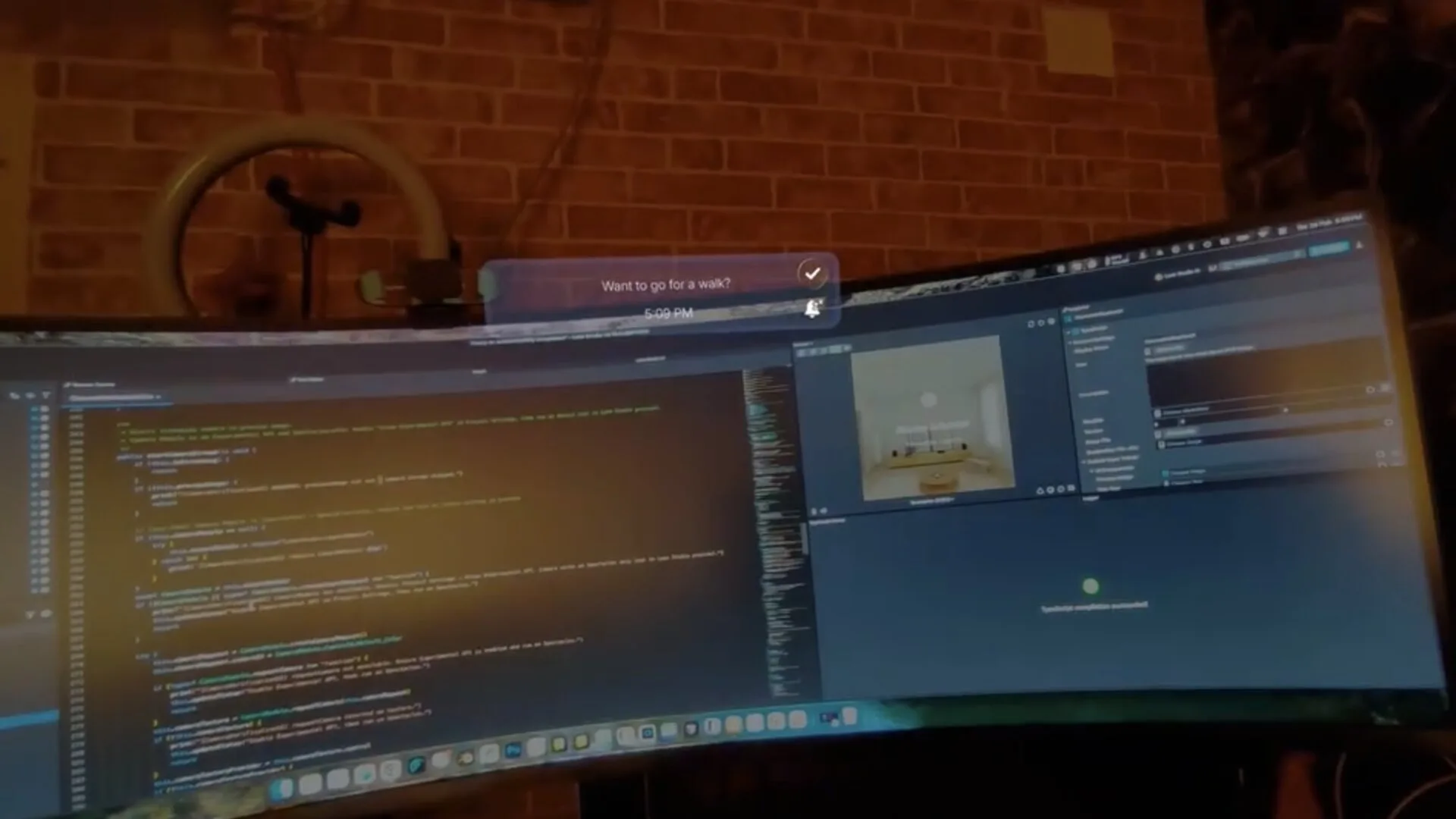
Glanceable time tool
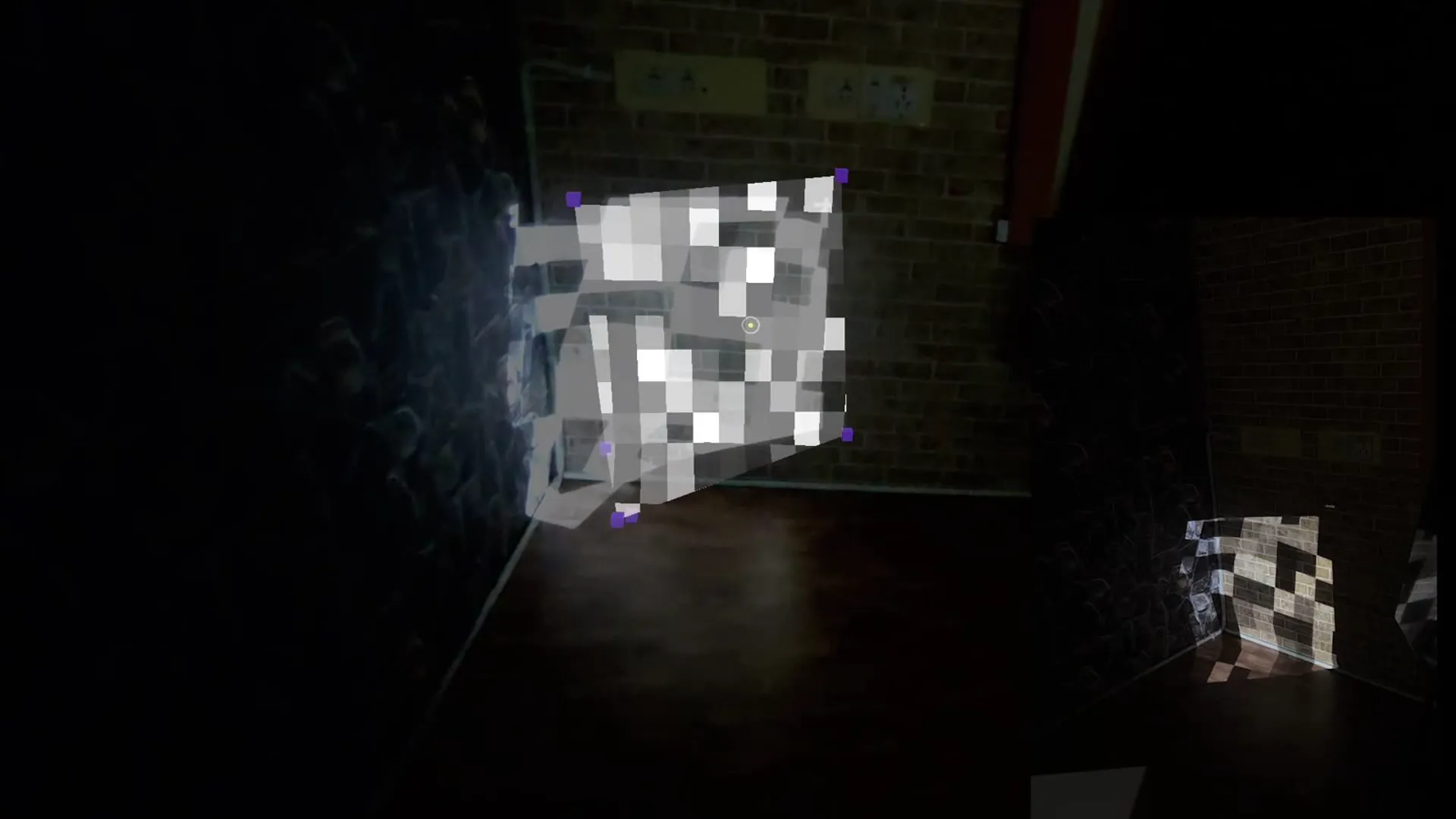
Room scanning
Have an idea for smart glasses?
We'll tell you what it takes to build it.
Start a project
MIT Reality Hack 2026 winner on Snap Spectacles. Replies within 48 hours.
Quick answers
What is wearable AR?
Wearable AR, usually called smart glasses, is a pair of glasses with a small display built into the lenses. The display projects digital content, like text, icons, or 3D objects, directly into your field of view while you can still see the real world around you.
Is wearable AR the same as a VR headset?
No. A VR headset fully covers your eyes and replaces the real world with a digital one. Wearable AR glasses are see through. The real world stays visible the whole time, and digital content is added on top of it, not instead of it.
How is wearable AR different from just using my phone?
A phone needs one hand to hold and your eyes to keep dropping down to a screen. Wearable AR sits on your face like regular glasses, so both hands stay free and you keep looking straight ahead at the world instead of down at a device.
Do I need a phone to use smart glasses?
Not for the AR itself. Content displays directly through the glasses. A phone is usually only involved for initial setup, pairing, and installing new experiences, not for running them.
What can wearable AR actually do right now?
Today's smart glasses can show turn by turn directions, capture photo and video hands-free, translate speech into live subtitles, and surface notifications, all without pulling out a phone.