TIMELY
CASE STUDY
Studio / Portfolio / Timely
Snap Spectacles Lens Contest 2026

Timely

Snap Spectacles Spatial AI UX Design Lens Contest
5Screens, cut from 20+
2Choices: snooze or done
2026Snap Spectacles
The brief

A reason to come back
every day.

Build something for the Snap Spectacles lens contest that demonstrates genuine retention: a reason for someone to come back every day. Not another AR demo that shows off what the glasses can do, but a tool people would actually keep using.

Every existing accountability tool lives on a phone, and every phone reminder is also a doorway to distraction. Smart glasses remove that doorway. Timely is built on a single insight: the nudge can reach you without pulling you into a screen.

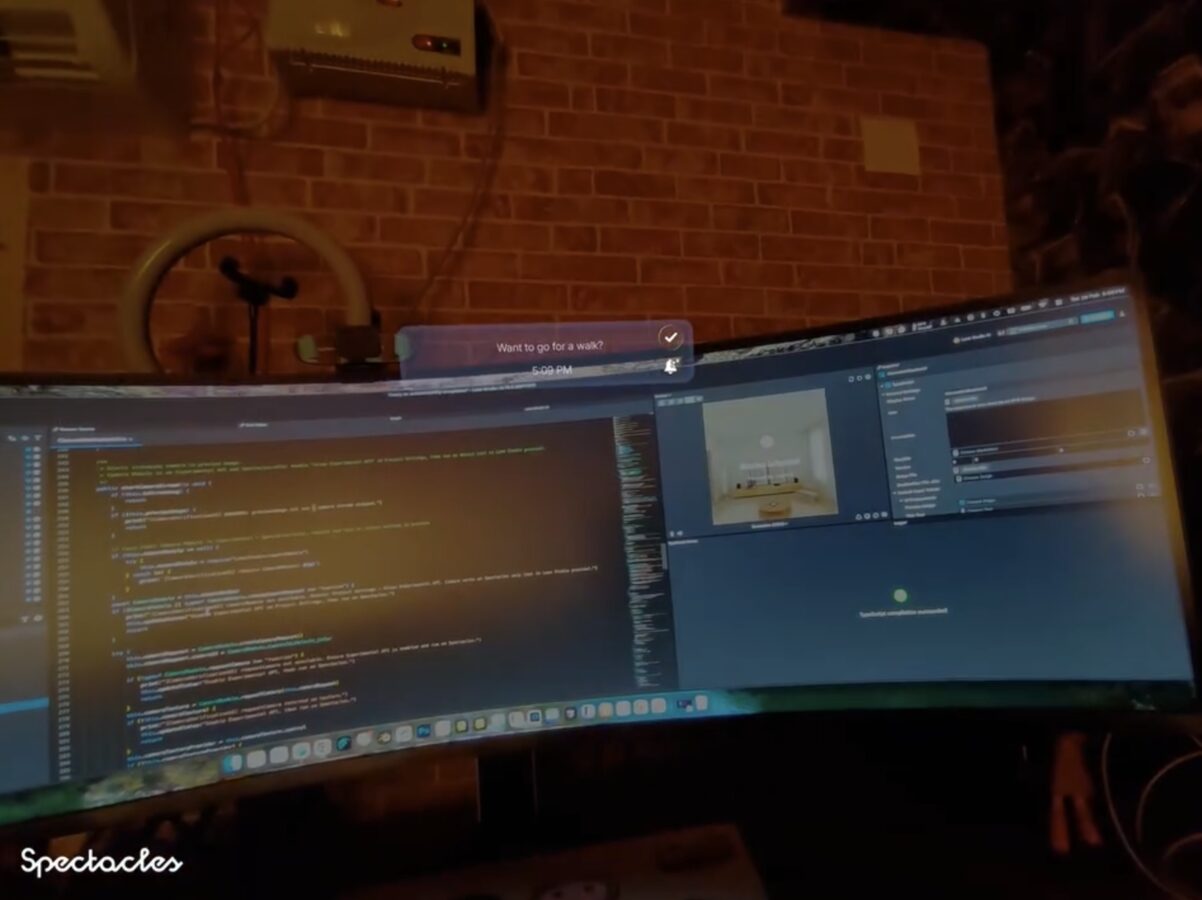
Describe a goal in natural language and Timely schedules a quiet HUD nudge on Spectacles at the right moment. When it fires, there are two choices: snooze or done. That is the entire interaction. No streaks, no badges, no social comparison, just a habit showing up when you said it should.

Submission
Snap Spectacles Lens Contest 2026
Platform
Snap Spectacles
Role
Concept · Interaction design · Creative direction
Status
Live exploration, submitted to the lens contest
Year
2026
Deliverable
AR habit companion with voice input and quiet HUD nudges on Snap Spectacles.
In the space

A quiet nudge,
right at the edge of attention.

Video
Snap Spectacles
Click to play
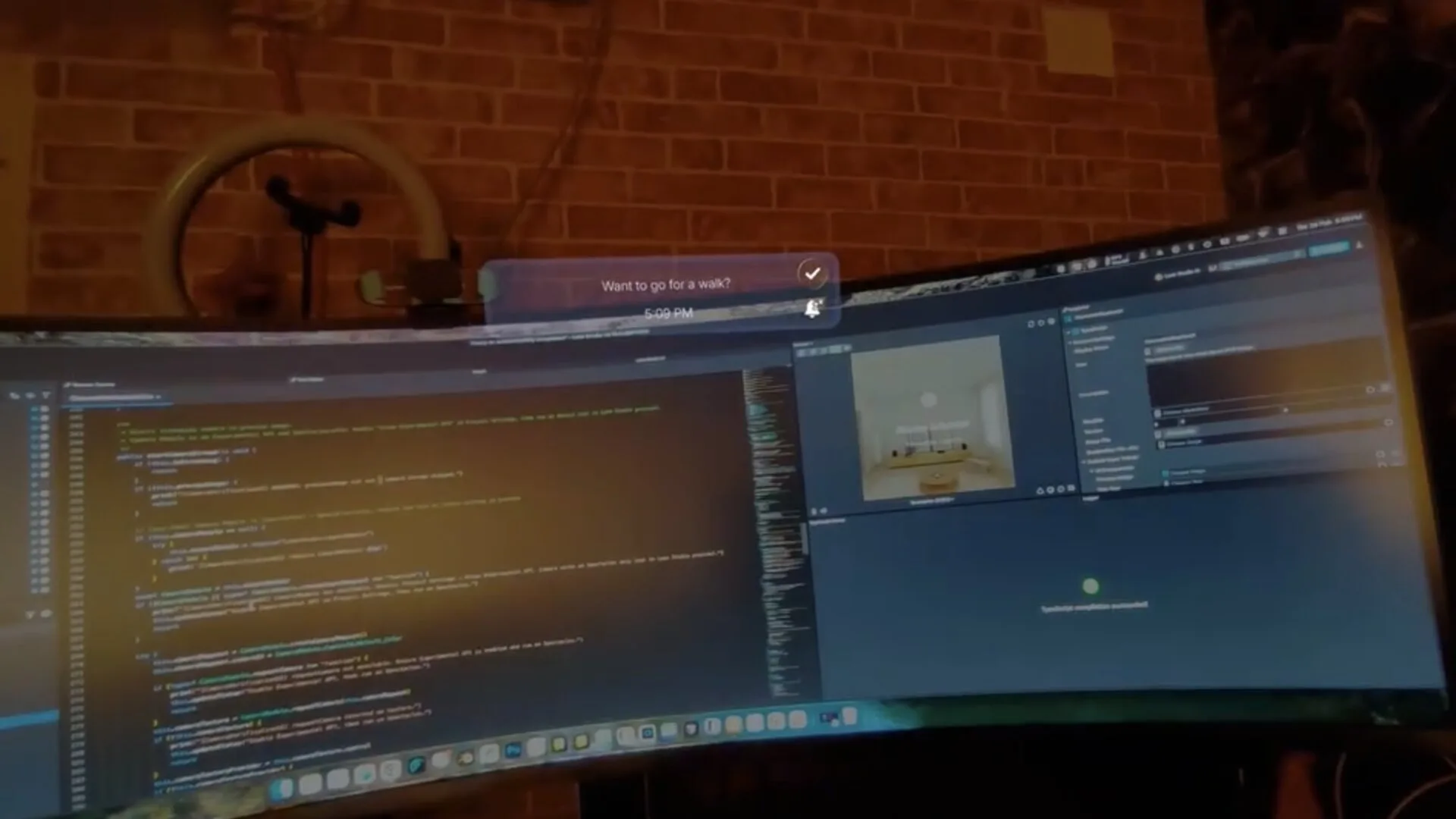
Timely AR habit companion HUD on Snap Spectacles Snap Spectacles Lens Contest 2026
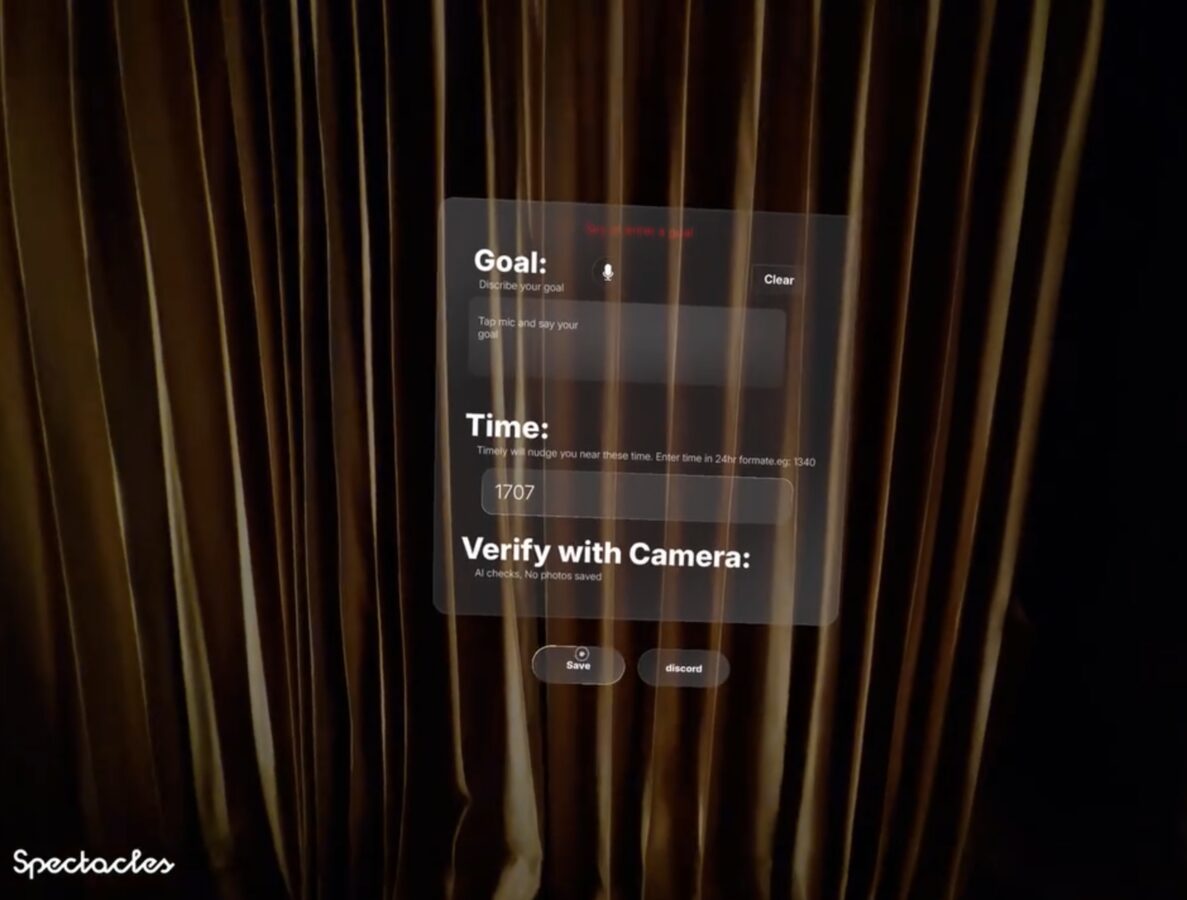
Timely voice input screen for setting a habit goal
Timely HUD nudge with snooze or done choice
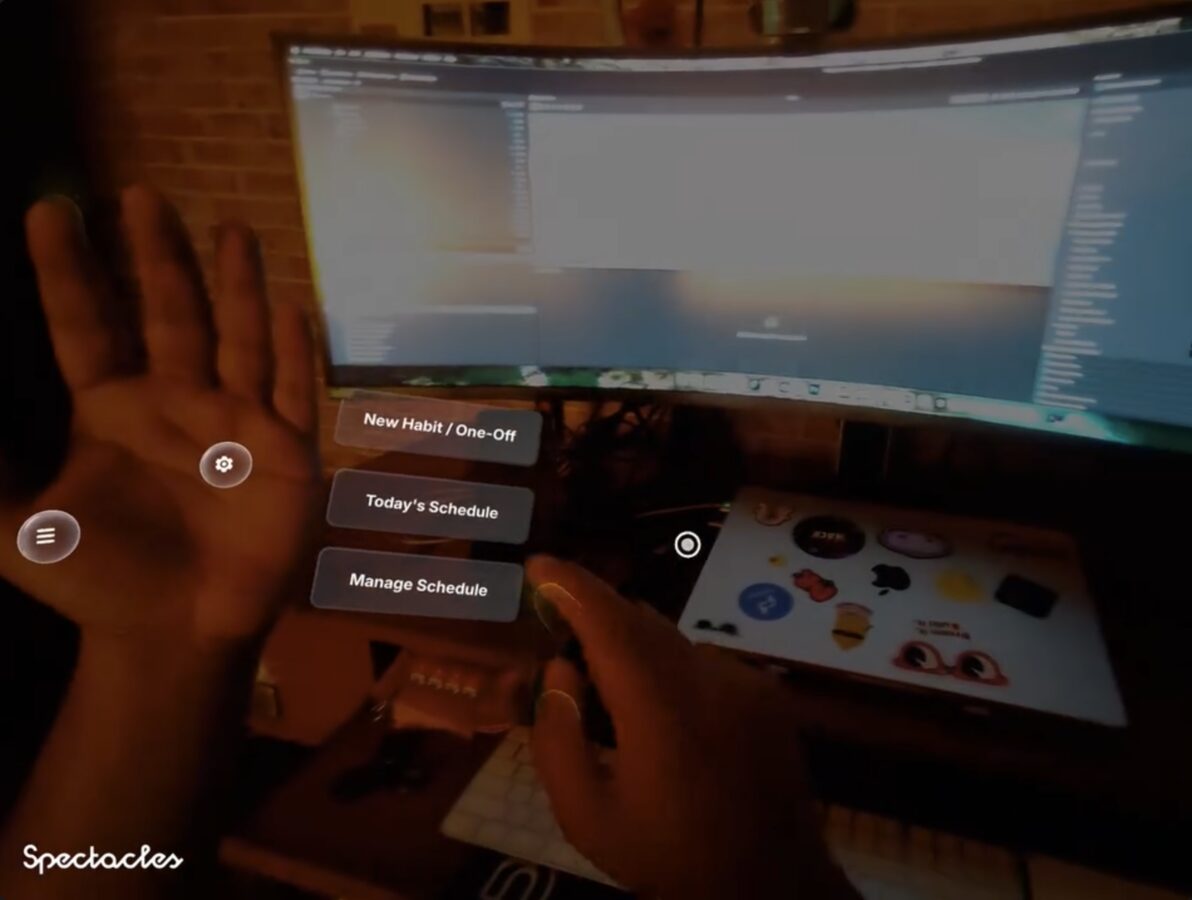
Timely running on Snap Spectacles
Process

Restraint as the
creative direction.

01
Cutting twenty screens to five
A Figma file mapped more than twenty screens covering every edge case. The call was to cut it to five. The retention mechanic only works if the tool creates no friction of its own, and every added feature worked against that argument. Restraint became the brief.
02
Notification design as the core problem
Most AR concepts try to fill the field of view. Timely's HUD was designed to appear only when called, sit at the edge of attention, and resolve in a single gesture. The glasses only earn a place in someone's daily habit if they do not disrupt the day they are meant to improve.
03
Voice input with AI-compressed headings
If creating a habit takes more than thirty seconds, people do not do it. Describing a goal out loud and letting AI compress it into a short nudge removes the last excuse not to start. Setup became a conversation instead of a form.
The result

A live exploration,
not a closed campaign.

Timely was submitted to the Snap Spectacles lens contest. It exists to show the thinking behind designing for Spectacles: how restraint, notification design, and voice input combine into a tool that works with the format instead of against it.

Restraint is a design decision, not a limitation
Cutting twenty screens to five was not a compromise, it was the creative direction. Every removed feature increased the chance the tool would actually get used.
Form factor changes what an interaction means
The same reminder is a distraction on a phone and a closed loop on Spectacles. The glasses did not just deliver Timely differently, they made the idea possible in a way phones structurally cannot.
Habit formation needs invisibility
A tool that demands attention to remind you to be productive has already failed. Designing for a tool to fade into routine is a harder and more honest brief than designing for engagement.
Describe the goal, not the system
AI-parsed voice input turns setup into a conversation instead of a configuration task. That shift is what makes someone actually start.
Start a project

Ready to bring your next idea into space?

We work with brands and platforms at the edge of spatial computing. Tell us what you're building.

Start a project
Next project
House of the Dragon AR
View project →