MAPPER
CASE STUDY
Studio / Portfolio / Spatial Mapper
Snap Spectacles Community Challenge 2026

Spatial Mapper

Snap Spectacles Projection Mapping Spatial AR Community Challenge
2Modes: Web and Solo
6Built-in materials
2026Snap Spectacles
The brief

Projection mapping,
off the laptop screen.

Projection mapping has always meant calibrating a projector's throw on a laptop, using a camera feed and a flat 2D screen, dragging control points to match a room you are not standing in front of. Snap Spectacles knows where the walls are and tracks hands precisely enough to register a pinch. So why is projection mapping still a laptop task?

Spatial Mapper puts the whole workflow on your face instead. You wear the Spectacles while a real projector runs, trace where the light lands on the wall with a pinch gesture, one point per corner, then place shapes, planes, boxes, spheres, cylinders, or a custom polygon, and give each one a material: a built-in animated shader, a preset test pattern, or an uploaded image, video, GIF, or 3D model.

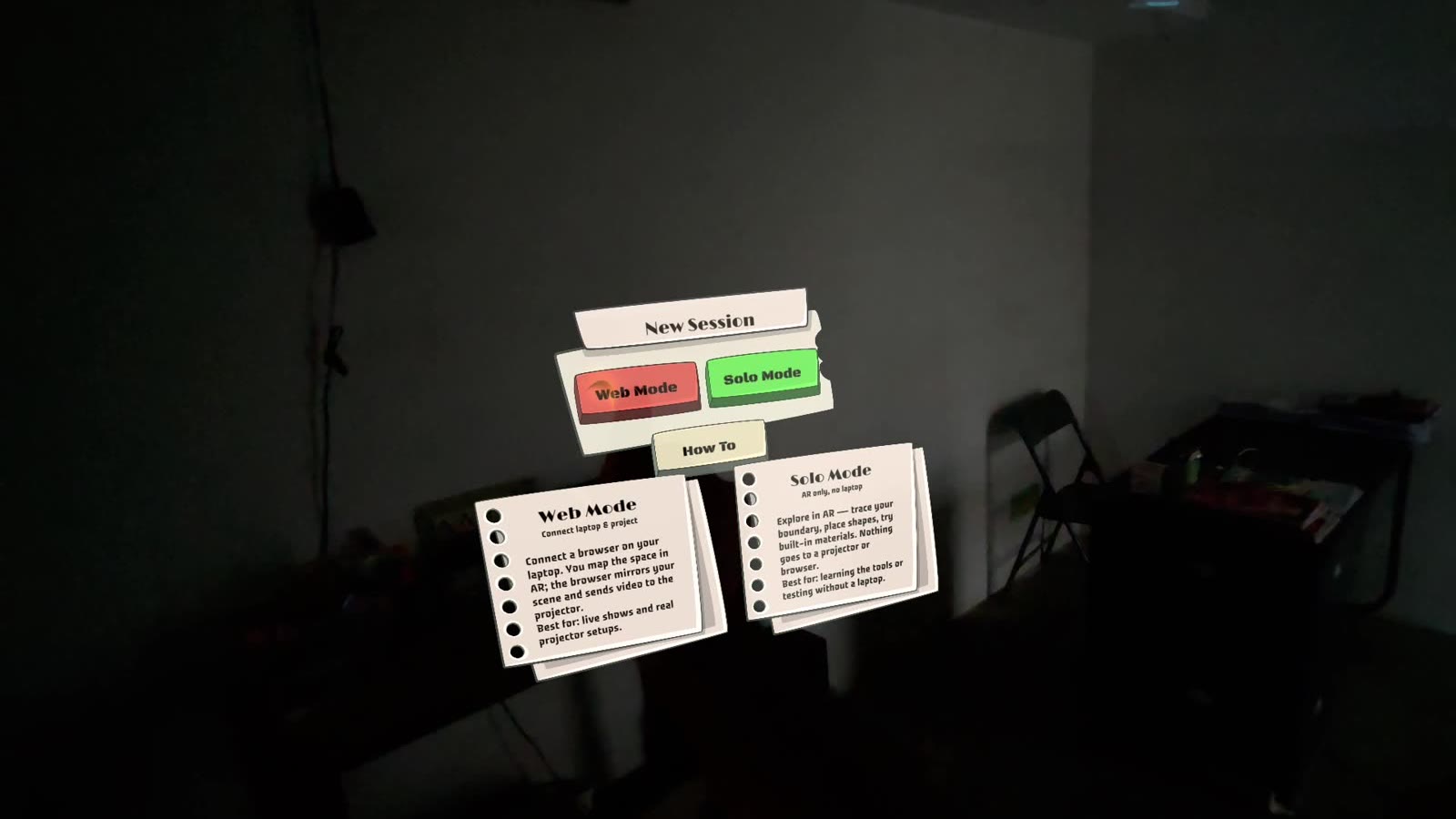
A browser companion app mirrors the scene live, lets you upload your own content, and drives the real projector's output. Web Mode and Solo Mode shipped together in V1 rather than staged separately, one for an actual install, one for learning the tool with no projector on hand.

Submission
Snap Spectacles Community Challenge 2026
Platform
Snap Spectacles, with a browser companion app
Role
Solo concept + build, RBKAVIN Studio
Status
Standalone entry, in submission for the Community Challenge
Year
2026
Deliverable
AR-native projection mapping tool with session save, spatial anchors, and a Snap Cloud-paired web companion.
In the space

Traced by hand,
thrown onto a real wall.

Video
Snap Spectacles
Click to play
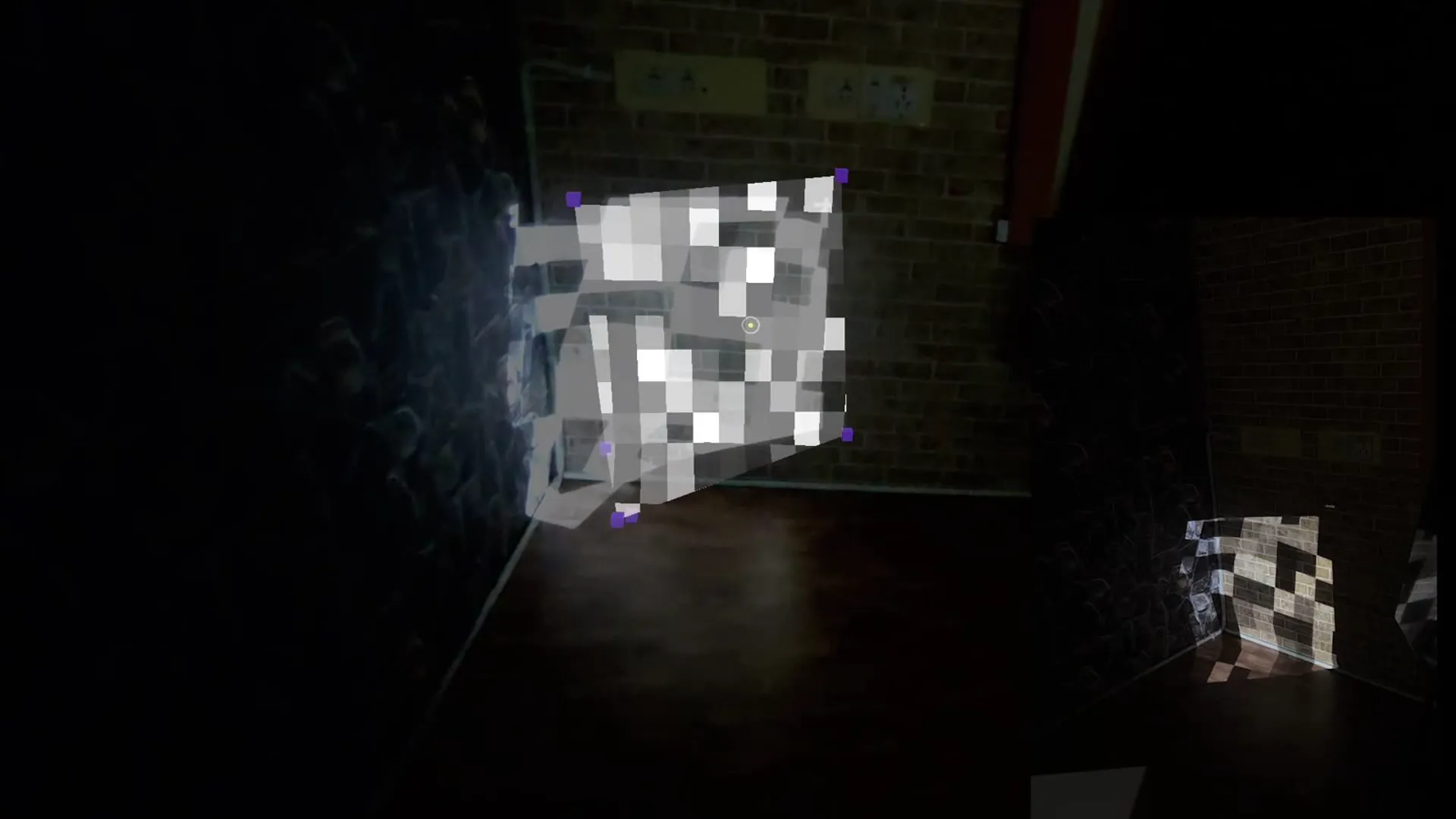
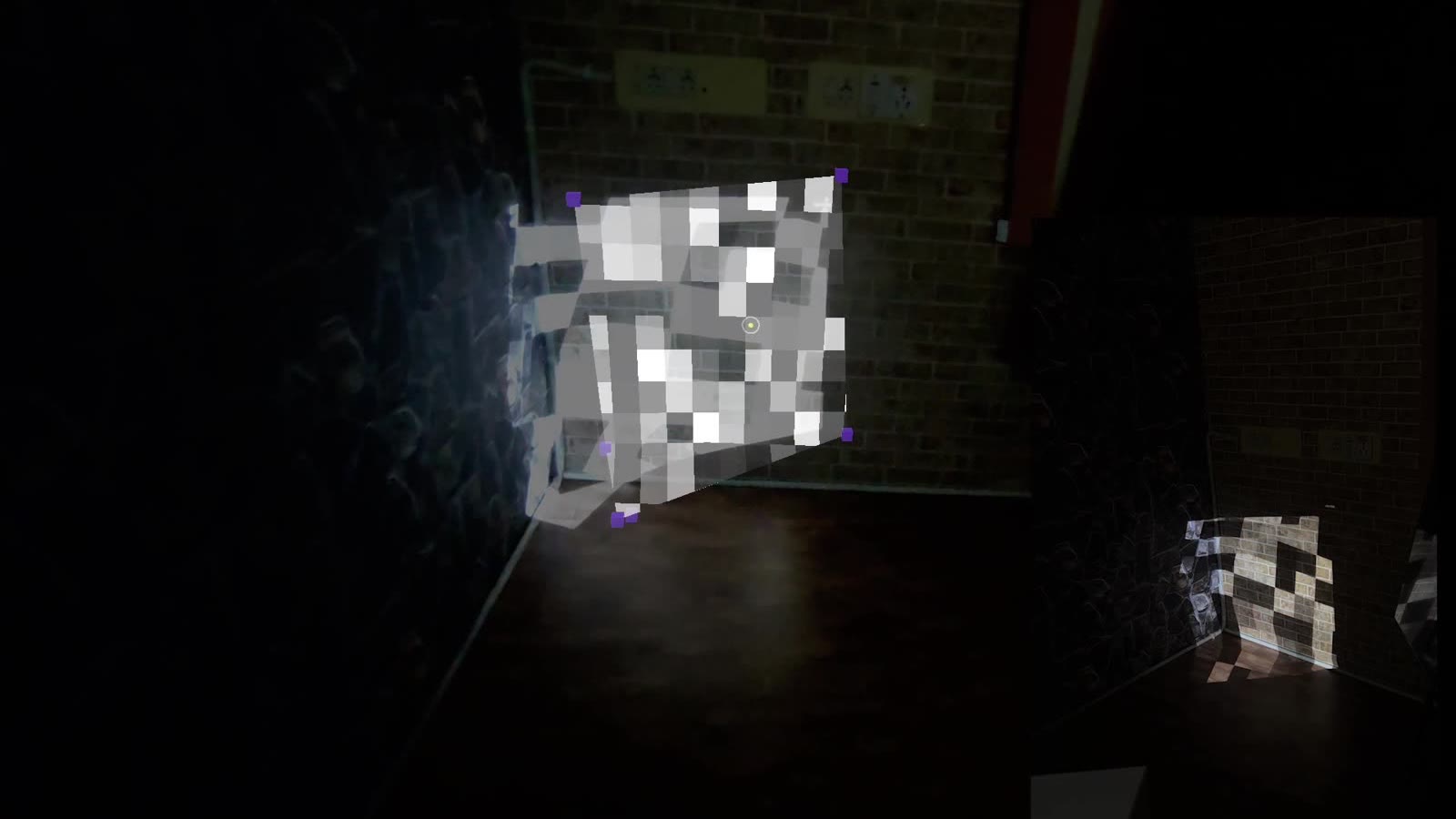
Spatial Mapper live projection output on a real wall Snap Spectacles Community Challenge 2026
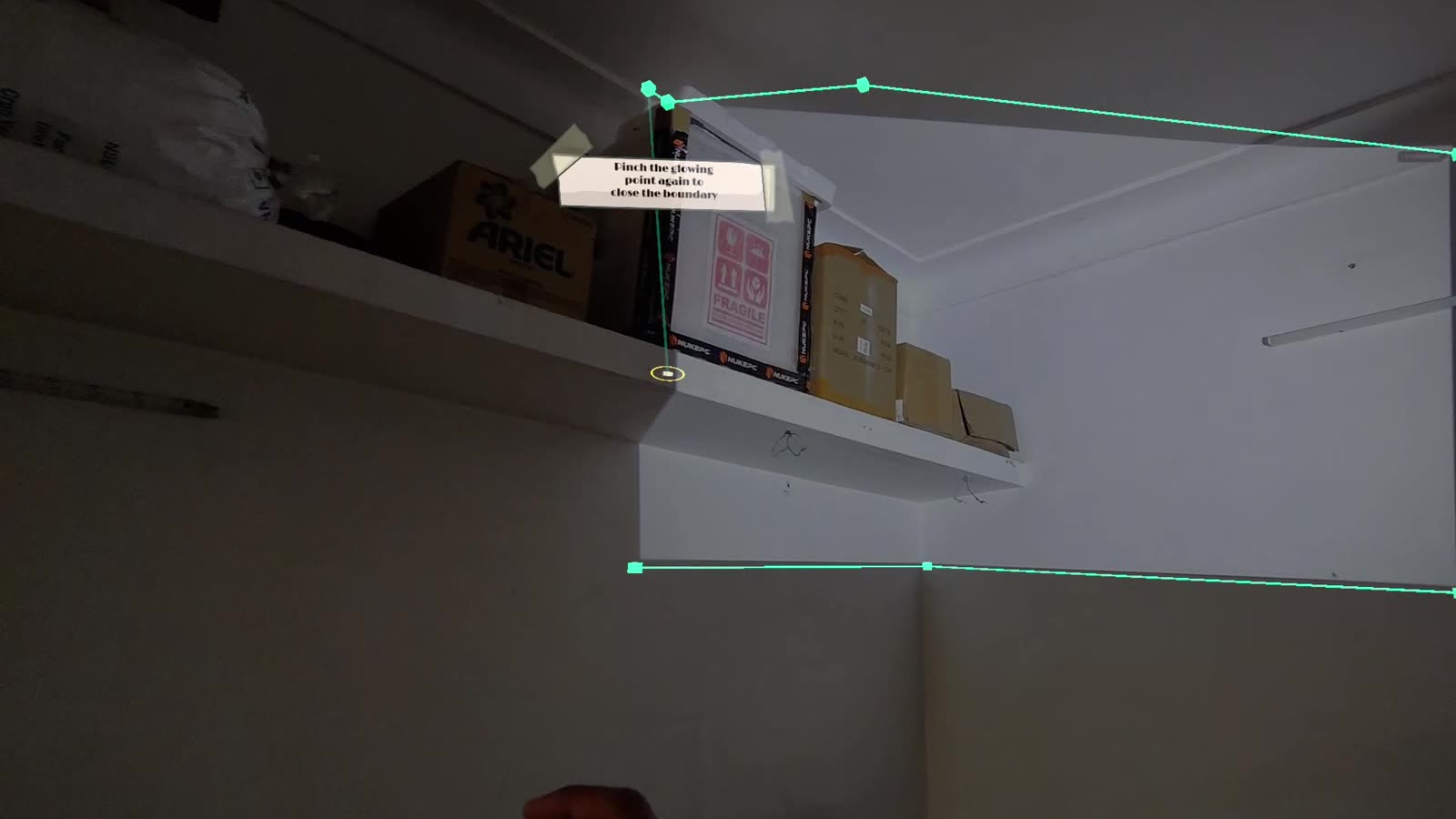
Tracing a projection boundary by hand on Snap Spectacles
Spatial Mapper Web Mode and Solo Mode selection screen
Spatial Mapper design synced live to a real wall projection
Process

Fixed scope,
on purpose.

01
The trace is the whole interaction
Every other projection mapping tool starts on a screen. The one decision that mattered most was making the boundary trace happen standing in the room, pinching each corner of the real light, not dragging points on a camera preview.
02
Web Mode and Solo Mode, shipped together
Solo Mode is for learning the tool or testing a design with no projector on hand. Web Mode is for the actual show. Shipping only one would have made the tool either a toy or a production instrument, never both, so both ship in V1.
03
Snap Cloud over a private WiFi relay
The Specs-to-browser pairing started as a private WebSocket relay, fine in a studio, bad on location. Moving it onto Snap Cloud (Supabase-backed) means the two devices can connect without sharing a network at all.
The result

A build in progress,
not a closed campaign.

Spatial Mapper is being finished as a standalone entry for the Spectacles Community Challenge. The core design loop, trace, place, material, project, works end to end and has been shown live on device. The remaining scope is session save and load, spatial anchors, and the Snap Cloud pairing and onboarding flow, the pieces that make a setup persist and let Web Mode work without a shared network.

A fixed scope protects the build
Redesigning the mapper itself was never allowed to eat into the schedule. Content sequences, multi-projector setups, blend modes, and audio-reactive materials are deliberately deferred, not missing by accident.
Anchoring only matters if it persists
Spatial anchors are mandatory in this build: it does not make sense to save a setup without anchoring it, so a saved scene has to reappear exactly where it was left in the room.
The live sync is the actual proof
Watching a shape sync from the headset to the browser companion and hit a real wall for the first time was the moment that mattered, not a feature landing, the AR design and the projector output finally agreeing with each other.
Pairing infrastructure is a feature
Moving from a private WiFi relay to Snap Cloud was plumbing, not a headline feature, but it is the decision that determines whether the tool works on someone else's site or only in the studio.
Start a project

Ready to bring your next idea into space?

We work with brands and platforms at the edge of spatial computing. Tell us what you're building.

Replies within 48 hours, straight from the studio.

Start a project
Next project
House of the Dragon AR
View project →