In short: shared AR is worth it when the idea only works with another person in it, a match, a co-op task, a reveal two people trigger together. If the idea works just as well alone, single-player is cheaper, faster to ship, and reaches more people.
Multiplayer AR comes in two shapes: same room or different places
Every shared AR brief is one of two things, and the difference decides most of the build.
Colocated. Everyone is in the same physical space and sees the same virtual object in the same real position. Two people stand either side of a table and both see the chessboard sitting on it. This needs the devices to agree on where the room is, which means a mapping or calibration step before anyone plays.
Remote. Players are in different places and each sees the shared content in their own space. Moves, scores, and state sync across the session, but nobody needs to agree on a physical room. This is the easier shape to distribute, because friends can join from a chat instead of from a venue.
On Snapchat, Snap's own documentation describes both modes. Remote sessions start from a group chat invite. Colocated sessions start with one person mapping the area and sharing a Snapcode that the others scan, and every participant has to be friends with that person. The same distinction carries over to glasses, where colocated play is the headline feature.
Where shared AR runs in 2026
Snapchat on phones: Connected Lenses
Connected Lenses are Lenses that pass and store data between the devices running them. Snap's documentation lists a limit of 64 participants in one Connected Lens session. The real advantage on phones is reach: the audience already has the app installed.
On September 10, 2026, Snap released Lens Studio 5.24 with a new real-time multiplayer SDK it calls the Connected Framework. It handles matchmaking (public matchmaking, or auto-joining the people in a chat), lets the developer set minimum, maximum, and target player counts with timeouts and retries, and syncs shared state with clear ownership of each object. It ships with a multiplayer starter template and a game template using Bitmoji avatars. For a brand, the practical change is that "find me someone to play with" is now a built-in feature rather than custom backend work, which shortens the build.
Snap Specs: Connected Lenses on glasses
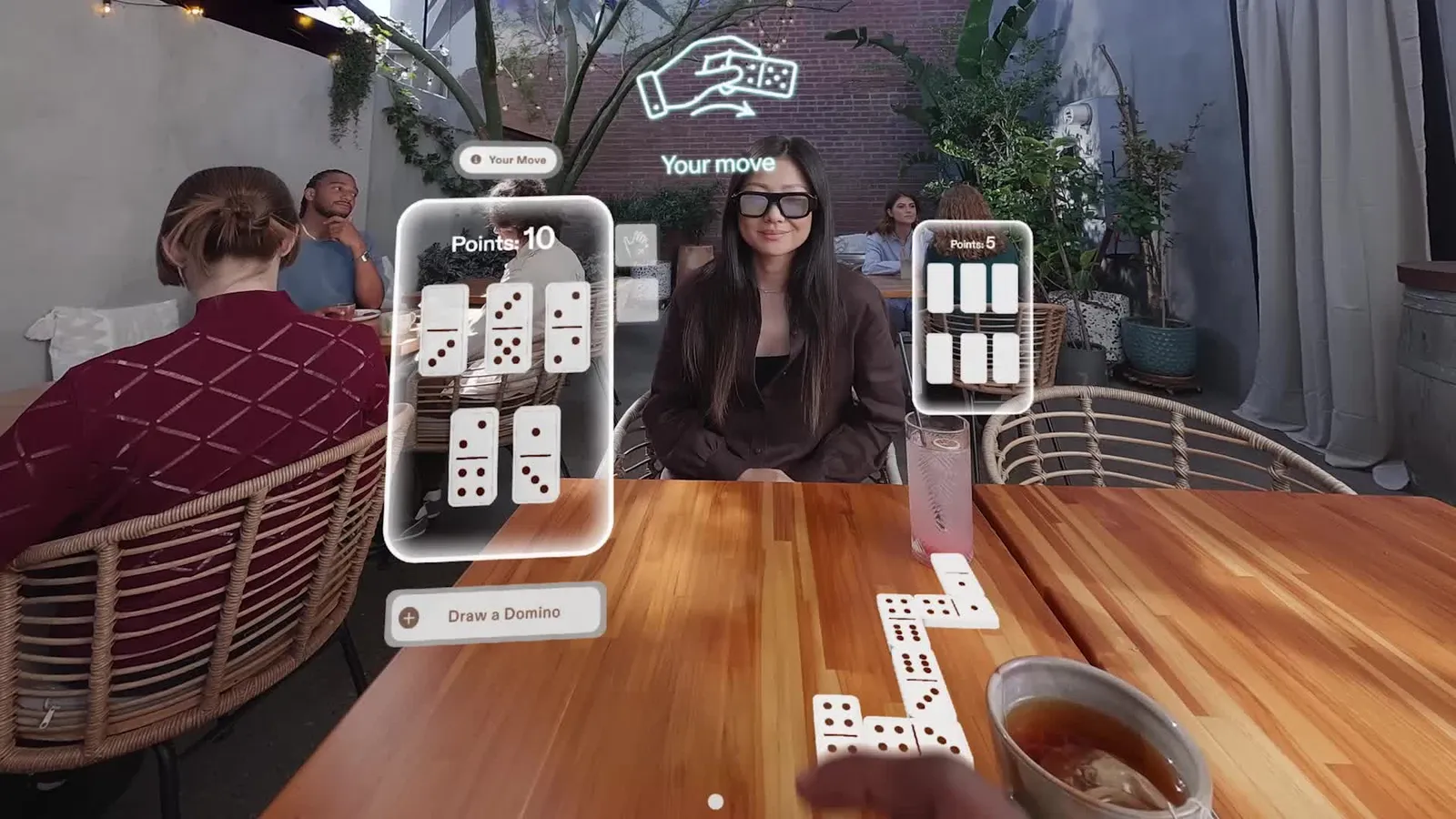
On Snap Specs (formerly Spectacles), shared AR means colocated play. In its September 16, 2026 announcement, Snap described Connected Lenses as letting two Specs wearers share digital experiences in the same physical space, with dominoes featuring Jimmy Butler, chess, and table tennis named as examples. Developers build these with Spectacles Sync Kit in Lens Studio. Specs is on pre-order at $2,195, and Snap says shipping is expected later this fall, with no exact date published yet.
This is where shared AR feels different from a phone. Nobody is holding a screen up between them. Both people look at the same board on the same table with their hands free, which is why we cover the format in our guide to the Spectacles dev kit for brands and across our wearables work.
What shared AR is actually good for
The test is simple: does the idea get better because another person is in it? These formats pass that test.
- Head-to-head games. A quick match against a friend, a rival fan, or a stranger at the stand. Competition gives people a reason to play twice. Table tennis and chess are on Snap's own Specs list for a reason.
- Co-op tasks. Two players each hold half the puzzle, or have to build something together before a timer runs out. Good for brands whose message is about teamwork or community.
- Shared reveals. A product drop or a hidden scene that only unlocks when two or more people trigger it at once. The reveal becomes a moment people talk about, not something one person saw on their own screen.
- Group photo moments. At an event, a group sees the same character or set piece in the same spot and poses with it. The shared object gives everyone the same reference, so the photo and the reaction match.
- Remote play with friends. On Snapchat, a Lens that people invite friends into spreads through chat. Every invite is a form of distribution the brand did not pay for.
For event teams, colocated shared AR fits inside the wider set of formats in our guide to AR at live events. If you are planning glasses at an activation, the hardware, staffing, and crowd flow side is covered separately in wearable AR live event formats. This piece is about the shared mechanic itself.
The constraints nobody puts in the pitch deck
Shared AR breaks in specific, predictable places. Plan for them in the brief, not in week six of the build.
Everyone needs the device and the app
A single-player Lens needs one person to say yes. A two-player Lens needs two. On phones, that means both people have Snapchat and, for colocated play, are friends with the host. On glasses, it means two headsets charged, fitted, and running at the same time. Every extra player multiplies the onboarding.
Matchmaking can leave people waiting alone
Public matchmaking only works when enough people are trying to play at the same moment. At launch, or late at night, a player can open the Lens and find nobody. The Connected Framework's minimum player counts and timeouts help, but the creative still needs an answer for the empty room: a solo mode, a bot, or a clear "invite a friend" path.
Latency and ownership shape the gameplay
Every shared action travels over the network before the other player sees it. Fast physics, like a ball two people hit back and forth, is the hardest case. Someone has to "own" each object so the two devices do not disagree about where it is. That is a design decision as much as an engineering one: slower, turn-based mechanics hide latency far better than twitch reactions.
Colocation needs calibration
For two people to see the same object in the same real spot, the devices have to agree on the room first. That means a mapping or scanning step before play starts. At a busy event, with people walking through the space and lighting changing, that step needs staff who know how to run it and a fallback when it fails.
Some features are off-limits in shared sessions
Snap restricts certain APIs inside Connected Lenses to protect privacy. Its documentation lists location lookups, microphone audio frames, depth data, and world mesh queries among them. If your idea depends on one of those, check before you write the brief, not after.
Testing takes more than one device
You cannot QA a multiplayer Lens alone. Lens Studio 5.24 lets several Preview windows and devices match into the same live session, which helps, but real-world testing still needs two or more people, two or more devices, and time booked for it in the schedule.
When single-player is the better call
Most brand AR should be single-player. Choose it when:
- The goal is reach. A solo Lens works the moment one person opens it. A shared one waits for a second person.
- The idea is a try-on, a filter, or a photo effect. These are personal by nature, and adding a second player adds cost without adding value.
- The timeline is tight. Sync, matchmaking, and multi-device testing add build and QA time.
- The event cannot staff it. Colocated glasses play needs someone to fit headsets, run calibration, and pair players.
A middle path works well: build a single-player core and add a shared moment on top, such as a leaderboard, a friend challenge, or a two-player bonus round. People who come alone still get a full experience. People who come in pairs get more.
How to brief a multiplayer AR experience
Answer these before you ask anyone for a quote. They change the scope more than any visual decision.
- Same room or different places? Colocated or remote decides the tech, the venue plan, and the distribution.
- How many players, and what happens with one? Name a minimum, a maximum, and the solo fallback.
- Phone, glasses, or both? Snapchat reaches the most people. Snap Specs gives the strongest shared moment but needs hardware on site.
- Who are the players to each other? Friends inviting friends, strangers at a stand, or a host and a guest. This decides how people join.
- How long is a session? Short rounds of a minute or two keep queues moving at events.
- What does winning or finishing produce? A shared photo, a reward, a score. Something people take away.
- Who runs it on the day? For colocated glasses, name the staff and budget for training.
If you want a starting point, our brief generator produces a structured AR brief you can add these answers to.
What we have built with shared AR
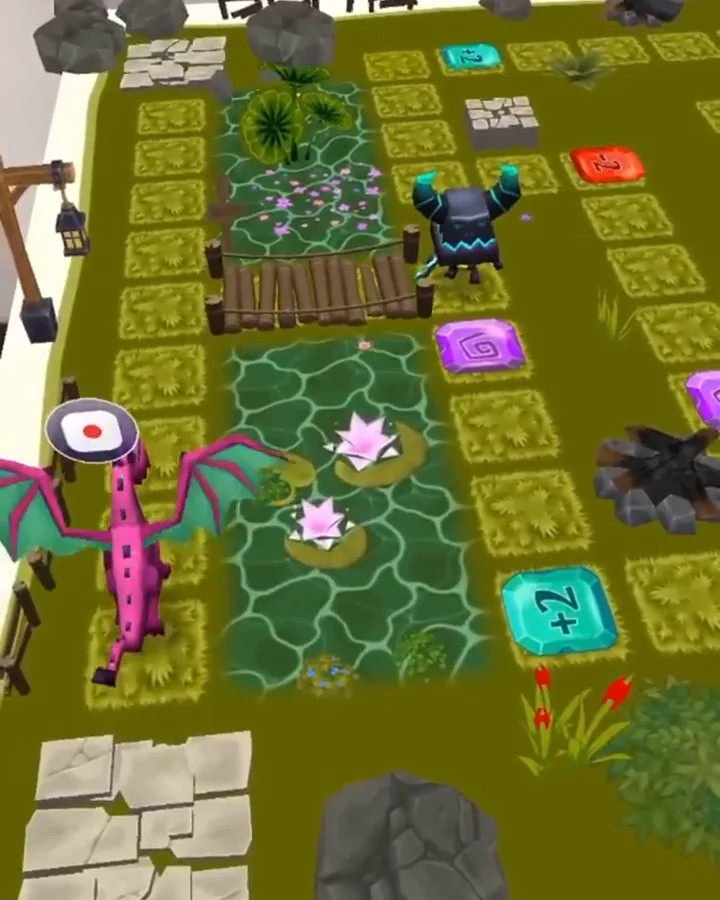
We built a multiplayer mixed reality board game as studio R&D: two players in different locations share one game in real time, each seeing the board in their own space through AR, with moves syncing across the session. It was a proof of concept for location-independent social play: two players, two parts of the world, one shared game.
Kavin also worked as an AR developer at Nexus Studios on Ellen's Heads Up! for Messenger, built with Ellen DeGeneres and Meta. One player has a category card above their head that only the others can see through AR, and they guess from reactions in real time. It was one of the first AR games built natively for Messenger video calls. The whole game runs on one simple shared rule.
On Snap Spectacles, we built Ice Fishing, a hyper-casual game where your phone becomes the fishing rod, and Noodle, the spatial AI workbench that won three prizes at MIT Reality Hack 2026. Both are single-player, and both taught us how much onboarding a glasses experience needs before a second player is even in the picture. More on how we work on the platform is in what we build as a smart glasses developer, and you can try live WebAR demos at ar.rbkavin.studio.
Frequently asked questions
What is multiplayer AR?
Multiplayer AR is an augmented reality experience where two or more people see and interact with the same digital content at the same time. It can be colocated, with everyone in the same room seeing an object in the same real spot, or remote, with players in different places sharing one synced game or scene.
What are Snapchat Connected Lenses?
Connected Lenses are Snapchat Lenses that share data between the devices running them, so several people can play or create together. Snap's documentation lists a limit of 64 participants per session. Remote sessions start from a chat invite, and colocated sessions start when one person maps the area and shares a Snapcode.
How many people can share AR on Snap Specs?
In its September 2026 announcement, Snap described Connected Lenses on Specs as letting two wearers share digital experiences in the same physical space, with chess, table tennis, and dominoes featuring Jimmy Butler as examples. Each player needs their own pair of Specs, which are on pre-order at $2,195.
Is multiplayer AR more expensive to build than a single-player Lens?
Yes. Shared state, matchmaking, a fallback for solo players, and testing across several devices all add build and QA time. Lens Studio 5.24's Connected Framework now handles matchmaking and state sync out of the box, which reduces custom backend work, but multi-device testing and colocation setup still cost time.
What is the biggest risk with shared AR at an event?
Onboarding. Every extra player has to have the app or a fitted headset, and colocated play needs a calibration step before anyone sees the same object. Without trained staff and a solo fallback, queues stall and the shared moment never happens.
When should a brand choose single-player AR instead?
When the goal is reach, the idea is personal like a try-on or a photo filter, or the timeline is tight. A single-player Lens works the moment one person opens it. A good compromise is a solo core with a shared extra, such as a friend challenge or a leaderboard.
Insights newsletter
Smart glasses, AR campaigns, spatial computing.
Straight to your inbox. No noise.
SubscribeDoes your idea need a second player?
Tell us the moment you want people to share. We'll tell you whether it should be multiplayer, single-player, or a solo core with a shared extra.
Start a project