In short: AR packaging and print work when the artwork is designed as a tracking target from day one, the entry point is one scan with no app hunt, and the trigger is locked and tested on the real printed stock before the print run starts.
New to this? The technique is called image tracking. See the 45 second visual explainer →
Image tracking recognises one exact picture, not a type of object
Image tracking does not know what a cereal box or a perfume carton is. It knows one image. During the build, the printed artwork is loaded into the AR engine as a reference. The engine pulls out hundreds of small feature points from it: sharp corners, edges, high contrast spots. At runtime it looks for that same constellation of points in the camera feed. When it finds a match, it knows where the print is, how far away it is and which way it is tilted, and it draws the 3D content on top.
That has two practical consequences for a brand. First, the experience only fires on that exact artwork. A redesigned label, a regional variant with different copy, or a new colourway is a different image, and each needs its own target or its own test. Second, the content is physically tied to the product. Tilt the box and the character on it tilts too. That link between the object in your hand and the content on screen is what makes packaging AR feel different from a video behind a QR code.
It is the same family of tracking we cover in our WebAR guide for brands, next to face, body and world tracking. For print, image tracking is almost always the right one, because the print is the anchor.
What makes artwork a good tracking target
Most packaging AR problems we see start in the design file, not the code. Engines differ, but the published guidance lines up. Vuforia's documentation and Snap's Lens Studio docs ask for the same things.
- Detail and contrast. Busy illustration, photography, type and texture give the engine plenty of feature points. Large flat colour fields and soft gradients give it almost nothing.
- No repeating patterns. A tiled monogram, stripes or a repeated logo grid confuse the engine, because the same cluster of points appears in many places. Vuforia and Lens Studio both list repetitive patterns as something to avoid.
- Matte over gloss. Gloss lamination, foil and spot UV throw reflections under shop lights and phone torches. Vuforia's guidance says a glossy reflection behaves like covering part of the target. If the brand wants a premium finish, keep the tracking zone matte.
- Flat and rigid. A carton face, a poster or a thick magazine page tracks well. A crumpled pouch, a curved bottle label or thin newsprint needs careful testing.
- Size for the viewing distance. Vuforia's documentation estimates that a 20 to 30 cm wide target is detectable from up to about 2 to 3 metres, roughly ten times its width, and notes that this varies with conditions. It recommends a printed target at least 12 cm wide for tabletop use. Other engines behave differently, but the principle holds: a 4 cm jewellery box lid will only work held close to the camera.
Lens Studio also asks for the real printed height of the marker in centimetres, so the 3D content scales correctly against the physical print. That number has to come from the final dieline, not a mockup.
How customers get in: QR to WebAR, Snapcode, or in-app scan
The tracking target and the entry point are two separate decisions. The target is what the camera locks onto. The entry point is how the customer opens the camera in the first place.
QR code to WebAR
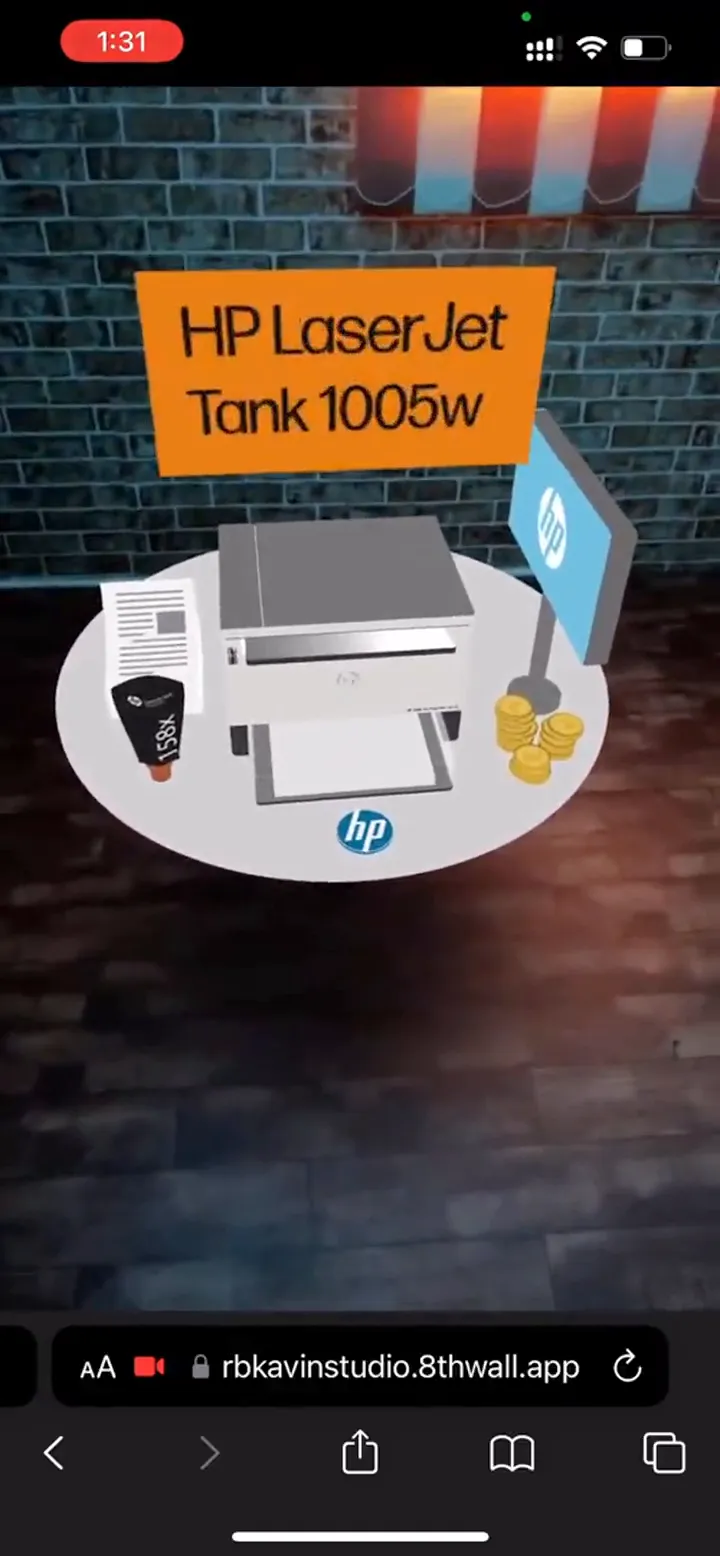
A QR code on the pack opens a browser link. The browser asks for camera access and the experience starts, with no app to install. This reaches the widest audience because almost every phone camera reads QR codes natively. HP is an example of the delivery model, though not of print tracking: an 8th Wall WebAR experience for an in-person product launch, where attendees scanned and launched it straight from their phone browser. For the 007 First Light game launch, built for Gloam Agency and IO Interactive, the WebAR was a face filter rather than image tracking, but the principle is the same: just a link that opens the camera.
Snapcode into Snapchat
Every lens built in Lens Studio gets a Snapcode, Snap's own scannable code, which unlocks that lens inside Snapchat. Snap has a template where the Snapcode itself acts as the tracking marker, so one printed mark both opens the lens and anchors it. The trade-off is that the customer needs Snapchat installed.
In-app scan
The customer opens a social app, finds the effect and points it at the print. This has the most friction for packaging, because nothing on the pack takes them there directly. It works best when the lens is already being pushed through paid media or creators, and the pack is a second touchpoint rather than the only one.
WebAR or a social lens: the trade-off for print
| WebAR (QR to browser) | Social lens (Snapchat, TikTok) | |
|---|---|---|
| Install needed | None, opens in the browser | The app, plus finding the lens |
| Entry from pack | Any QR code | Snapcode (Snapchat) or search |
| Sharing | Has to be designed in (capture and share sheet) | Built in, the lens travels with each share |
| Data | Your own analytics, your own domain | Platform analytics only |
| Who controls lifespan | You and your hosting provider | The platform |
For a product sitting on a shelf for 12 months or more, WebAR is usually the safer default because the brand owns the link and the data. For a short campaign aimed at a young, social-native audience, a lens wins on reach and sharing. Many briefs do both: a QR to WebAR on the pack, and a lens version for paid social. The 3D assets can be reused across the two, as we cover in Camera Kit vs 8th Wall.
Packaging lives longer than most AR platforms
A campaign lens can come down after six weeks. A printed box can sit in a cupboard for years, and the QR code on it keeps working only as long as whatever it points to. Platform longevity is a real risk for print, and it has already happened twice.
On January 14, 2025, Meta shut down Meta Spark and removed all third-party AR effects from Instagram, Facebook and Messenger. Brands can no longer publish their own AR effects on Instagram, so image-tracked Instagram filters like the five dollar bill and book projects below cannot be built there today. 8th Wall's hosted WebAR platform ended access on February 28, 2026. Its owner Niantic Spatial says existing hosted projects keep running until February 28, 2027, then go offline. The engine has since gone open source and can be self-hosted.
The practical fix is simple. Point the printed QR code at a URL on the brand's own domain, and redirect it from there. If the platform underneath changes, you update the redirect, not the packaging. Ask any studio where the experience will be hosted and what happens to the link when the contract ends.
Lock the trigger before the print run
Print is the one part of an AR brief you cannot patch later. The 3D content behind a WebAR link can be updated any time. The artwork on 200,000 printed cartons cannot. That sets the order of work:
- Bring the AR team in at design stage, before the artwork is signed off, so the tracking zone is designed as a target and not bolted on.
- Freeze the tracking zone once it passes testing. Late copy changes, a moved barcode or a new legal line inside that zone can break tracking.
- Test on a press proof on the real stock with the real finish, not on a screen or a desk printout. Varnish and lamination change how a target behaves.
- Test in real light, under shop lighting, at home, and in low light, on older phones as well as new ones.
- Put a short call to action next to the QR, such as "Scan, then point your camera at the box." People do not guess that the box is the trigger.
This is the same planning discipline we lay out in how to plan an immersive campaign, with one extra fixed date: the print deadline.
How to measure AR packaging and print
The QR code is the measurement opportunity most brands waste. Use a different code, or a different URL parameter, for each pack, SKU, market or print placement, and you can see which one drives scans. With WebAR on your own analytics you can track scans, camera permission accepted, target found, time in experience and taps on any shop link. Social lenses report views, plays and shares inside the platform's dashboard.
Agree the success metric before launch. For packaging it is usually scan rate per unit shipped and repeat use. For a poster or print ad it is scans per placement. Our guide to measuring AR campaign ROI covers how to set those numbers up.
Where AR on packaging and print earns its place
Unboxing
The moment of opening a product is already an event. AR can add a reveal on the inside of the lid or the box face, for beauty, tech and gifting where the packaging is part of the product.
Product storytelling
Where something came from, how it is made, how to use it. A box that shows an animated how-to does more than a printed leaflet, and the content can be updated after print.
Collectibles
Different designs across a range, each unlocking its own character or piece, give people a reason to buy the next one. For Pandora, via Simone Agency, we built an Instagram AR experience where charm pieces appear in frame and you catch them to build a personalised bracelet. That was a catch game, not print tracking, but the collect-and-complete mechanic carries straight over to a range of packs.
Posters, maps and out-of-home
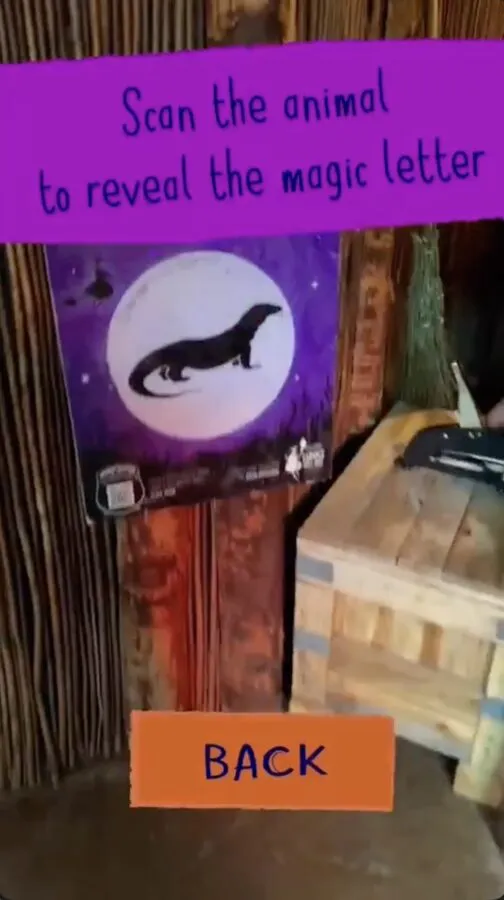
A poster is a large, flat target, which is close to ideal if the finish is matte. Print also works as a route through a physical space. For Chester Zoo, with Augit, we built Luna's Lost Spell, a six-station WebAR Halloween trail. A QR code on a printed trail map handed out at the entrance opened it in the browser, and at the stations, image-tracked animal scans and AR mini games revealed the letters. Collect all six and they spell the magic word that claims the reward.
Print ads and printed objects
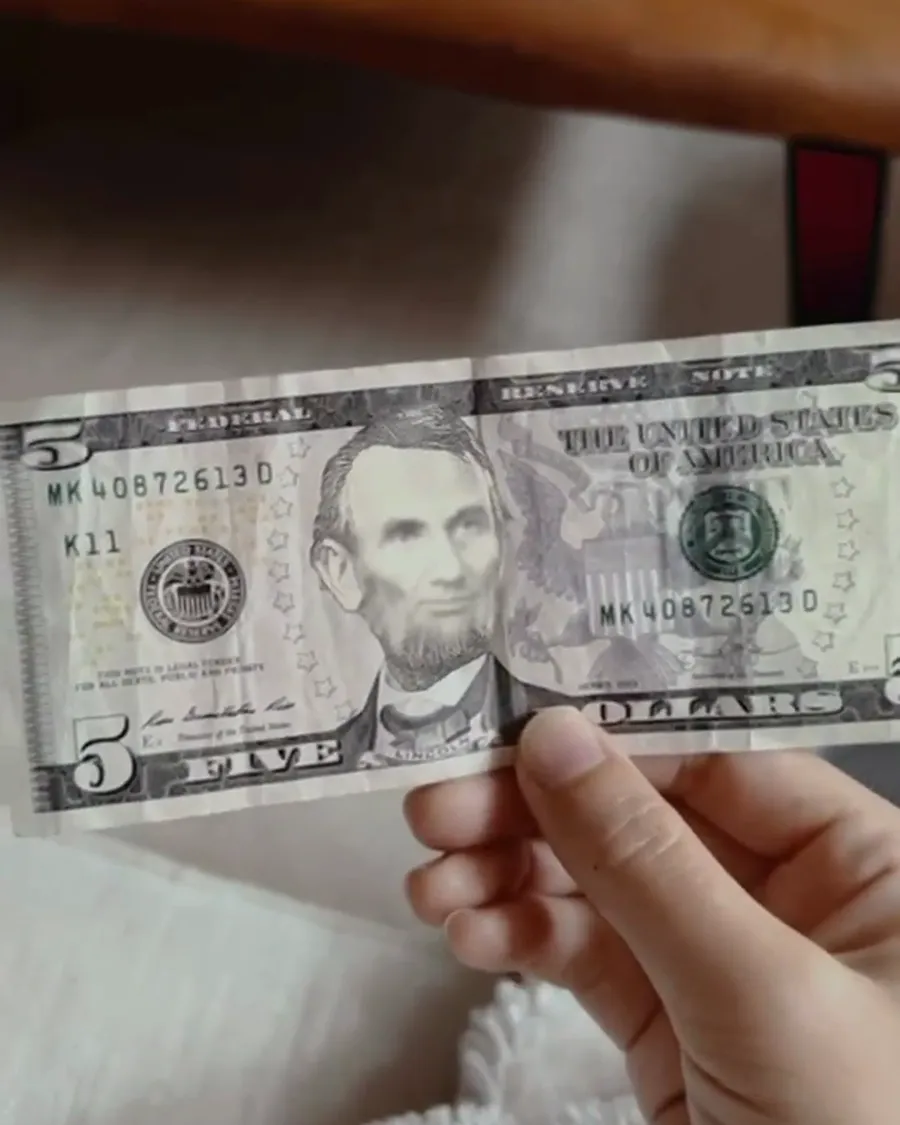
Magazine pages, flyers, tickets, books and even money. For a horror film promotion, The Book, we built image-tracked Instagram AR where you point your camera at a book and a ghost emerges from the pages around you. For Karen X Cheng and the Starts With Us campaign, we built an image-tracked Instagram filter where you aim your camera at a US five dollar bill and Lincoln steps off it to deliver a message about how change starts with us. Nobody had to print anything: the target was already in people's wallets.
You can try image tracking on your own phone in our live WebAR demos at ar.rbkavin.studio, before you brief anything. If the brief is a lens rather than a web experience, our branded AR filter guide covers cost and scope.
Frequently asked questions
What is AR packaging?
AR packaging is printed packaging that triggers an augmented reality experience when a phone camera is pointed at it. It uses image tracking, so the camera recognises the specific artwork on the box or label and pins animated 3D content to it. Customers usually get in by scanning a QR code that opens the experience in their browser.
Do customers need an app to use AR packaging?
Not with WebAR. A QR code on the pack opens the experience in the phone browser with no install. Snapchat lenses need the Snapchat app and are opened with a Snapcode. Choose WebAR when the audience is broad, and a social lens when built-in sharing matters more than reach.
What makes a good image target for AR print?
High detail and contrast, no repeating patterns, a matte finish, a flat rigid surface, and a size that suits the viewing distance. Vuforia's documentation estimates detection from up to about ten times the target's width, though engines and conditions vary. Large flat colour areas, gloss lamination and foil make tracking less reliable.
When should the AR studio get involved in a packaging project?
At design stage, before artwork sign-off. The tracking zone has to be designed and tested as a target, then frozen before the print run. The 3D content can change after print, but the printed trigger cannot.
Is 8th Wall still a safe choice for packaging AR?
Not on its old hosted platform. 8th Wall ended platform access on February 28, 2026, and Niantic Spatial says existing hosted projects stay online until February 28, 2027. The engine is now open source and self-hosted. For packaging with a long shelf life, point the QR code at a URL on your own domain so you can move the experience without reprinting.
Can AR packaging work on Instagram?
Not with third-party effects. Meta shut down Meta Spark on January 14, 2025 and removed AR effects built by third parties from Instagram, Facebook and Messenger. For packaging today, the main routes are WebAR in the browser, Snapchat lenses and TikTok effects.
Insights newsletter
Smart glasses, AR campaigns, spatial computing.
Straight to your inbox. No noise.
SubscribeGot a box, label or poster that should come alive?
Send us the artwork and the print date. We'll tell you whether it tracks, what to change, and which entry point fits the audience.
Start a project