AR that lives
on a link.
No app. No download. A user opens a URL, allows camera access, and the augmented reality starts immediately. Face AR, world AR, hand tracking, and product 3D — all in the browser.
- 01Within 48 hours — a direct reply with scope, technology recommendation, and cost band.
- 02Optional call — 20 minutes to clarify the interaction and audience context.
- 03Try live demos now while you wait: ar.rbkavin.studio
ar.rbkavin.studio has live WebAR demos you can run in your browser right now. Face filters, world AR, sky segmentation, hand tracking. No app, no QR code — just open the link on your phone.
WebAR formats we
build for brands.
Glasses, accessories, makeup, character overlays, and generative AI transformations — all face-tracked in real time through the browser. Works without the Snapchat or TikTok app. Ideal for try-on campaigns and brand activations that need full audience reach.
3D objects, characters, and animated scenes placed and anchored in the real world through the rear camera. A product that appears on a table. A character that walks through a room. An installation that lives at a specific location, visible only to visitors.
Photorealistic 3D models of products that users can place, rotate, and inspect in their own space. Ideal for e-commerce, retail, and packaging campaigns. The 3D experience runs on a link or embedded directly on a product page, no plugin required.
AR that responds to the hands without requiring a touchscreen tap. Virtual objects held in the hand, gestures that trigger animations or transitions, and interactive installations where the body is the interface. Built on WebXR and custom tracking.
AR that activates when a phone camera points at a specific image: packaging, a poster, a business card, a page in a magazine. The marker becomes the launch point for a 3D reveal, video, or animated brand moment. Built for packaging, print, and OOH.
WebAR can go beyond these formats. Multi-user AR, spatial audio, AI-driven interactions, generative visuals, location-based unlocks, e-commerce try-on layers. If you have an idea that doesn't fit a standard format, send the brief and we'll scope it honestly.
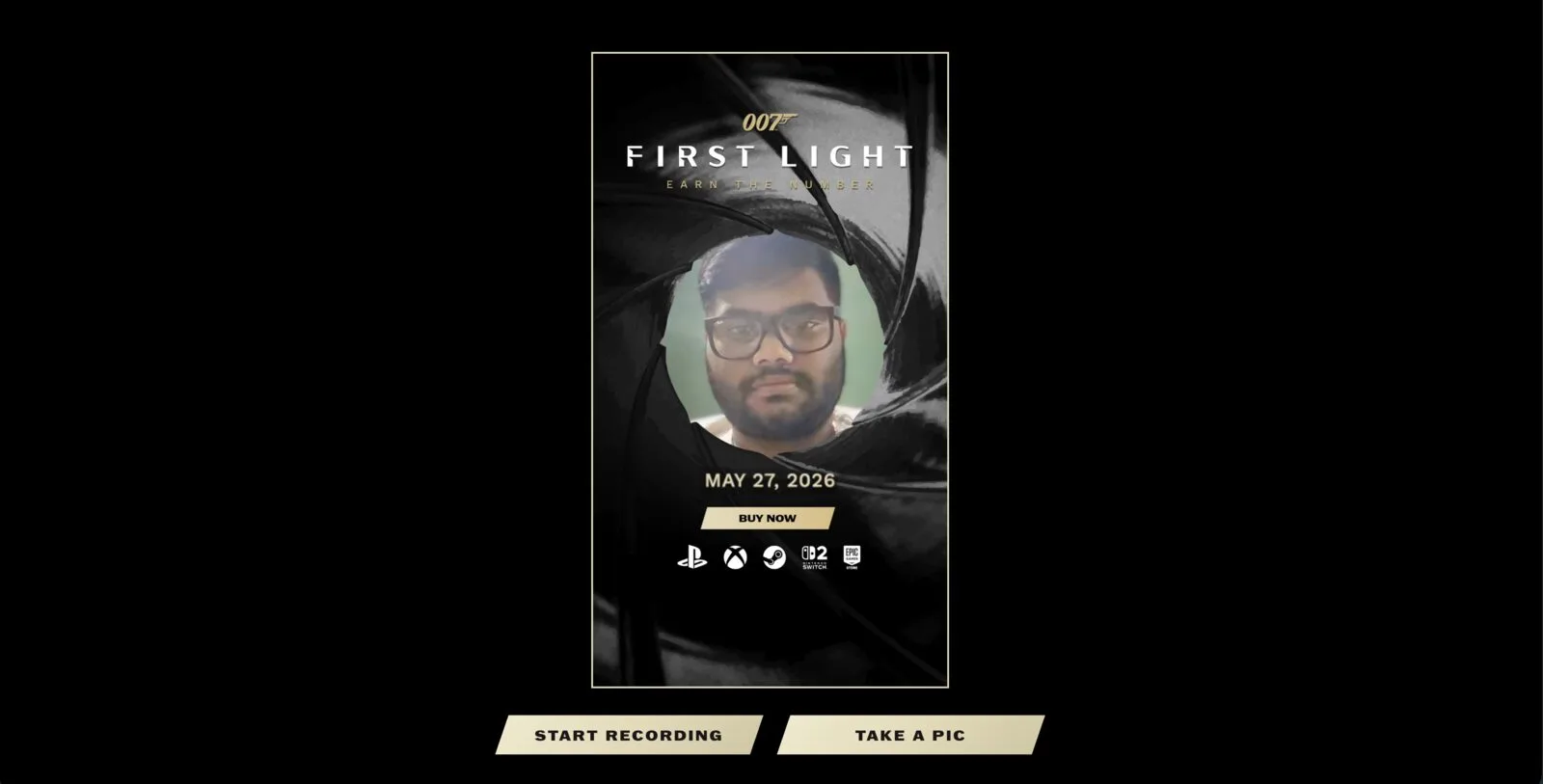
007 First
Light.
A WebAR campaign experience built for 007: First Light. Ran entirely in the browser, activated from a link. The audience accessed the AR without installing anything and without being on a specific social platform.
WebAR was the right format here because the campaign needed to reach beyond any single platform's existing user base. The link could live in press coverage, brand emails, paid ads, and partner embeds simultaneously.
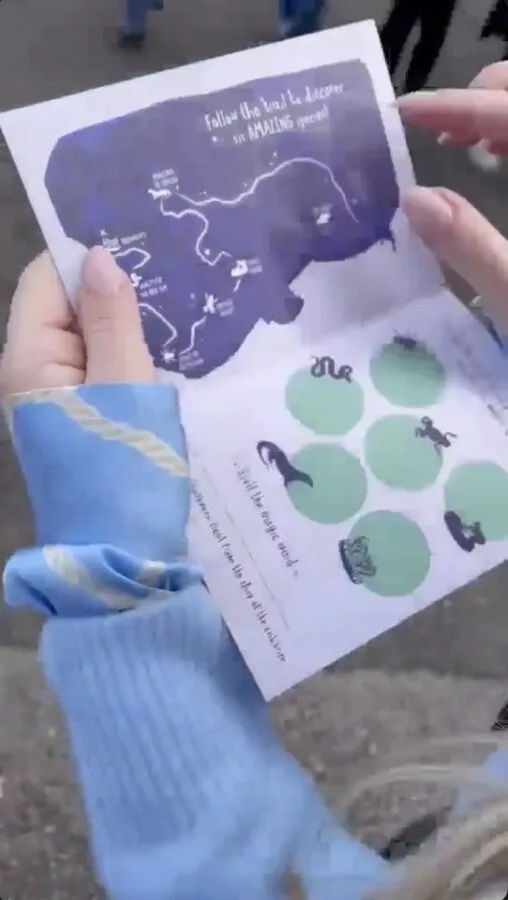
Chester
Zoo.
A WebAR trail experience activated by QR codes at animal enclosures across the zoo. Visitors scanned and encountered AR conservation stories for each species — no app, no Snapchat, no TikTok. Just a URL at each location.
Over 3,000 visitors used the trail during Halloween week alone. The zoo owns the experience permanently, updates it each season, and reads engagement analytics from their own dashboard.
What a WebAR
build costs.
Pricing is driven by interaction complexity and the number of experience states. No platform licensing fees — WebAR is an open technology. These are the real starting points.
Single-mechanic WebAR: a face filter, a product 3D viewer, or an image-tracked reveal. One interaction, brand assets integrated, live on a URL.
- ✓ One core AR mechanic, tested across iOS and Android
- ✓ Branded to brief, assets integrated
- ✓ Hosted and live on a shareable URL
- ✓ Timeline: 2 to 4 weeks
Multi-state WebAR: world AR with physics, face AR with animated character, product configurator, or interactive gameplay. Built for a campaign with a specific audience and distribution context.
- ✓ Multi-state interaction designed around the campaign goal
- ✓ World AR, face AR, hand tracking, or product 3D
- ✓ Embeddable on your site or accessible via QR / paid ad
- ✓ Timeline: 3 to 6 weeks
Long-running or multi-market WebAR: a product AR layer across an entire catalogue, a retail-wide try-on tool, or a campaign platform that runs across multiple territories with analytics and CMS management.
- ✓ Multi-product or multi-market architecture
- ✓ CMS or admin layer for content updates
- ✓ Full analytics integration and performance reporting
- ✓ Ongoing hosting and support SLA
From brief to live
in 2 to 6 weeks.
WebAR moves faster than app builds because there is no app store review. A confirmed brief leads to a live experience on a URL, ready to send to your media team.
What you bring: the campaign objective, the audience, and the brand assets. We handle everything else from tech stack to live URL.
Start the conversationWhat we know
about WebAR.
All articles →
What WebAR is, how it differs from social AR and native apps, what it costs, and when it's the right format for a brand campaign.
→A format decision guide: when to use Snap Lenses, when to use WebAR, and when neither is the right answer.
→The trade-offs between in-platform social AR and browser-native WebAR for brand campaigns, audiences, and distribution.
→Questions about
WebAR.
AR that loads in
any browser, on any phone.
One brief, one reply within 48 hours: scope, technology recommendation, and cost. If WebAR is the wrong format, we say so.
Need something else? Social AR → · Smart glasses → · Contact the studio →