In short: a music AR filter earns its budget when the song is part of the effect, not background to it, because every video a fan posts with it carries the track to their followers.
This is written for label marketing teams, artist managers and agency producers planning a single or album campaign. We have built AR for Little Mix, Sony Music UK and Universal Music, and the same handful of decisions come up on every music brief: which format, which platform, how the audio is cleared, and when the effect has to be live.
Why AR works for music when the song is in the effect
A music release lives or dies on how many people use the track in their own content. A poster or a paid video asks fans to watch. An AR effect asks them to make something, and when the effect plays the song, the thing they make is a short video with the track attached.
The scale of that behaviour is not small. Snap reported in 2023 that videos created with music from Sounds on Snapchat had passed 2.7 billion, with over 183 billion views, since the Sounds library launched in 2020. The same year Snap added Sounds recommendations for Lenses: when a fan applies a Lens, a Sounds icon suggests tracks to pair with it.
The general mechanics of why fan-made AR content travels further than paid media are covered in how AR campaigns earn organic reach. For music, the extra lever is the sound itself.
Five AR formats that work for a music release
1. Song-synced Lenses and effects
The effect plays the track and the visuals move with it: a beat drop triggers a burst, a chorus changes the scene, a quiet verse pulls everything back. This is the format with the clearest link to streams, because the song is impossible to separate from the content.
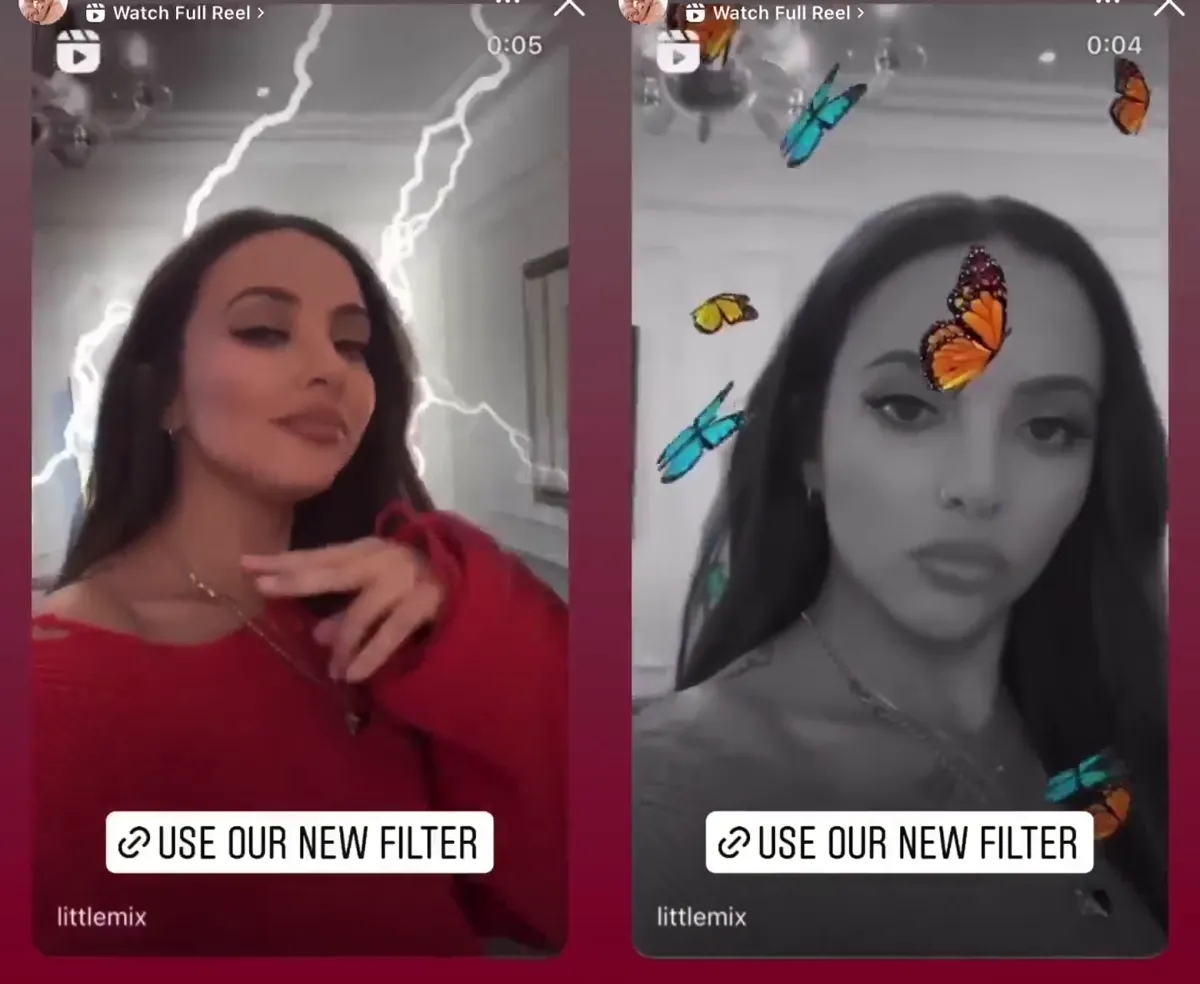
Our Little Mix Thunder effect for Instagram worked this way. Thunder crackles and butterflies emerge in sync with the track's transitions, so every beat shift and drop triggers a visual change. The AR becomes a performance of the song rather than a sticker on top of it. For Sony Music UK's Valentine's Day single, also on Instagram, we built an effect where the visuals react to the song, tied to the emotional tone of the track so the result is a share-ready moment.
2. Visual-identity and lyric effects
The album artwork, colour palette, typography or a key lyric becomes a face or world effect. These are cheaper to build and fast to approve, and they work well in the teaser phase before the track is out, when there is no audio to sync to yet. The risk is that they look like any other filter unless the art direction is distinctive enough to be recognised in a two-second clip.
3. Fan games with the song as the mechanic
A 15 to 30 second game where the track is playing and the gameplay echoes it. Games hold attention longer than a face effect and give fans a score to beat, which is a reason to post and a reason to challenge a friend.
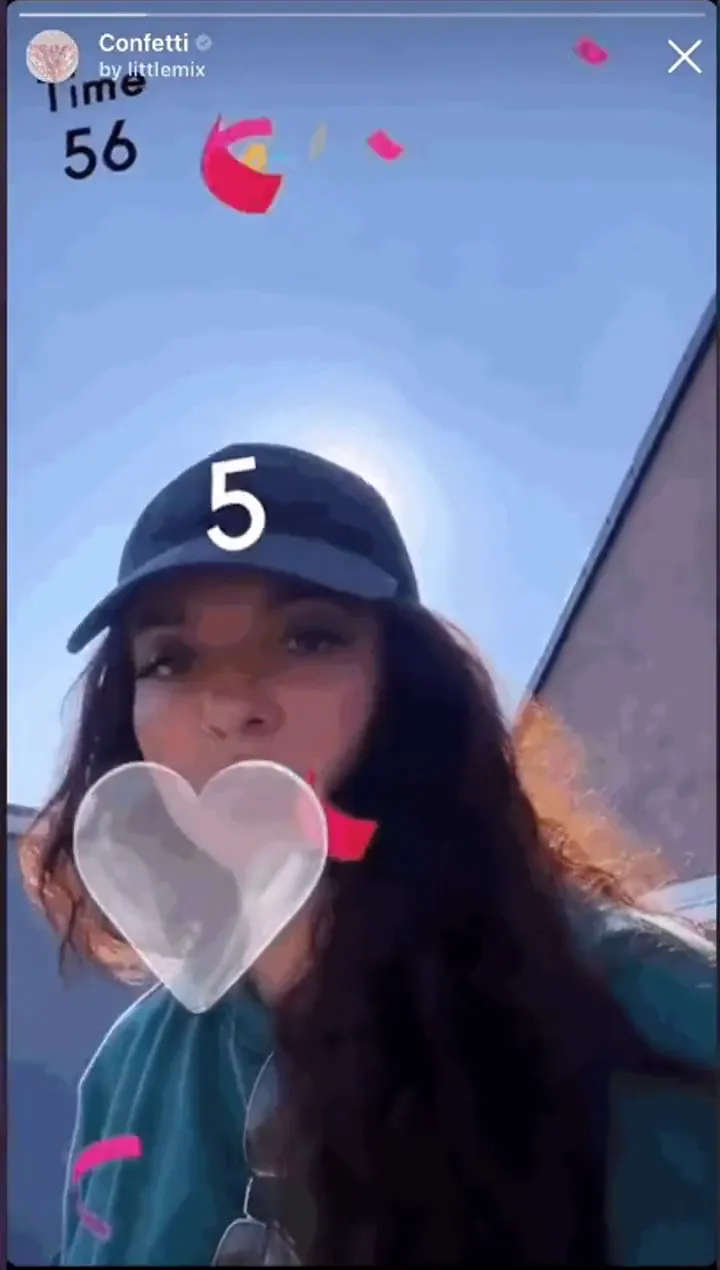
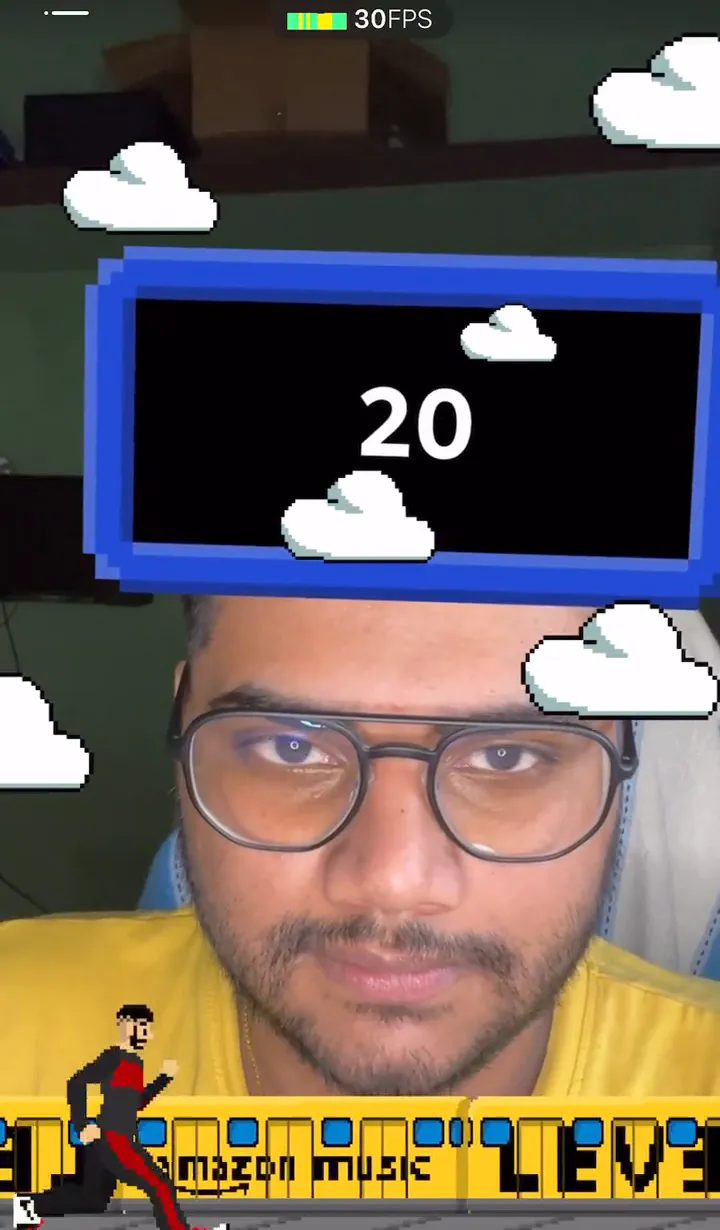
Two of our Instagram music builds took this route. For Little Mix's Confetti album, an empty heart floats in frame and confetti falls around the player, who catches pieces to fill it, so the mechanic carries the album's theme. For Universal Music, we built an endless runner where players keep going while the promoted track plays around them, making the song part of the mechanic. The full playbook for brand games, including scoring and replay loops, is in our TikTok AR effects guide.
4. Tour and concert AR
At a show, AR shifts from reach to experience: a Lens unlocked by the stage visuals, a set-list reveal, a location-locked effect that only works at the venue, or a hands-free layer on smart glasses. Phone AR in a crowd has real limits: patchy signal, low light and people who do not want to hold a phone up during the set. We cover those constraints and the wearable formats that get around them in wearable AR at festivals and music events, and our wider wearables work shows where that format is heading.
5. Vinyl, merch and poster image tracking
The physical product becomes the trigger. Point a phone at the sleeve, the tour poster or the hoodie print and the artwork animates, the artist appears, or an exclusive clip plays. This rewards the fans who paid for the physical release and gives retail and merch a reason to be filmed.
For physical products, WebAR is often the better delivery route than a social Lens, because a QR code on the sleeve opens it in the browser with no app required. You can try that kind of no-install AR on our demo portal at ar.rbkavin.studio.
Which platform fits a music release in 2026
All four of our music builds above were Instagram AR effects, made between 2021 and 2023. That route has closed. Meta removed every third-party Meta Spark effect from Instagram, Facebook and Messenger on January 14, 2025, and shut the Spark tools to outside creators. The mechanics we built there now map onto three platforms:
- Snapchat Lenses. Lens Studio includes Snap's licensed music library, so a Lens can play a released track from the Sounds catalogue. Snap's documentation sets the limits: one licensed track per Lens, no edits or mixing, and the audio is muted where the track is not licensed for the user's country. Our custom Snapchat filter guide covers build and review.
- TikTok effects. Effect House documents a Sound Library node: the person using the effect picks a track from TikTok's Sound Library, and the effect can drive visuals from its volume and pitch. Videos posted with the track are grouped on that track's sound page, which is where a release trend becomes visible.
- WebAR. No app, opens from a link or QR code, and the label controls the audio file directly. Best for vinyl, merch, posters and venue moments. Weaker for organic spread, because there is no built-in sound page or effects tray.
We usually recommend one hero platform, chosen by where the artist's fans already make content, and a lighter port to the second.
How lenses drive UGC with the track attached
The goal is simple to state: every post made with the effect should also count as a use of the song. Three things make that happen.
- The track is selected inside the effect, not added later. If a fan has to find the song separately, most will not. On Snapchat the Lens carries the licensed track. On TikTok, the effect launch and the sound should be pushed together by the artist's own first post.
- The best moment lines up with the hook. Build the visual peak around the 10 to 15 seconds of the song fans already loop. That is the clip people will post.
- The artist uses it first. A post from the artist's own account seeds the effect and the sound page at the same time. Effects without an artist post tend to stay in the tray.
Release timing and lead times
Work back from the date the effect has to be live, not from release day. If the plan includes a teaser or pre-save phase, the effect may need to launch a week or two before the single.
- Snapchat: three to six weeks to build a straightforward Lens, then five to ten business days of Snap review. Hold two weeks of review buffer for a fixed date.
- TikTok: three to five weeks to build, plus one to two weeks of Effect House review.
- Games and complex effects: six to ten weeks total on Snapchat, six to eight on TikTok.
The safe default is to brief six to eight weeks before the go-live date. Music campaigns slip more than most because the final master, artwork and release date can all move. Build the effect so the audio and artwork can be swapped late without starting again.
Rights and clearance for the audio
Audio is the part of a music AR brief most likely to cause a delay, and it is the one the studio cannot solve alone.
- Platform libraries. Using the track through Snapchat's licensed music or TikTok's Sound Library means the platform's own music licence covers playback for organic use. Check with the label's digital team that the track will be in each platform's library on release day.
- Custom audio inside the effect. Stems, remixes, a voice note from the artist or a preview clip before release are a separate clearance. The label needs to sign off on master and publishing rights for that specific use. In our experience, licensed music is one of the common triggers for Snap review revisions, so expect questions.
- Paid and branded effects. When a brand, not the artist, is running the effect, TikTok limits business accounts to its Commercial Music Library, which is pre-cleared for commercial use. A brand-artist collaboration needs the track cleared for commercial use, not just for organic posts.
- Likeness. An effect that uses the artist's face, voice or a 3D avatar needs the artist's approval in writing, separate from the audio.
What to measure on an AR music campaign
Report AR numbers and music numbers side by side, because the AR dashboard alone does not show whether the song moved.
- Effect numbers. Snap Lens Insights reports views, plays, shares and play time per session. TikTok's Effect House analytics reports opens, posts, views, likes and shares for videos made with the effect.
- Sound usage. How many videos use the track on TikTok, checked on its sound page or in the label's own data, before and after the effect goes live.
- Music outcomes. Streams, saves, Shazams and chart movement in the two weeks around launch, compared with the artist's previous release.
The ratio that matters most is posts to opens. A high open count with few posts means the effect is fun to try but not worth sharing, which usually points back to the hook moment.
Common pitfalls on music AR briefs
- The song is optional. An album-art filter with no audio is a branding exercise, not a music campaign.
- The effect launches after the trend. If the sound is already peaking when the effect clears review, it arrives late. Schedule it for the release window, not after.
- Audio clearance starts last. Ask about rights in the first call, not the week before submission.
- Too long to post. A 60 second experience will not fit a 15 second clip. Design the payoff to land early.
- No artist post. Without one, the effect has no seed audience.
Many of the same storytelling decisions apply to entertainment campaigns generally. Our piece on immersive storytelling for film and series promotions covers how to sequence AR across a launch window.
Frequently asked questions
Can a Snapchat Lens play the actual single?
Yes. Lens Studio includes Snap's licensed music library, so a Lens can carry a released track from the Sounds catalogue. The rules are strict: one licensed track per Lens, no edits, no mixing with other audio, and the track is muted for users in countries where it is not licensed. Confirm with the label's digital team that the track will be in the library on release day.
How much does an AR filter for an album launch cost?
A simple face effect built by a specialist studio typically runs $3,000 to $5,000. A world AR or body tracking experience runs $8,000 to $15,000, and a fan game or multi-state Lens with 3D assets starts around $20,000. Building the same idea for Snapchat and TikTok adds cost, but less than double, because the concept, art and audio map carry over.
How far ahead of release day should we start?
Six to eight weeks before the date you want the Lens live. A straightforward Snapchat Lens takes three to six weeks to build, then Snap review adds five to ten business days. TikTok Effect House review adds one to two weeks. If you also need the effect live for a pre-save or teaser phase, count back from that earlier date instead.
Can we still launch an Instagram AR filter for a single?
Not as a custom effect. Meta removed all third-party Meta Spark effects from Instagram, Facebook and Messenger on January 14, 2025, and closed the Spark tools to outside creators. Music AR for social now runs on Snapchat Lenses, TikTok effects, or WebAR that opens from a link or QR code with no app required.
Should a music release use Snapchat or TikTok for AR?
It depends on where the artist's audience already makes content. TikTok is where songs spread through sound pages and creator trends, so an effect that sits on top of the track feeds that loop. Snapchat lets a Lens carry the licensed track itself and reports plays, shares and play time per Lens. We usually recommend one hero platform and a lighter port to the second.
What should a label measure on an AR music campaign?
Measure the platform numbers and the music numbers side by side. Snap Lens Insights reports views, plays, shares and play time. TikTok's Effect House analytics reports opens, posts, views, likes and shares for videos using the effect. Then compare the sound page video count, Shazams and streams in the weeks around launch against the artist's previous release.
Insights newsletter
Smart glasses, AR campaigns, spatial computing.
Straight to your inbox. No noise.
SubscribePlanning a single or album launch?
Send us the release date, the track and where the fans already post. We'll come back with a format, a platform and a timeline that hits the date.
Start a project