WINX
CASE STUDY
Studio / Portfolio / Winx-ify Me
Winx Club × Gloam Agency UK

Winx-ify
Me

Gen AI ComfyUI LoRA Microsite
The brief

Your face. Their world.

Winx Club wanted fans to see themselves inside the show. The ask was a free web experience: upload a selfie, get a character version of yourself back. Fan engagement through transformation, not merchandise or passive content.

The challenge was that off-the-shelf models could not hold both things at once: the user's actual face, and the show's distinct 3D-ish cartoon style. Push toward realism and you lose the Winx look. Chase the style too hard and the output stops resembling the person.

We trained a custom LoRA model to find that balance, then built the full pipeline and microsite around it: upload or take a photo, select a character style, generate, download, share.

Client
Winx Club
Agency
Gloam Agency UK × RBKAVIN. Immersive Studio
Platform
Web microsite, ComfyUI, custom LoRA
Role
Creative Director · Full-stack Developer
Year
2025
Deliverable
Gen-AI microsite: custom LoRA pipeline, load-balanced ComfyUI deployment, selfie-to-character transformation with download and social sharing.
The experience

Selfie in.
Winx character out.
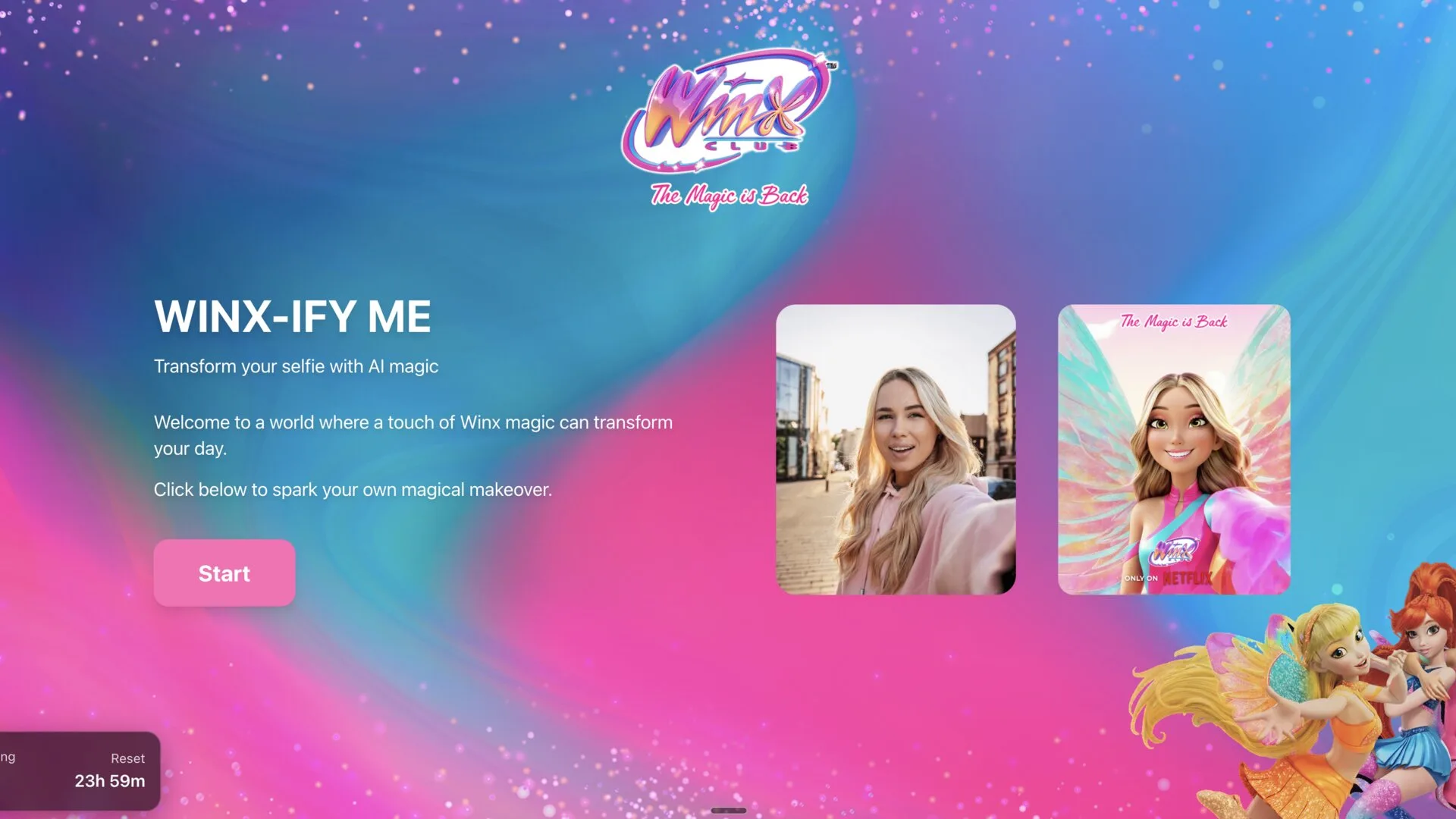
Winx-ify Me microsite: selfie transformation landing page Winx-ify Me microsite
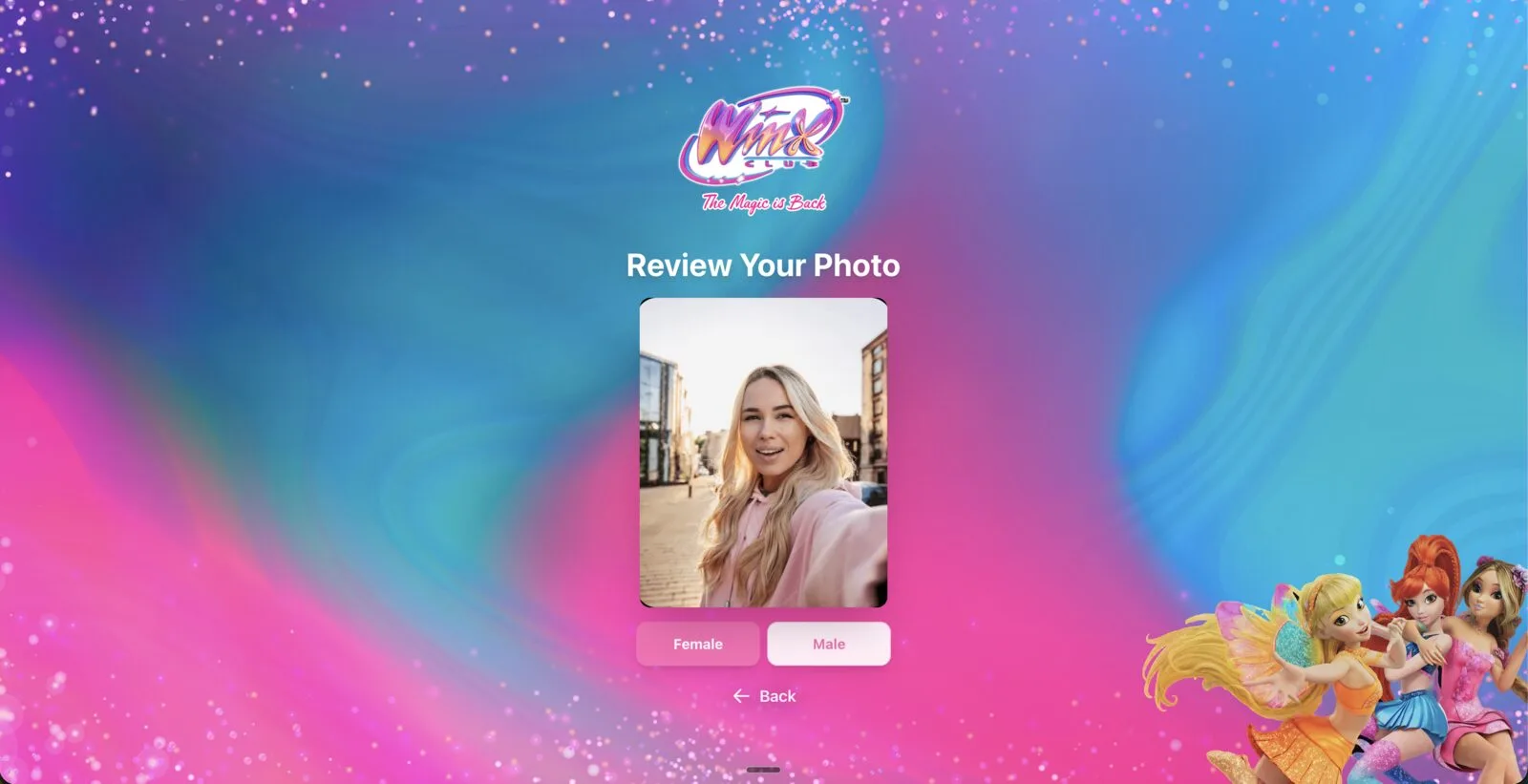
Winx-ify Me photo review screen with female/male character style selector
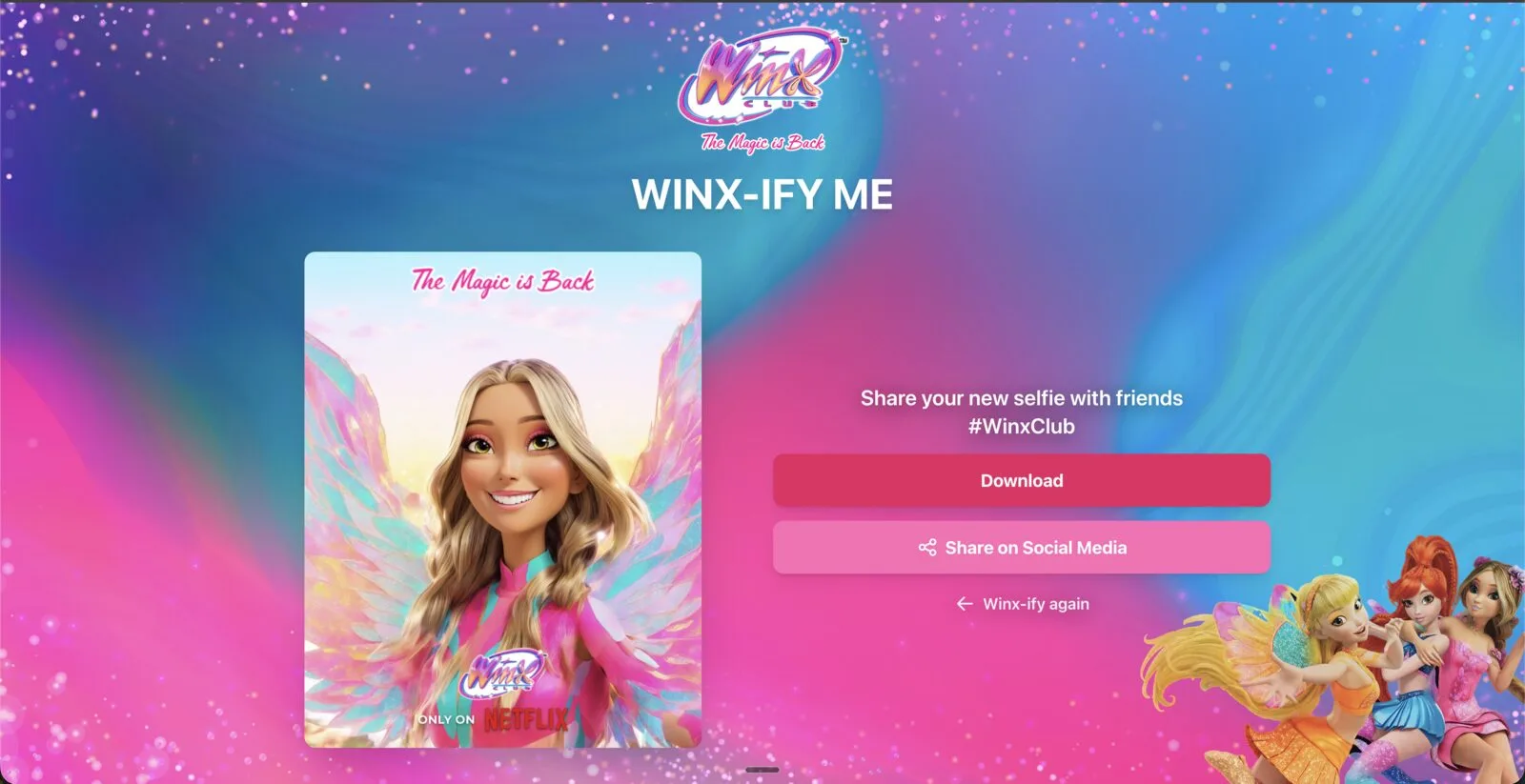
Winx-ify Me result: AI-generated Winx character portrait with download and share
Demo
Full user flow
Hover to play
Process

Three calls that shaped
the pipeline.

01
ComfyUI for control
Early experiments with managed APIs gave fast results but no real access to the generation pipeline. When edge cases appeared, there was no lever to pull. ComfyUI meant every node was exposed. As new problems surfaced during testing, we could intervene directly rather than work around a black box.
02
Training the balance
The LoRA had to hold two things: the user's actual face, and the Winx visual language. Too much weight on character style and outputs stopped looking like the person. Too much on realism and the output lost the show's identity. We also added a backend upscaler on all inputs: low-resolution uploads dragged output quality down significantly, and fixing it at the input stage beat trying to compensate in the model.
03
Rate limiting as product design
Keeping the experience free meant limiting each user to 5 generations per day. That required session and IP tracking on the backend, but it also shaped the UX: the limit needed to feel intentional, like a design constraint, not a broken feature. How we communicated the cap changed how users perceived the whole experience.
Learnings

What this project
actually taught us.

LoRA training is a moving target
Training a model to hold both user likeness and a strong character aesthetic is harder than either alone. The balance shifts with every new training run. Multiple rounds of experimentation were not a sign of scope creep. They were the work.
Single-instance deployments break fast
ComfyUI on a single server handles a demo fine. Real user traffic requires load-balanced instances from the start. Setting that up after launch under live load is a different, harder problem than building it in.
Input quality gates matter more than model tuning
Low-resolution uploads had a bigger negative impact on output quality than any model parameter. Adding a backend upscaler at the input stage, before the ComfyUI pipeline ran, had more effect on consistency than any number of fine-tuning iterations.
Constraints need a UX, not just a backend rule
A 5-generation daily cap is invisible until someone hits it. How that moment is handled determines whether the user feels the product is broken or designed. The rate limit became a feature only after we designed the communication around it.
Start a project

Want to build something like this?

We work with brands and agencies who want gen-AI experiences that actually ship, end-to-end, from model training to live deployment.

Replies within 48 hours, straight from the studio.

Start a project
Next project
007 First Light WebAR
View project →