On location
A mannequin on Tower Bridge.
Visible from where you stand.
Video
Snapchat lens
Click to play
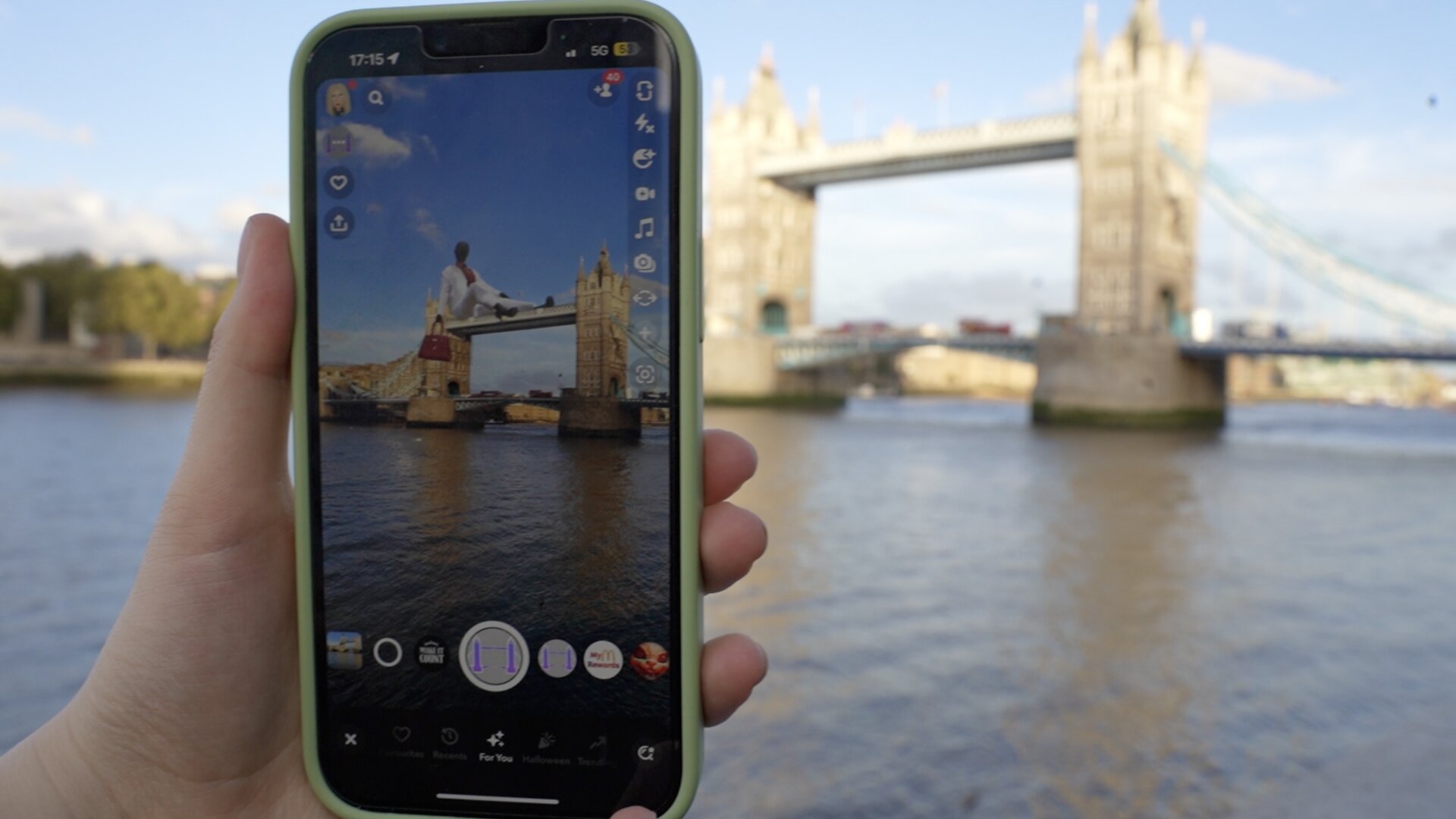 Tower Bridge, London
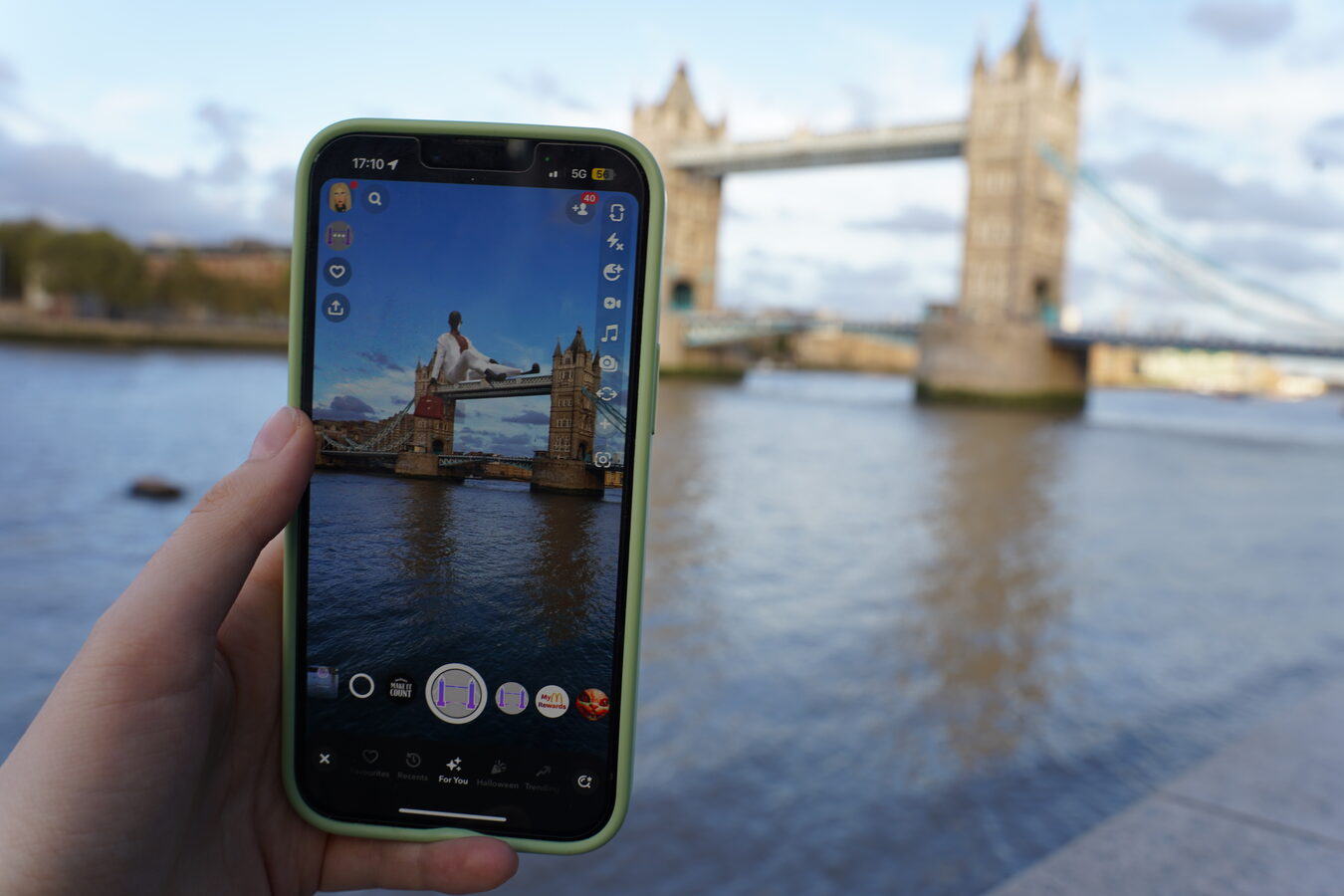
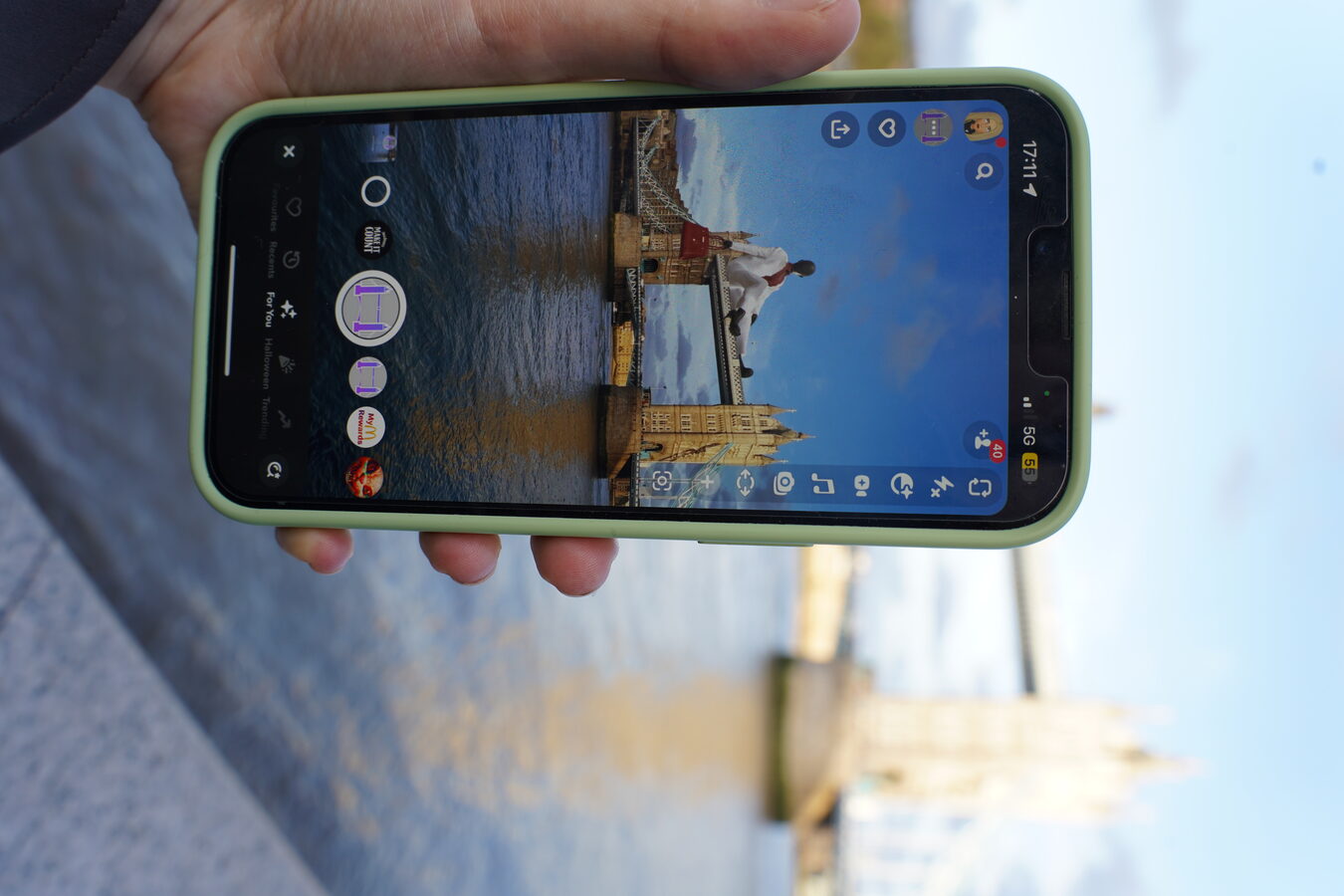
VFX spectacles are one-sided by nature. A video of a character perched on a skyscraper looks dramatic from one fixed camera angle. What if the same illusion worked in real life, from wherever you were standing?
This was an R&D pitch for Oraar Studio: explore world-locked AR at the scale of a real landmark. The question was not just technical. It was about whether branded spectacle could become a genuinely shared, perspective-correct experience in public space.
Tower Bridge was the obvious choice. Iconic, globally recognisable, and meaningful to the studio. Multiple viewing angles were baked into its architecture.
Tower Bridge, London
We take briefs from brands, agencies, and platforms who want spatial experiences that actually hold attention.
Replies within 48 hours, straight from the studio.